Pathways Resource Library
Tools to help people understand their options
Explore messaging, research, and resources from across the field—along with customizable, white-label tools that you can adapt, brand as your own, and use in your organization’s communications—to help you reach key audiences with language that builds confidence and expands what’s possible.
Article
What it will take to change the narrative about career education
This resource may be shared with proper attribution to the organization.
This resource may be shared with proper attribution to the organization.
The article discusses the growing issue of young Americans aged 18-24 not engaging in college or work, exacerbated by the pandemic. Despite high job vacancies, there's skepticism toward non-college education and job-training programs. The article highlights policy recommendations to integrate workforce training and higher education, stressing that both traditional and non-degree credentials are essential for economic mobility. The purpose is to advocate for a broader, more inclusive approach to postsecondary education and workforce training, aiming to enhance economic opportunities for all.
Playbook or Guidebook
Making the Case
This resource may be shared with proper attribution to the organization.
This resource may be shared with proper attribution to the organization.
This playbook gives people in the learn-and-work ecosystem key information they can use to make the case for incremental credentialing. Case-making requires different information for various audiences, including the campus community, employers and industry partners, funders, learners, and policymakers. The playbook covers: How to define incremental credentialing and incremental credentials, the benefits of incremental credentialing to various constituencies, and the four factors driving the case for incremental credentialing.
Research Report
Striving to Thrive
This resource may be shared with proper attribution to the organization.
This resource may be shared with proper attribution to the organization.
This is a set of research about how young people form their occupational identities. From 2018-2019, Equitable Futures gathered key insights from qualitative and quantitative research with over 4,000 young people on how they see themselves and the opportunities and challenges they anticipate in pursuing their career and life goals.
Research Report
Pathways Matter to Families: What Parents and Young Adults Believe and Want to Know About Education to Workforce Pathways
This resource may be shared with proper attribution to the organization.
This resource may be shared with proper attribution to the organization.
Pathways Matter to Families offers insights and actionable resources for students and families. The two complementary resources linked are informed by original research investigating what parents and young adults think and want to know about education-to-workforce pathways and experiences.
Research Report
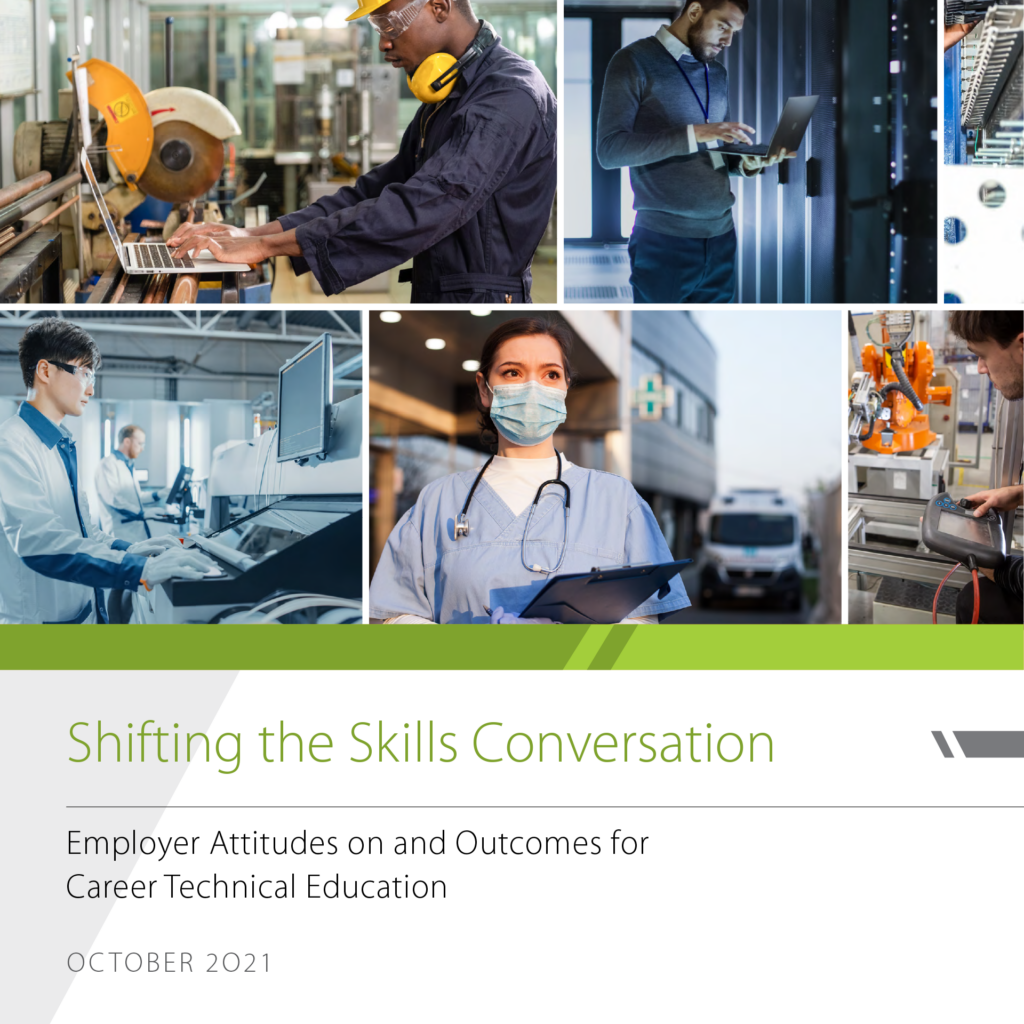
Shifting the Skills Conversation: Employer Attitudes and Outcomes of Career Technical Education
This resource may be shared with proper attribution to the organization.
This resource may be shared with proper attribution to the organization.
This resource provides tangible data points on employer attitudes toward Career Technical Education (CTE) and the positive return on investment CTE experiences provide for business and economic growth. Based on a national survey of more than 300 professionals actively involved in hiring decisions in in-demand fields, these new findings demonstrate that employers strongly support and see direct value in CTE. The findings also indicate that employer recognition and support for skills-focused hiring is growing and that employers back a greater public investment in CTE programs.
Research Report
The Making of an Innovation Engine: Advancing Career-Connected Learning
This resource may be shared with proper attribution to the organization.
This resource may be shared with proper attribution to the organization.
The Catalyze Challenge set out to answer two core research questions: was it successful in catalyzing new innovation and, if so, what type? It employs a three-stage review process involving a collective effort to identify unique, groundbreaking career-connected models that are heavily invested in the communities they serve. The key takeaways that are explored in depth throughout this report.
Research Report
Walton FamilyFoundation‑GallupVoices of Gen Z Study: Year 3 Annual Report
This resource may be shared with proper attribution to the organization.
This resource may be shared with proper attribution to the organization.
The third installment of this annual survey series tracks the wellbeing, education, and future outlook of Generation Z, based on responses from nearly 3,800 13- to 28-year-olds. Key findings include a widening life-evaluation gap between Gen Z students and adults, record-high levels of classroom engagement, and persistent disparities linked to teacher quality and school experience. The report also examines reading habits, chronic absenteeism, cellphone policies in schools, and Gen Z's growing sense of preparedness for the future.
Book
Choosing College
This resource may be shared with proper attribution to the organization.
This resource may be shared with proper attribution to the organization.
This report looks at how people make decisions regarding higher education through “Jobs-to-be-Done” theory which interrogates and exposes the real reasons people make personal choices, from buying a milk shake to make life-changing decisions. The analysis based on this theory, provides important insights, both for college-bound students and their families, but also institutions of higher education, many of which might be tooling themselves to perform the wrong job.
Playbook or Guidebook
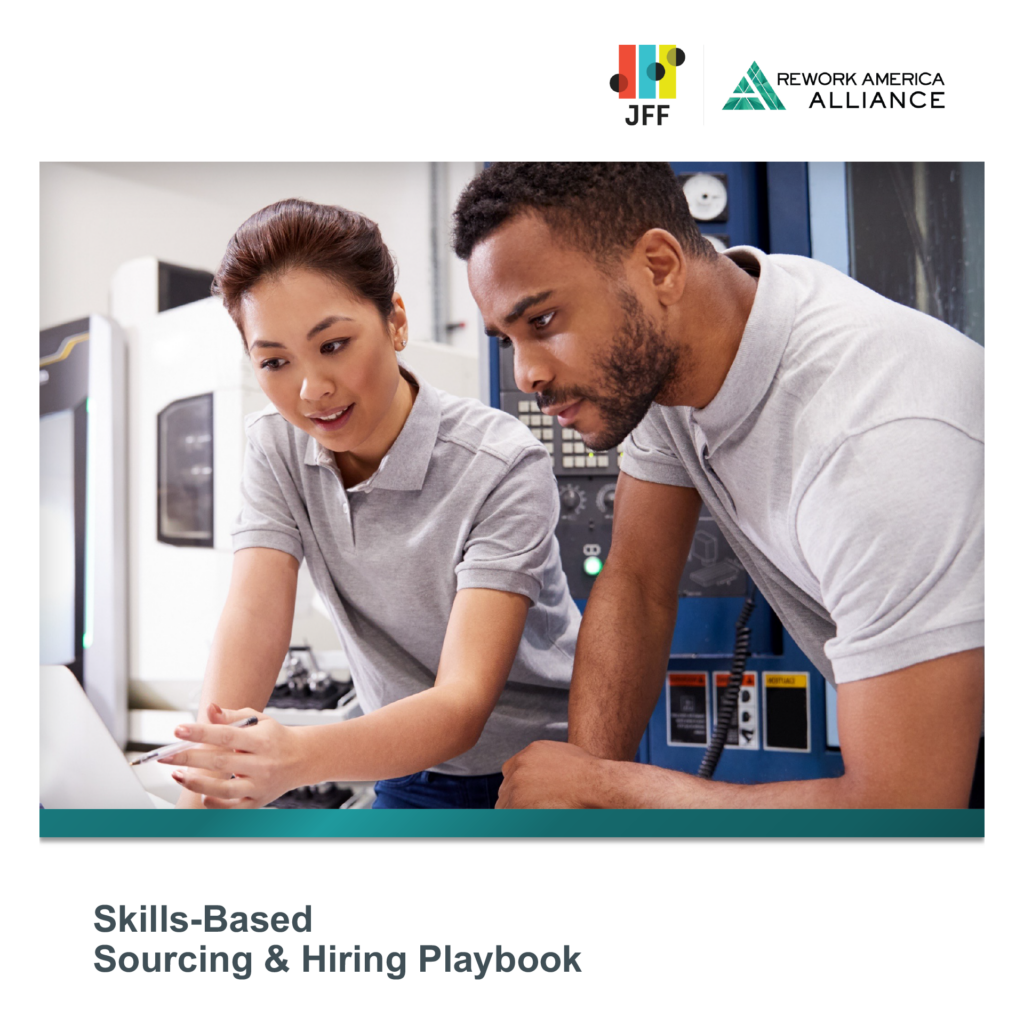
Skills-Based Sourcing and Hiring Playbook
This resource may be shared with proper attribution to the organization.
This resource may be shared with proper attribution to the organization.
This playbook is a step-by-step guide to implementing more equitable and effective approaches to employee recruiting, hiring, and advancement by embracing skills-first talent management practices.
Filters
Article
What it will take to change the narrative about career education
This resource may be shared with proper attribution to the organization.
This resource may be shared with proper attribution to the organization.
The article discusses the growing issue of young Americans aged 18-24 not engaging in college or work, exacerbated by the pandemic. Despite high job vacancies, there's skepticism toward non-college education and job-training programs. The article highlights policy recommendations to integrate workforce training and higher education, stressing that both traditional and non-degree credentials are essential for economic mobility. The purpose is to advocate for a broader, more inclusive approach to postsecondary education and workforce training, aiming to enhance economic opportunities for all.
Playbook or Guidebook
Making the Case
This resource may be shared with proper attribution to the organization.
This resource may be shared with proper attribution to the organization.
This playbook gives people in the learn-and-work ecosystem key information they can use to make the case for incremental credentialing. Case-making requires different information for various audiences, including the campus community, employers and industry partners, funders, learners, and policymakers. The playbook covers: How to define incremental credentialing and incremental credentials, the benefits of incremental credentialing to various constituencies, and the four factors driving the case for incremental credentialing.
Research Report
Striving to Thrive
This resource may be shared with proper attribution to the organization.
This resource may be shared with proper attribution to the organization.
This is a set of research about how young people form their occupational identities. From 2018-2019, Equitable Futures gathered key insights from qualitative and quantitative research with over 4,000 young people on how they see themselves and the opportunities and challenges they anticipate in pursuing their career and life goals.
Research Report
Pathways Matter to Families: What Parents and Young Adults Believe and Want to Know About Education to Workforce Pathways
This resource may be shared with proper attribution to the organization.
This resource may be shared with proper attribution to the organization.
Pathways Matter to Families offers insights and actionable resources for students and families. The two complementary resources linked are informed by original research investigating what parents and young adults think and want to know about education-to-workforce pathways and experiences.
Research Report
Shifting the Skills Conversation: Employer Attitudes and Outcomes of Career Technical Education
This resource may be shared with proper attribution to the organization.
This resource may be shared with proper attribution to the organization.
This resource provides tangible data points on employer attitudes toward Career Technical Education (CTE) and the positive return on investment CTE experiences provide for business and economic growth. Based on a national survey of more than 300 professionals actively involved in hiring decisions in in-demand fields, these new findings demonstrate that employers strongly support and see direct value in CTE. The findings also indicate that employer recognition and support for skills-focused hiring is growing and that employers back a greater public investment in CTE programs.
Research Report
The Making of an Innovation Engine: Advancing Career-Connected Learning
This resource may be shared with proper attribution to the organization.
This resource may be shared with proper attribution to the organization.
The Catalyze Challenge set out to answer two core research questions: was it successful in catalyzing new innovation and, if so, what type? It employs a three-stage review process involving a collective effort to identify unique, groundbreaking career-connected models that are heavily invested in the communities they serve. The key takeaways that are explored in depth throughout this report.
Research Report
Walton FamilyFoundation‑GallupVoices of Gen Z Study: Year 3 Annual Report
This resource may be shared with proper attribution to the organization.
This resource may be shared with proper attribution to the organization.
The third installment of this annual survey series tracks the wellbeing, education, and future outlook of Generation Z, based on responses from nearly 3,800 13- to 28-year-olds. Key findings include a widening life-evaluation gap between Gen Z students and adults, record-high levels of classroom engagement, and persistent disparities linked to teacher quality and school experience. The report also examines reading habits, chronic absenteeism, cellphone policies in schools, and Gen Z's growing sense of preparedness for the future.
Book
Choosing College
This resource may be shared with proper attribution to the organization.
This resource may be shared with proper attribution to the organization.
This report looks at how people make decisions regarding higher education through “Jobs-to-be-Done” theory which interrogates and exposes the real reasons people make personal choices, from buying a milk shake to make life-changing decisions. The analysis based on this theory, provides important insights, both for college-bound students and their families, but also institutions of higher education, many of which might be tooling themselves to perform the wrong job.
Playbook or Guidebook
Skills-Based Sourcing and Hiring Playbook
This resource may be shared with proper attribution to the organization.
This resource may be shared with proper attribution to the organization.
This playbook is a step-by-step guide to implementing more equitable and effective approaches to employee recruiting, hiring, and advancement by embracing skills-first talent management practices.