Resource Library
The Pathways Resource Library is a central hub of research and tools designed to drive innovation in education-to-workforce pathways. It contains a wide selection of resources organized by topic, audience, region, and type, allowing you to easily locate materials that fit your needs.
Research Report
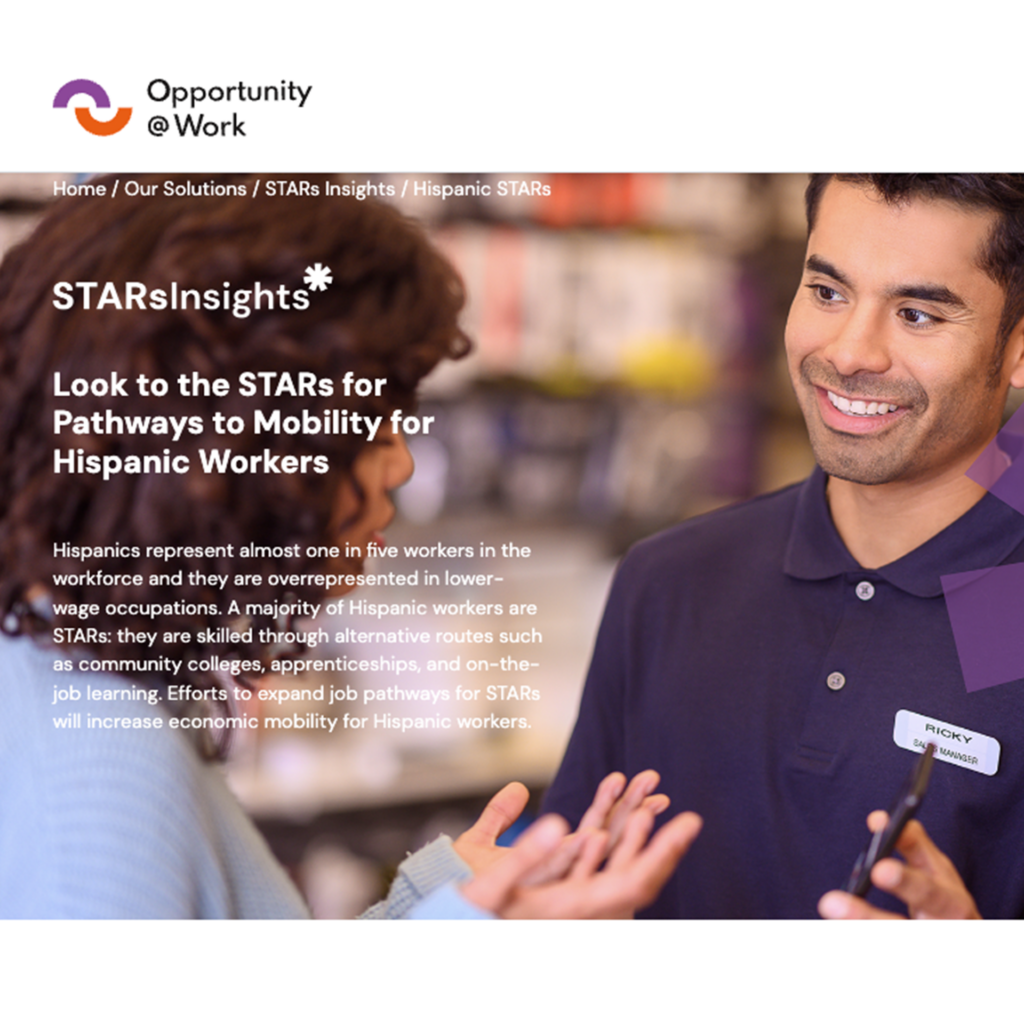
Hispanic STARs: Smart Employers Aim for Hispanic STARs
This resource may be shared with proper attribution to the organization.
This resource may be shared with proper attribution to the organization.
This report highlights the significant presence of Hispanic workers who are skilled through alternative routes (STARs) in the workforce and their overrepresentation in lower-wage occupations. It discusses the barriers these workers face due to degree requirements and suggests that employers prioritize skills over formal education to improve economic mobility for Hispanic STARs.
Blog Post
Telling the Right Stories: How Narratives Can Change Community College
This resource may be shared with proper attribution to the organization.
This resource may be shared with proper attribution to the organization.
The post highlights the gap between community college students' aspirations to earn four-year degrees and the reality that only a small percentage achieve this goal. It criticizes current narratives and policies that hinder successful transfers, particularly for low-income and minority students, and advocates for a shift towards focusing on credit mobility and recognition. By changing the narrative to value students' prior achievements and creating more flexible, student-centered pathways, the aim is to foster equitable educational and economic outcomes.
Research Report
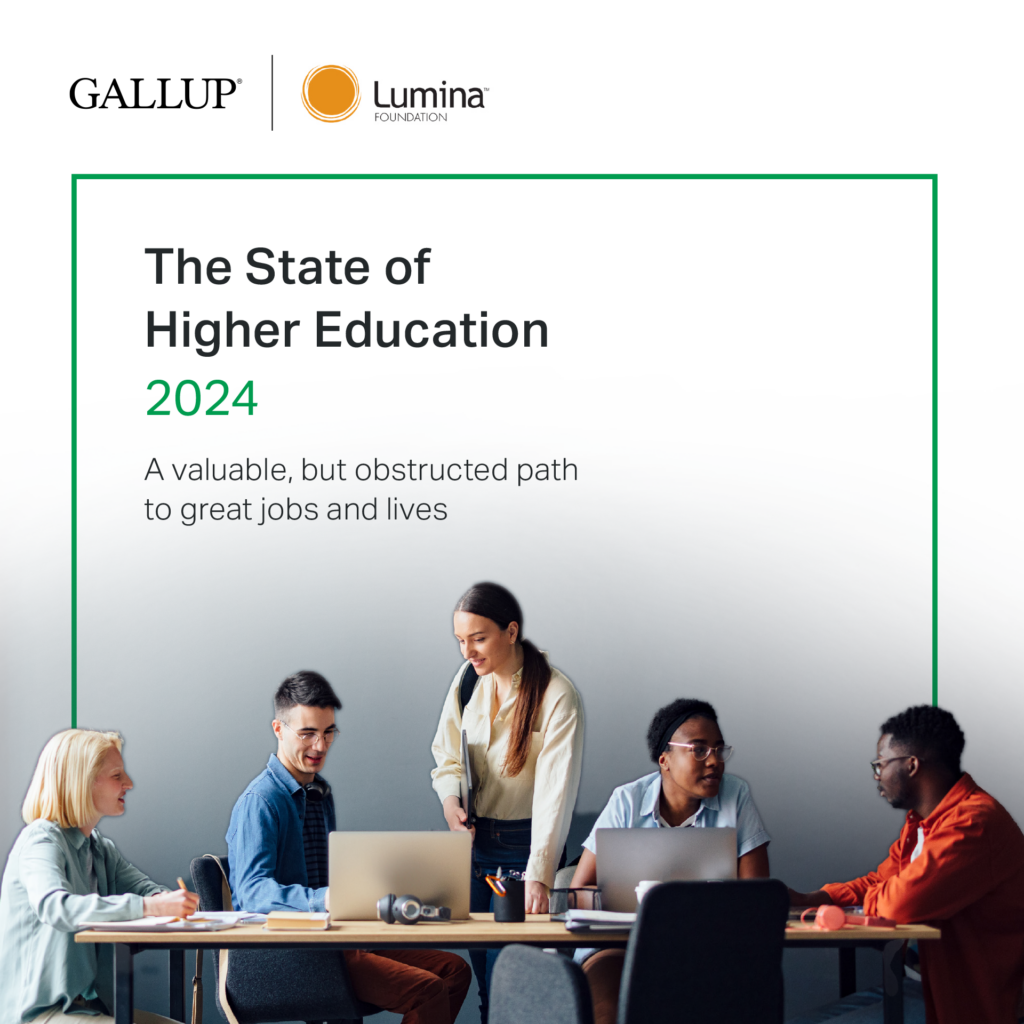
Lumina State of Higher Education
This resource may be shared with proper attribution to the organization.
This resource may be shared with proper attribution to the organization.
Gallup and Lumina Foundation conducted a report studying the most pressing issues facing higher education. Insights cover U.S. adults' interest in pursuing higher education, what's keeping them from enrolling and what's causing currently enrolled students to consider stopping out.

Toolkit
Communications Toolkit: Postsecondary Pathways and The Shifting American Economy.
This resource may be shared with proper attribution to the organization.
This resource may be shared with proper attribution to the organization.
A toolkit communicating pathways with students and families. it includes: a) how different pathways can look like; b) how pathway career ladder can look like; c) how pathway support systems can look like.
Research Report
Preparing our Students for the Real World
This resource may be shared with proper attribution to the organization.
This resource may be shared with proper attribution to the organization.
This is a thought paper for school and community leaders. It takes an honest look at the reality of what was facing America students and its workforce in 2019 and what brought America to this reality. It also provides clarity and direction to bring greater effectiveness and scalability to Career Connected Learning practices.
Article
What it will take to change the narrative about career education
This resource may be shared with proper attribution to the organization.
This resource may be shared with proper attribution to the organization.
The article discusses the growing issue of young Americans aged 18-24 not engaging in college or work, exacerbated by the pandemic. Despite high job vacancies, there's skepticism toward non-college education and job-training programs. The article highlights policy recommendations to integrate workforce training and higher education, stressing that both traditional and non-degree credentials are essential for economic mobility. The purpose is to advocate for a broader, more inclusive approach to postsecondary education and workforce training, aiming to enhance economic opportunities for all.
Toolkit
What does it take to engage in narrative change
This resource may be shared with proper attribution to the organization.
This resource may be shared with proper attribution to the organization.
This website captures insights and lessons learned from the Pathways Narrative Project and shares tools and resources for organizations interested in engaging in narrative change as part of their mission and work. The Pathways Narrative Project is a two-year collaborative initiative, led by Wonder: Strategies for Good and supported by the Bill & Melinda Gates Foundation, Walton Family Foundation and others, that convened nine organizations to improve education and career pathways for young people. Together the cohort explored how to leverage the power of narrative to advance programs and systems change in the pathways space.
White Paper
Degrees of Risk: What Gen Z and Employers Think About Education-to-Career Pathways… and How Those Views are Changing
This resource may be shared with proper attribution to the organization.
This resource may be shared with proper attribution to the organization.
This is an examination of what is required to make a person employable, as well as what professional and educational success looks like. This study was commissioned by American Student Assistance (ASA) and Jobs for the Future (JFF). The research aimed to understand current familiarity with and perceptions of non-degree postsecondary pathways from both Gen Z and employer perspectives. This paper also makes recommendations for the way forward to expand high-quality postsecondary options for all learners.
Article
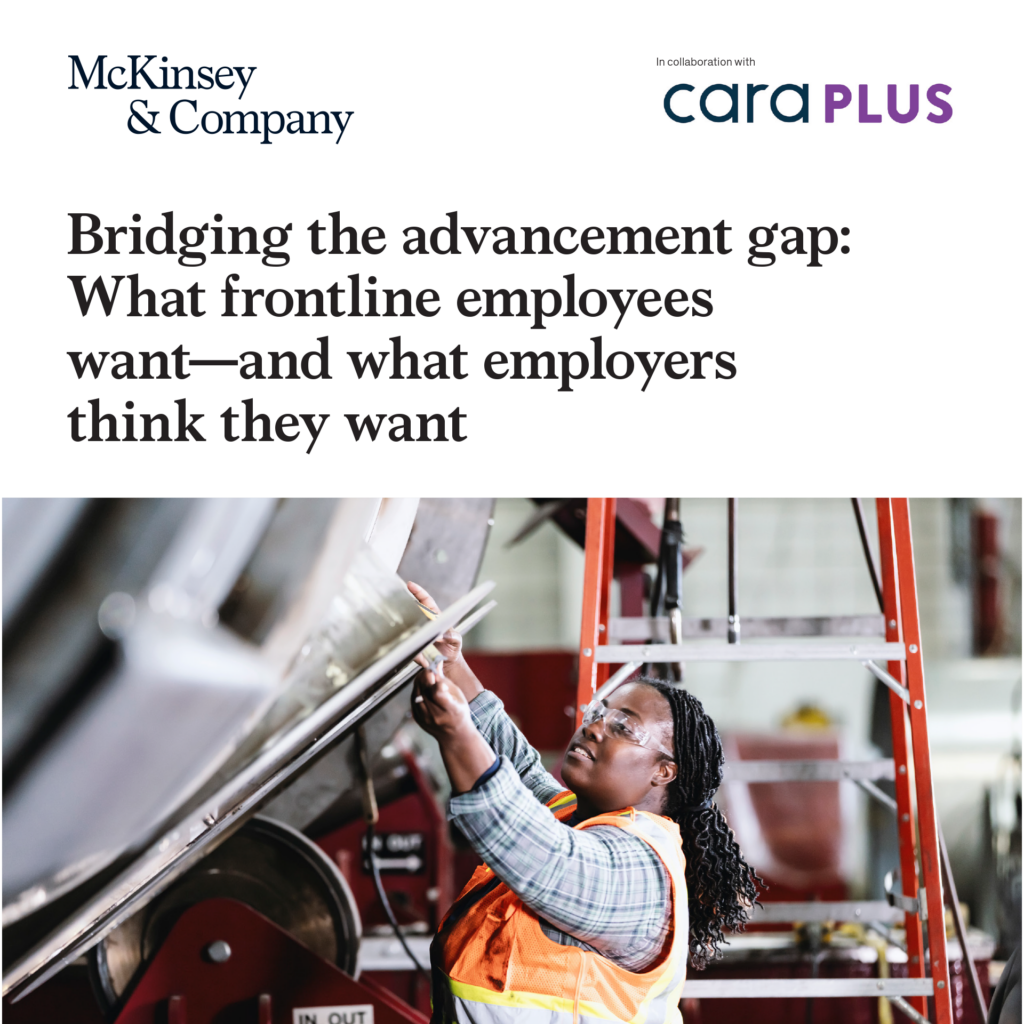
Bridging the Advancement Gap
This resource may be shared with proper attribution to the organization.
This resource may be shared with proper attribution to the organization.
To better understand frontline employee perspectives, McKinsey, in collaboration with Cara Plus, conducted separate surveys of frontline employees and managers of frontline employees across the country in March 2022. This article explores frontline employee career advancement in four parts: first, what frontline employees say they need; second, what employers perceive as the career advancement priorities of frontline employees; third, the common barriers to career advancement; and last, how employers can bridge the differences, with a focus on tactical actions to meaningfully improve career advancement outcomes.
Filters
Research Report
Hispanic STARs: Smart Employers Aim for Hispanic STARs
This resource may be shared with proper attribution to the organization.
This resource may be shared with proper attribution to the organization.
This report highlights the significant presence of Hispanic workers who are skilled through alternative routes (STARs) in the workforce and their overrepresentation in lower-wage occupations. It discusses the barriers these workers face due to degree requirements and suggests that employers prioritize skills over formal education to improve economic mobility for Hispanic STARs.
Blog Post
Telling the Right Stories: How Narratives Can Change Community College
This resource may be shared with proper attribution to the organization.
This resource may be shared with proper attribution to the organization.
The post highlights the gap between community college students' aspirations to earn four-year degrees and the reality that only a small percentage achieve this goal. It criticizes current narratives and policies that hinder successful transfers, particularly for low-income and minority students, and advocates for a shift towards focusing on credit mobility and recognition. By changing the narrative to value students' prior achievements and creating more flexible, student-centered pathways, the aim is to foster equitable educational and economic outcomes.
Research Report
Lumina State of Higher Education
This resource may be shared with proper attribution to the organization.
This resource may be shared with proper attribution to the organization.
Gallup and Lumina Foundation conducted a report studying the most pressing issues facing higher education. Insights cover U.S. adults' interest in pursuing higher education, what's keeping them from enrolling and what's causing currently enrolled students to consider stopping out.
Toolkit
Communications Toolkit: Postsecondary Pathways and The Shifting American Economy.
This resource may be shared with proper attribution to the organization.
This resource may be shared with proper attribution to the organization.
A toolkit communicating pathways with students and families. it includes: a) how different pathways can look like; b) how pathway career ladder can look like; c) how pathway support systems can look like.
Research Report
Preparing our Students for the Real World
This resource may be shared with proper attribution to the organization.
This resource may be shared with proper attribution to the organization.
This is a thought paper for school and community leaders. It takes an honest look at the reality of what was facing America students and its workforce in 2019 and what brought America to this reality. It also provides clarity and direction to bring greater effectiveness and scalability to Career Connected Learning practices.
Article
What it will take to change the narrative about career education
This resource may be shared with proper attribution to the organization.
This resource may be shared with proper attribution to the organization.
The article discusses the growing issue of young Americans aged 18-24 not engaging in college or work, exacerbated by the pandemic. Despite high job vacancies, there's skepticism toward non-college education and job-training programs. The article highlights policy recommendations to integrate workforce training and higher education, stressing that both traditional and non-degree credentials are essential for economic mobility. The purpose is to advocate for a broader, more inclusive approach to postsecondary education and workforce training, aiming to enhance economic opportunities for all.
Toolkit
What does it take to engage in narrative change
This resource may be shared with proper attribution to the organization.
This resource may be shared with proper attribution to the organization.
This website captures insights and lessons learned from the Pathways Narrative Project and shares tools and resources for organizations interested in engaging in narrative change as part of their mission and work. The Pathways Narrative Project is a two-year collaborative initiative, led by Wonder: Strategies for Good and supported by the Bill & Melinda Gates Foundation, Walton Family Foundation and others, that convened nine organizations to improve education and career pathways for young people. Together the cohort explored how to leverage the power of narrative to advance programs and systems change in the pathways space.
White Paper
Degrees of Risk: What Gen Z and Employers Think About Education-to-Career Pathways… and How Those Views are Changing
This resource may be shared with proper attribution to the organization.
This resource may be shared with proper attribution to the organization.
This is an examination of what is required to make a person employable, as well as what professional and educational success looks like. This study was commissioned by American Student Assistance (ASA) and Jobs for the Future (JFF). The research aimed to understand current familiarity with and perceptions of non-degree postsecondary pathways from both Gen Z and employer perspectives. This paper also makes recommendations for the way forward to expand high-quality postsecondary options for all learners.
Article
Bridging the Advancement Gap
This resource may be shared with proper attribution to the organization.
This resource may be shared with proper attribution to the organization.
To better understand frontline employee perspectives, McKinsey, in collaboration with Cara Plus, conducted separate surveys of frontline employees and managers of frontline employees across the country in March 2022. This article explores frontline employee career advancement in four parts: first, what frontline employees say they need; second, what employers perceive as the career advancement priorities of frontline employees; third, the common barriers to career advancement; and last, how employers can bridge the differences, with a focus on tactical actions to meaningfully improve career advancement outcomes.