Reaching Learners
Help learners see what’s possible
Learners are looking for clear, meaningful paths—but often don’t see options that feel real or attainable.
These resources help you:
- Use aspirational language that builds confidence
- Connect education and training to real-world outcomes
- Avoid overwhelming or overly technical messaging
Explore resources for reaching learners below
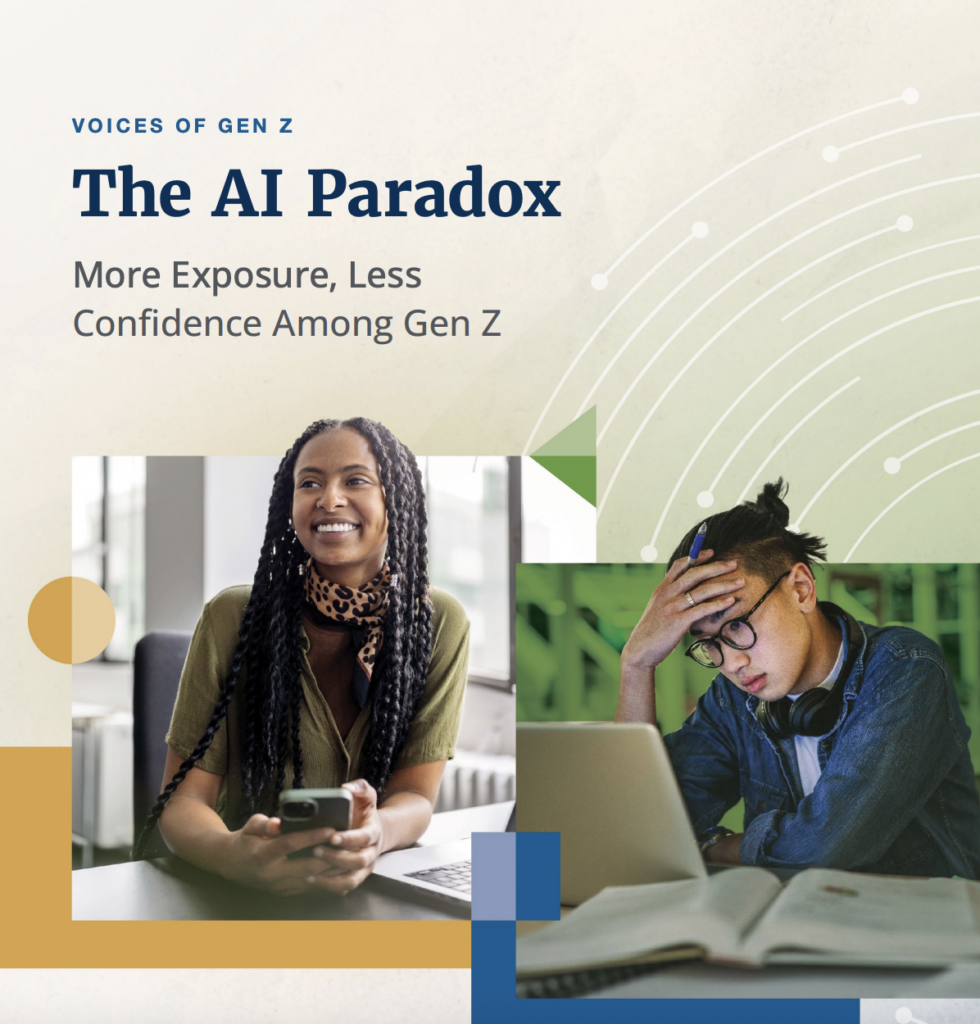
Research Report
The AI Paradox: More Exposure, Less Confidence Among Gen Z
This resource may be shared with proper attribution to the organization.
This resource may be shared with proper attribution to the organization.
This Gallup, Walton Family Foundation, and GSV report examines how Generation Z's relationship with artificial intelligence has evolved over the past year. Drawing on survey data from more than 1,500 14- to 29-year-olds, the report finds that while AI adoption has remained flat, negative sentiment has grown sharply, with declining excitement and hopefulness alongside rising anger and persistent anxiety. It explores Gen Z's skepticism toward AI's impact on creativity, critical thinking, and workplace trust, alongside growing recognition among students that AI skills will be essential for their education and careers.
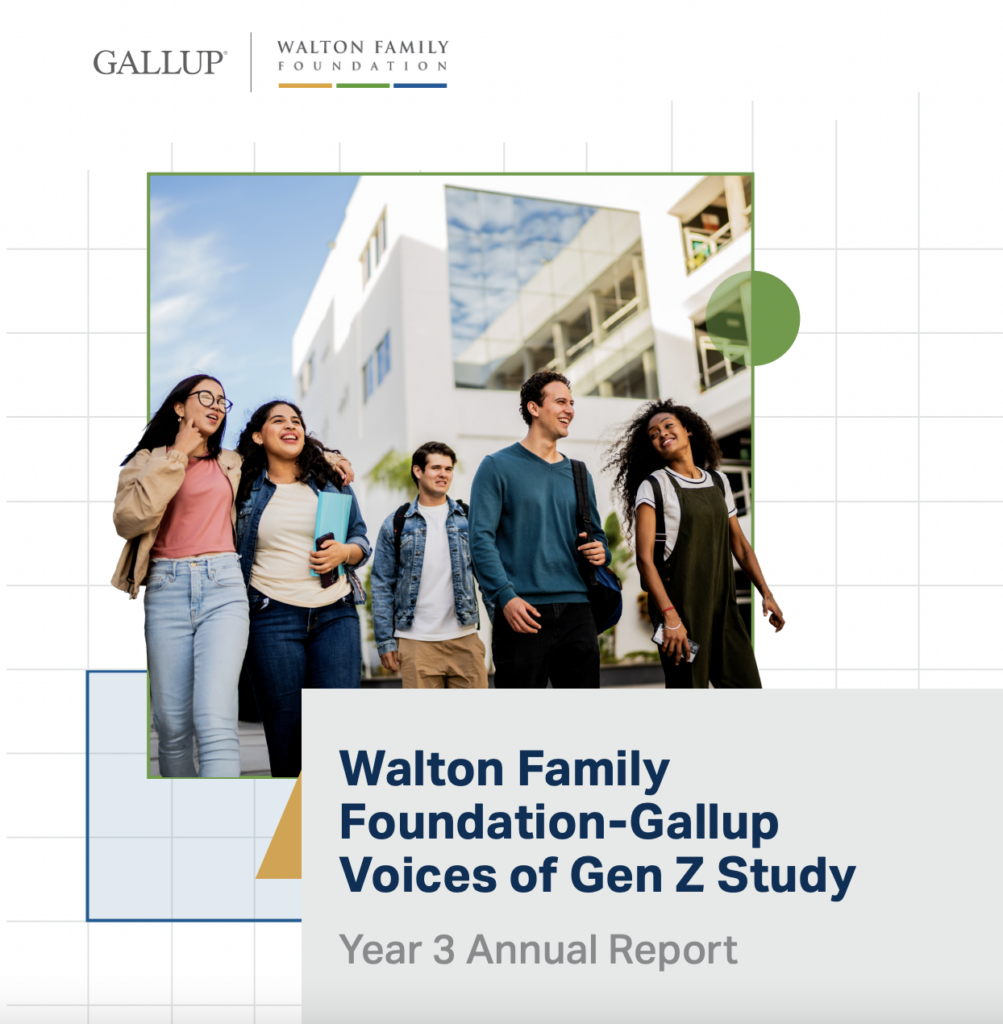
Research Report
Walton FamilyFoundation‑GallupVoices of Gen Z Study: Year 3 Annual Report
This resource may be shared with proper attribution to the organization.
This resource may be shared with proper attribution to the organization.
The third installment of this annual survey series tracks the wellbeing, education, and future outlook of Generation Z, based on responses from nearly 3,800 13- to 28-year-olds. Key findings include a widening life-evaluation gap between Gen Z students and adults, record-high levels of classroom engagement, and persistent disparities linked to teacher quality and school experience. The report also examines reading habits, chronic absenteeism, cellphone policies in schools, and Gen Z's growing sense of preparedness for the future.

Community Resource
Career Ready Network
This resource may be shared with proper attribution to the organization.
This resource may be shared with proper attribution to the organization.
A unified directory of organizations and employers offering work-based learning opportunities—such as internships, job shadows, and apprenticeships— to help decision-makers find, compare, and connect with providers.
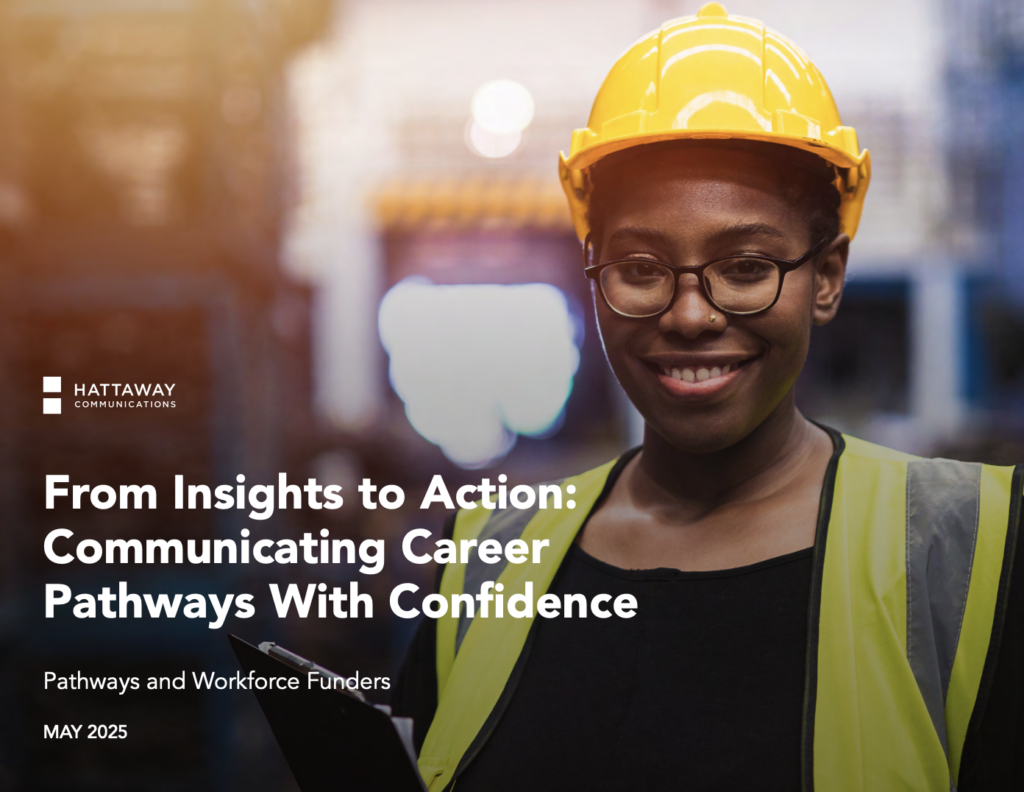
Toolkit
From Insights to Action: Communicating Career Pathways With Confidence
This resource may be shared with proper attribution to the organization.
This resource may be shared with proper attribution to the organization.
This communications toolkit is designed to help organizations and advocates effectively engage learners and employers regarding the value of career education and training programs as well as skill-based hiring. It offers research-backed messaging that reflects what people care about most—and what motivates them to take action. These messages don’t just describe the benefits of pathways programs, they also help audiences see these options as relevant, accessible, and worth pursuing. The guidance in this manual is grounded in science-based communication practices and shaped by extensive research, including a landscape analysis of messaging in the field and media, a nationally representative survey with message testing, roundtable discussions with learners and employers, and a series of pulse surveys.
This toolkit offers adaptable, ready-to-use messages, language, and themes to support outreach, engagement, and storytelling. Use them to strengthen your communications—whether you're writing a social post, developing a presentation, or talking with partners and stakeholders. The messages are designed to be flexible; feel free to use them as written or tailor them to fit your audience and voice.
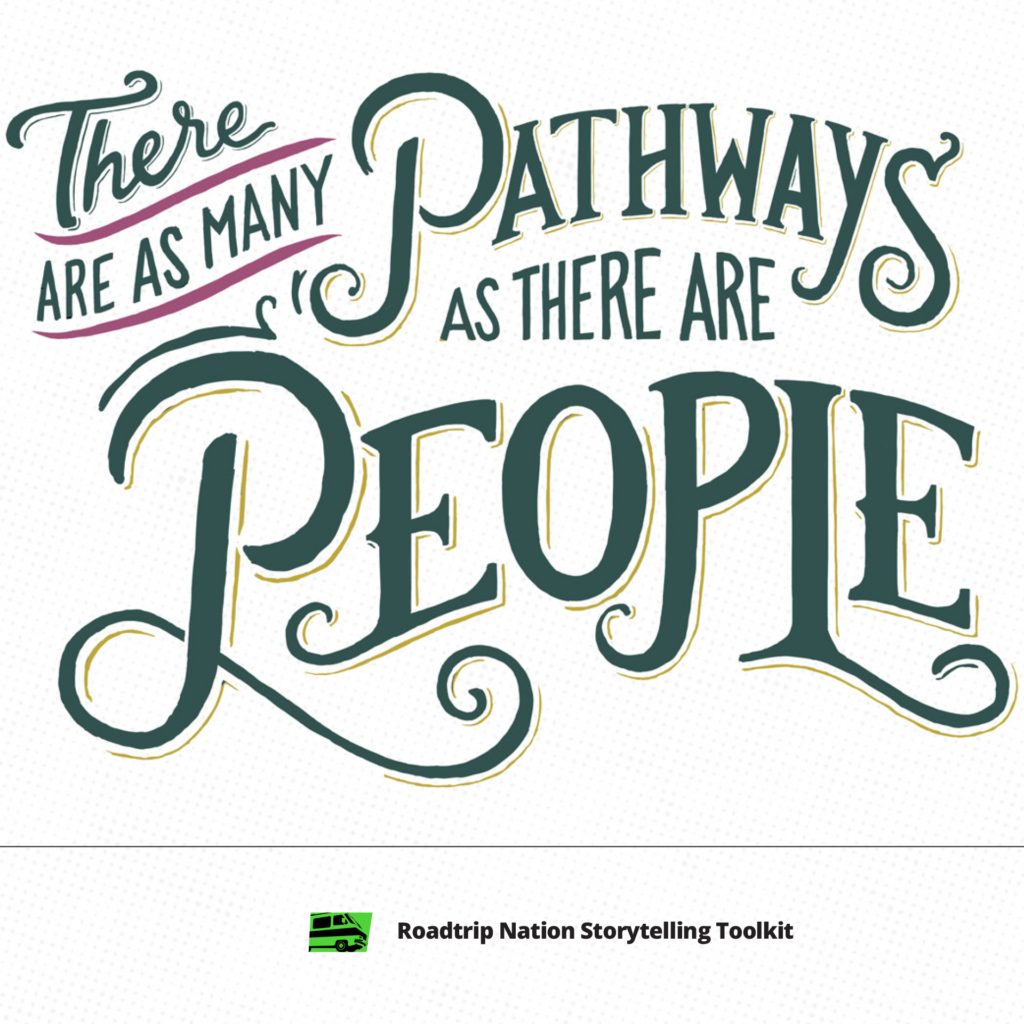
Toolkit
Roadtrip Nation Storytelling Toolkit
This resource may be shared with proper attribution to the organization.
This resource may be shared with proper attribution to the organization.
This storytelling toolkit outlined the fundamentals of Road Trip Nation's storytelling approach, developed over two decades of co-creating these stories with young people, so that other nonprofits and impact-minded organizations can amplify young people’s voices and stories in their own work.
Research Report
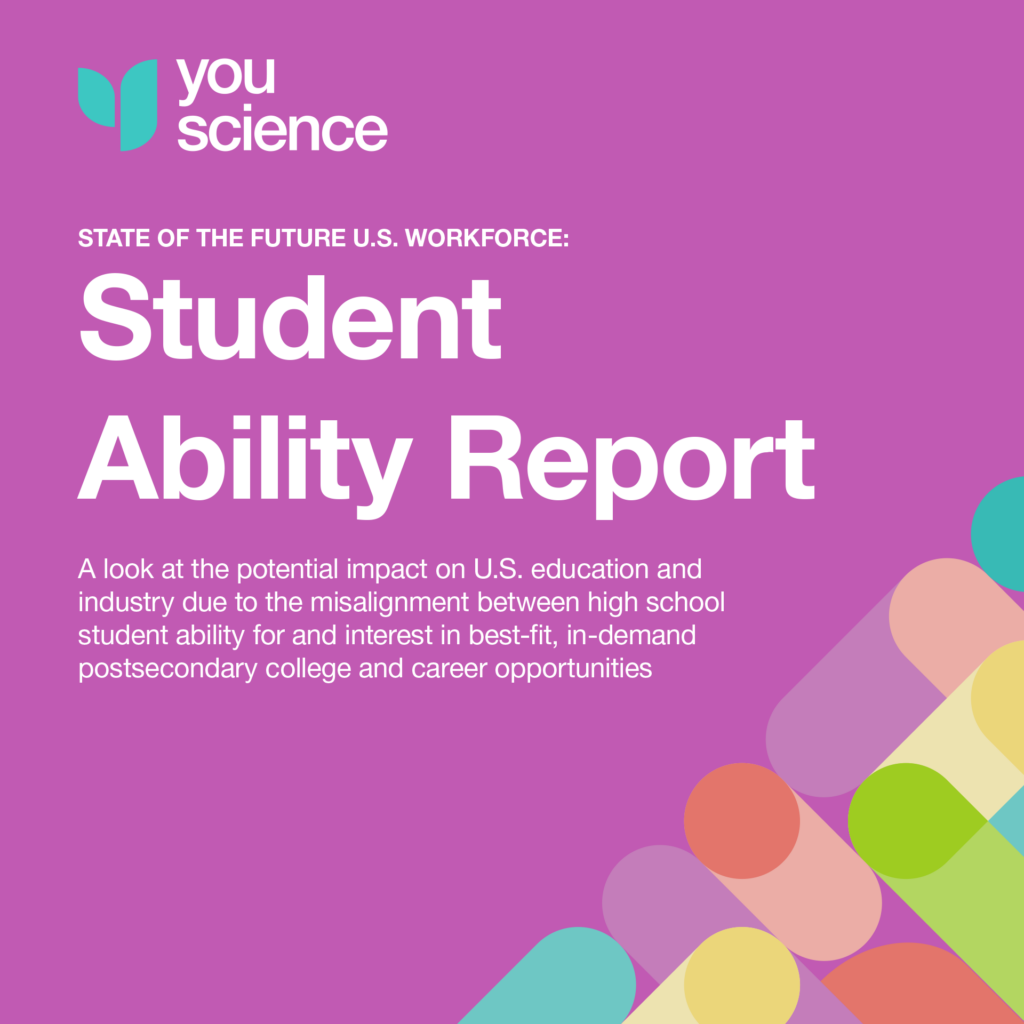
Student Ability Report
This resource may be shared with proper attribution to the organization.
This resource may be shared with proper attribution to the organization.
The State of the Future U.S. Workforce: Student Ability Report analyzes anonymized data from the YouScience Discovery aptitude-based career guidance assessments taken in U.S. high schools (grades 9 through 12) across all 50 states in 2021. They outline our findings and suggest solutions that address the challenge in a holistic, practical way in this report.
Research Report
Education at a Crossroads
This resource may be shared with proper attribution to the organization.
This resource may be shared with proper attribution to the organization.
High school graduates no longer see the traditional 4-year college pathway as their only postsecondary option, according to the latest research from YouScience®. This report contains insights into pathways students are choosing instead, where they turn for influence and guidance, and where there are opportunities for improvement. The report includes data and solutions for:
- Career and Technical Education (CTE) awareness.
- Post-graduation satisfaction.
- Educator/student interactions.
- Counselor impact.
- Aptitude discovery.
Research Report
The Value of Community Colleges: Recent Students’ Motivations and Outcomes
This resource may be shared with proper attribution to the organization.
This resource may be shared with proper attribution to the organization.
This study offers new insights about value community colleges provide and the range of needs that they serve. It examines recent community college students' motivations for enrolling, and their self-reported perceptions of the value of their education and training experiences, and the degree to which they acheived their goals for enrolling.
Research Report
High School Awareness Research
This resource may be shared with proper attribution to the organization.
This resource may be shared with proper attribution to the organization.
This is a report containing the results of a study on new approaches in higher education, funded by the Charles Kock Foundation.
Article
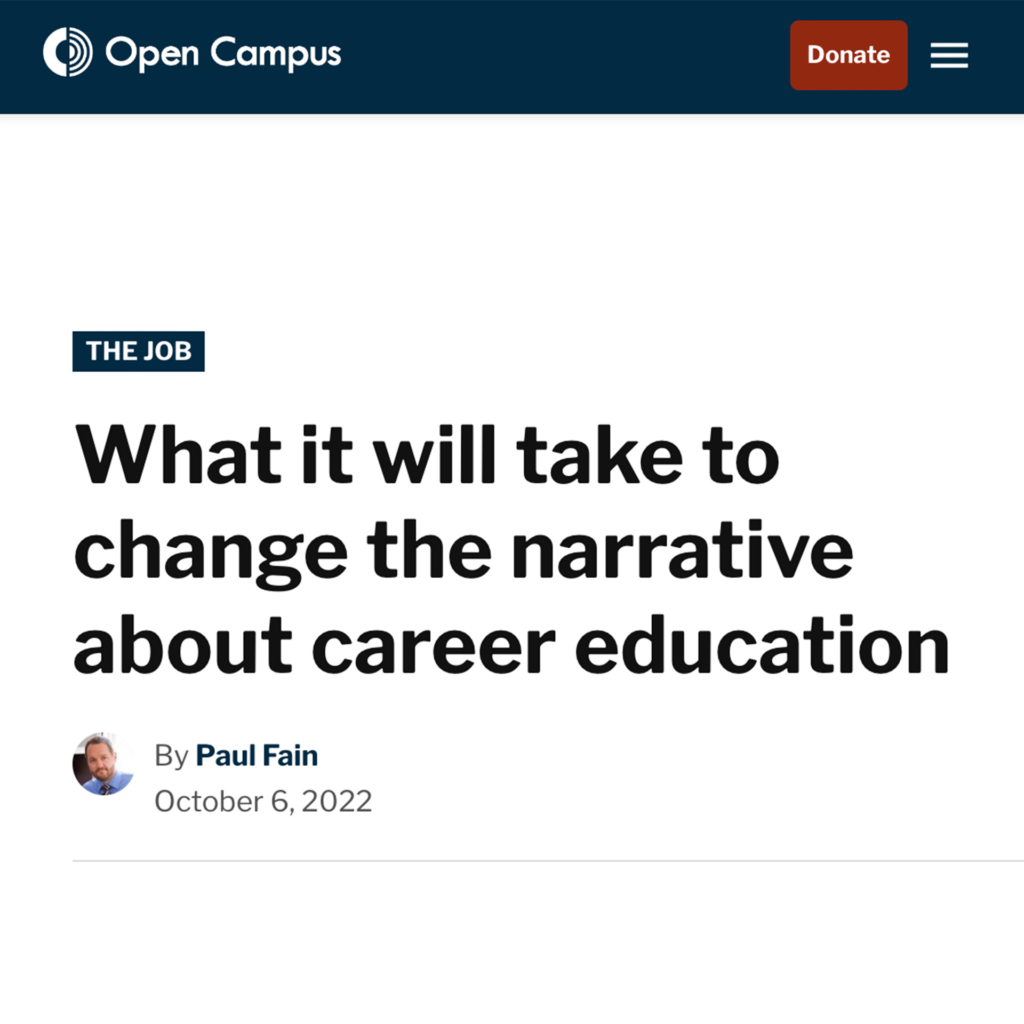
What it will take to change the narrative about career education
This resource may be shared with proper attribution to the organization.
This resource may be shared with proper attribution to the organization.
The article discusses the growing issue of young Americans aged 18-24 not engaging in college or work, exacerbated by the pandemic. Despite high job vacancies, there's skepticism toward non-college education and job-training programs. The article highlights policy recommendations to integrate workforce training and higher education, stressing that both traditional and non-degree credentials are essential for economic mobility. The purpose is to advocate for a broader, more inclusive approach to postsecondary education and workforce training, aiming to enhance economic opportunities for all.
Filters
Research Report
The AI Paradox: More Exposure, Less Confidence Among Gen Z
This resource may be shared with proper attribution to the organization.
This resource may be shared with proper attribution to the organization.
This Gallup, Walton Family Foundation, and GSV report examines how Generation Z's relationship with artificial intelligence has evolved over the past year. Drawing on survey data from more than 1,500 14- to 29-year-olds, the report finds that while AI adoption has remained flat, negative sentiment has grown sharply, with declining excitement and hopefulness alongside rising anger and persistent anxiety. It explores Gen Z's skepticism toward AI's impact on creativity, critical thinking, and workplace trust, alongside growing recognition among students that AI skills will be essential for their education and careers.
Research Report
Walton FamilyFoundation‑GallupVoices of Gen Z Study: Year 3 Annual Report
This resource may be shared with proper attribution to the organization.
This resource may be shared with proper attribution to the organization.
The third installment of this annual survey series tracks the wellbeing, education, and future outlook of Generation Z, based on responses from nearly 3,800 13- to 28-year-olds. Key findings include a widening life-evaluation gap between Gen Z students and adults, record-high levels of classroom engagement, and persistent disparities linked to teacher quality and school experience. The report also examines reading habits, chronic absenteeism, cellphone policies in schools, and Gen Z's growing sense of preparedness for the future.
Community Resource
Career Ready Network
This resource may be shared with proper attribution to the organization.
This resource may be shared with proper attribution to the organization.
A unified directory of organizations and employers offering work-based learning opportunities—such as internships, job shadows, and apprenticeships— to help decision-makers find, compare, and connect with providers.
Toolkit
From Insights to Action: Communicating Career Pathways With Confidence
This resource may be shared with proper attribution to the organization.
This resource may be shared with proper attribution to the organization.
This communications toolkit is designed to help organizations and advocates effectively engage learners and employers regarding the value of career education and training programs as well as skill-based hiring. It offers research-backed messaging that reflects what people care about most—and what motivates them to take action. These messages don’t just describe the benefits of pathways programs, they also help audiences see these options as relevant, accessible, and worth pursuing. The guidance in this manual is grounded in science-based communication practices and shaped by extensive research, including a landscape analysis of messaging in the field and media, a nationally representative survey with message testing, roundtable discussions with learners and employers, and a series of pulse surveys.
This toolkit offers adaptable, ready-to-use messages, language, and themes to support outreach, engagement, and storytelling. Use them to strengthen your communications—whether you're writing a social post, developing a presentation, or talking with partners and stakeholders. The messages are designed to be flexible; feel free to use them as written or tailor them to fit your audience and voice.
Toolkit
Roadtrip Nation Storytelling Toolkit
This resource may be shared with proper attribution to the organization.
This resource may be shared with proper attribution to the organization.
This storytelling toolkit outlined the fundamentals of Road Trip Nation's storytelling approach, developed over two decades of co-creating these stories with young people, so that other nonprofits and impact-minded organizations can amplify young people’s voices and stories in their own work.
Research Report
Student Ability Report
This resource may be shared with proper attribution to the organization.
This resource may be shared with proper attribution to the organization.
The State of the Future U.S. Workforce: Student Ability Report analyzes anonymized data from the YouScience Discovery aptitude-based career guidance assessments taken in U.S. high schools (grades 9 through 12) across all 50 states in 2021. They outline our findings and suggest solutions that address the challenge in a holistic, practical way in this report.
Research Report
Education at a Crossroads
This resource may be shared with proper attribution to the organization.
This resource may be shared with proper attribution to the organization.
High school graduates no longer see the traditional 4-year college pathway as their only postsecondary option, according to the latest research from YouScience®. This report contains insights into pathways students are choosing instead, where they turn for influence and guidance, and where there are opportunities for improvement. The report includes data and solutions for:
- Career and Technical Education (CTE) awareness.
- Post-graduation satisfaction.
- Educator/student interactions.
- Counselor impact.
- Aptitude discovery.
Research Report
The Value of Community Colleges: Recent Students’ Motivations and Outcomes
This resource may be shared with proper attribution to the organization.
This resource may be shared with proper attribution to the organization.
This study offers new insights about value community colleges provide and the range of needs that they serve. It examines recent community college students' motivations for enrolling, and their self-reported perceptions of the value of their education and training experiences, and the degree to which they acheived their goals for enrolling.
Research Report
High School Awareness Research
This resource may be shared with proper attribution to the organization.
This resource may be shared with proper attribution to the organization.
This is a report containing the results of a study on new approaches in higher education, funded by the Charles Kock Foundation.
Article
What it will take to change the narrative about career education
This resource may be shared with proper attribution to the organization.
This resource may be shared with proper attribution to the organization.
The article discusses the growing issue of young Americans aged 18-24 not engaging in college or work, exacerbated by the pandemic. Despite high job vacancies, there's skepticism toward non-college education and job-training programs. The article highlights policy recommendations to integrate workforce training and higher education, stressing that both traditional and non-degree credentials are essential for economic mobility. The purpose is to advocate for a broader, more inclusive approach to postsecondary education and workforce training, aiming to enhance economic opportunities for all.