Pathways Resource Library
Tools to help people understand their options
Explore messaging, research, and resources from across the field—along with customizable, white-label tools that you can adapt, brand as your own, and use in your organization’s communications—to help you reach key audiences with language that builds confidence and expands what’s possible.
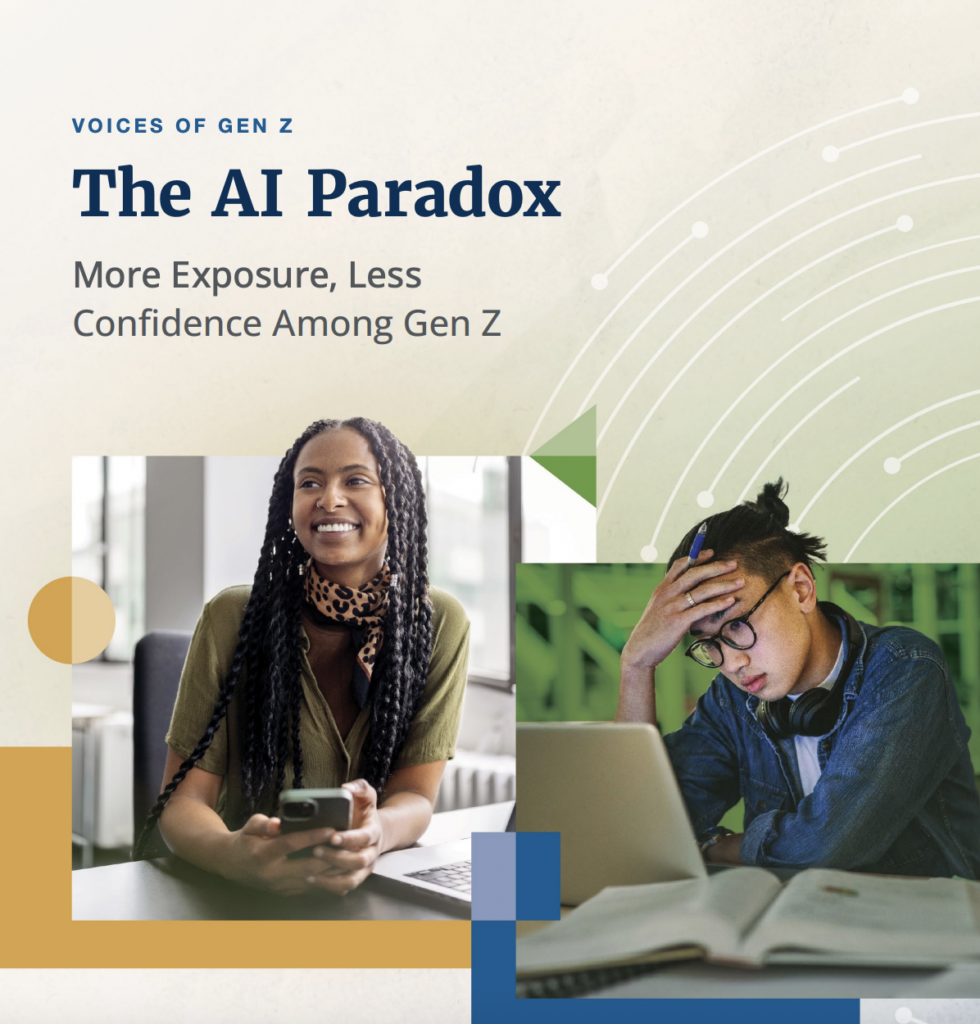
Research Report
The AI Paradox: More Exposure, Less Confidence Among Gen Z
This resource may be shared with proper attribution to the organization.
This resource may be shared with proper attribution to the organization.
This Gallup, Walton Family Foundation, and GSV report examines how Generation Z's relationship with artificial intelligence has evolved over the past year. Drawing on survey data from more than 1,500 14- to 29-year-olds, the report finds that while AI adoption has remained flat, negative sentiment has grown sharply, with declining excitement and hopefulness alongside rising anger and persistent anxiety. It explores Gen Z's skepticism toward AI's impact on creativity, critical thinking, and workplace trust, alongside growing recognition among students that AI skills will be essential for their education and careers.
Research Report
High School Awareness Research
This resource may be shared with proper attribution to the organization.
This resource may be shared with proper attribution to the organization.
This is a report containing the results of a study on new approaches in higher education, funded by the Charles Kock Foundation.
White Paper
Degrees of Risk: What Gen Z and Employers Think About Education-to-Career Pathways… and How Those Views are Changing
This resource may be shared with proper attribution to the organization.
This resource may be shared with proper attribution to the organization.
This is an examination of what is required to make a person employable, as well as what professional and educational success looks like. This study was commissioned by American Student Assistance (ASA) and Jobs for the Future (JFF). The research aimed to understand current familiarity with and perceptions of non-degree postsecondary pathways from both Gen Z and employer perspectives. This paper also makes recommendations for the way forward to expand high-quality postsecondary options for all learners.
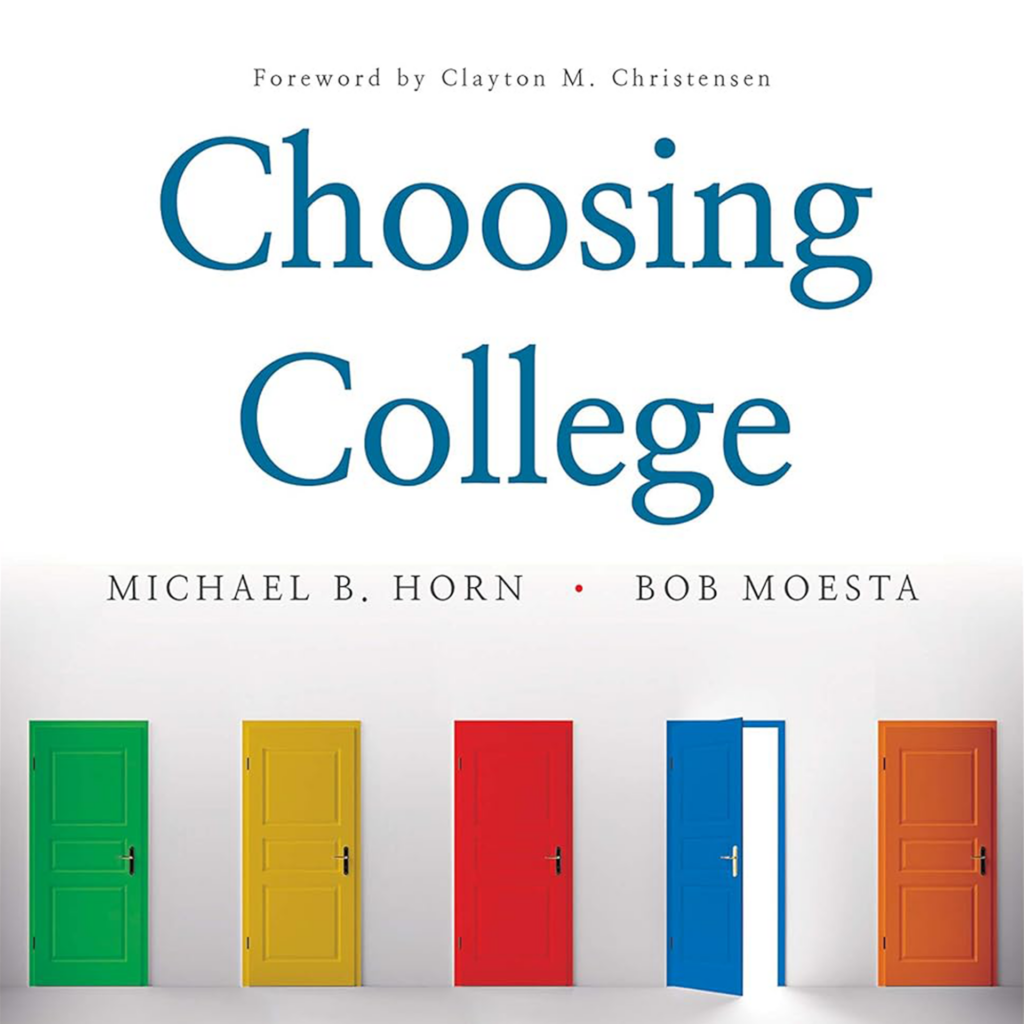
Book
Choosing College
This resource may be shared with proper attribution to the organization.
This resource may be shared with proper attribution to the organization.
This report looks at how people make decisions regarding higher education through “Jobs-to-be-Done” theory which interrogates and exposes the real reasons people make personal choices, from buying a milk shake to make life-changing decisions. The analysis based on this theory, provides important insights, both for college-bound students and their families, but also institutions of higher education, many of which might be tooling themselves to perform the wrong job.
Research Report
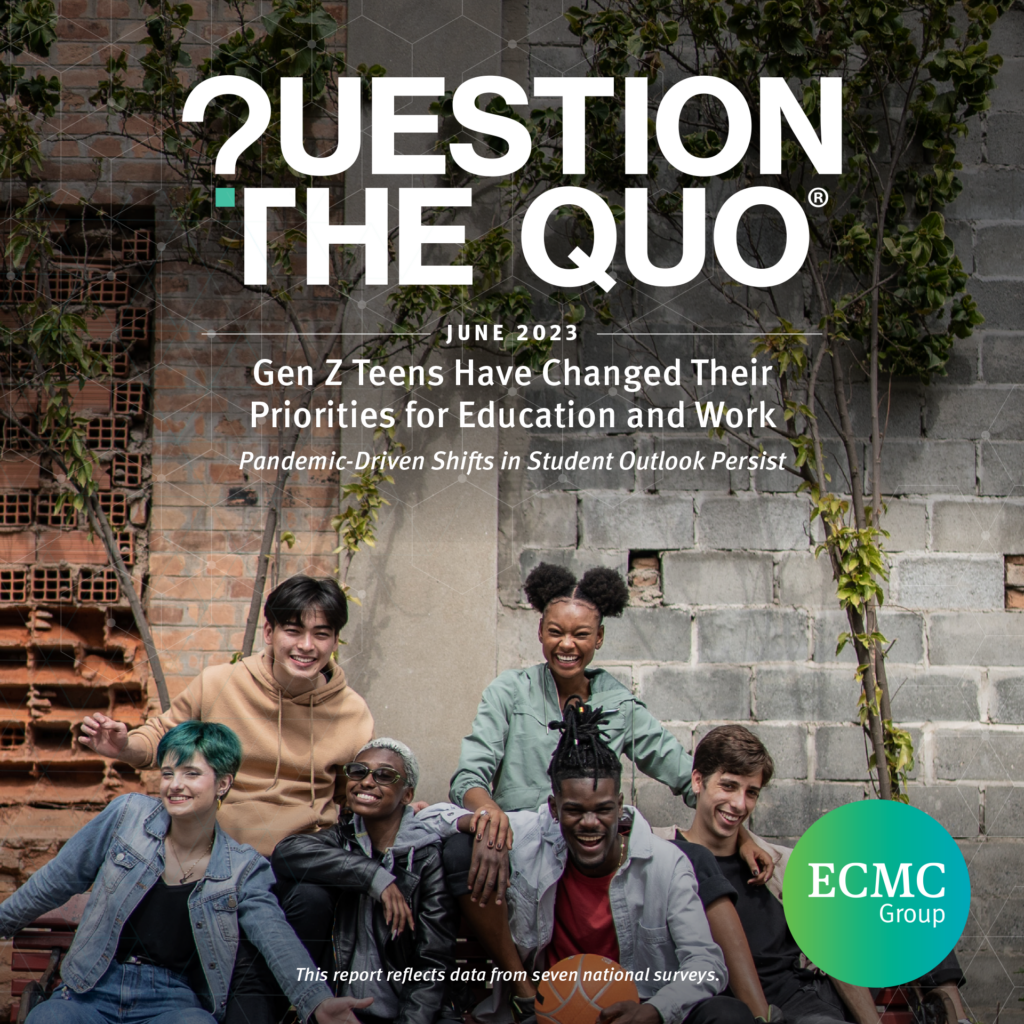
Question the Status Quo: Gen Z Teens Have Changed Their Priorities for Education and Work
This resource may be shared with proper attribution to the organization.
This resource may be shared with proper attribution to the organization.
Research Report
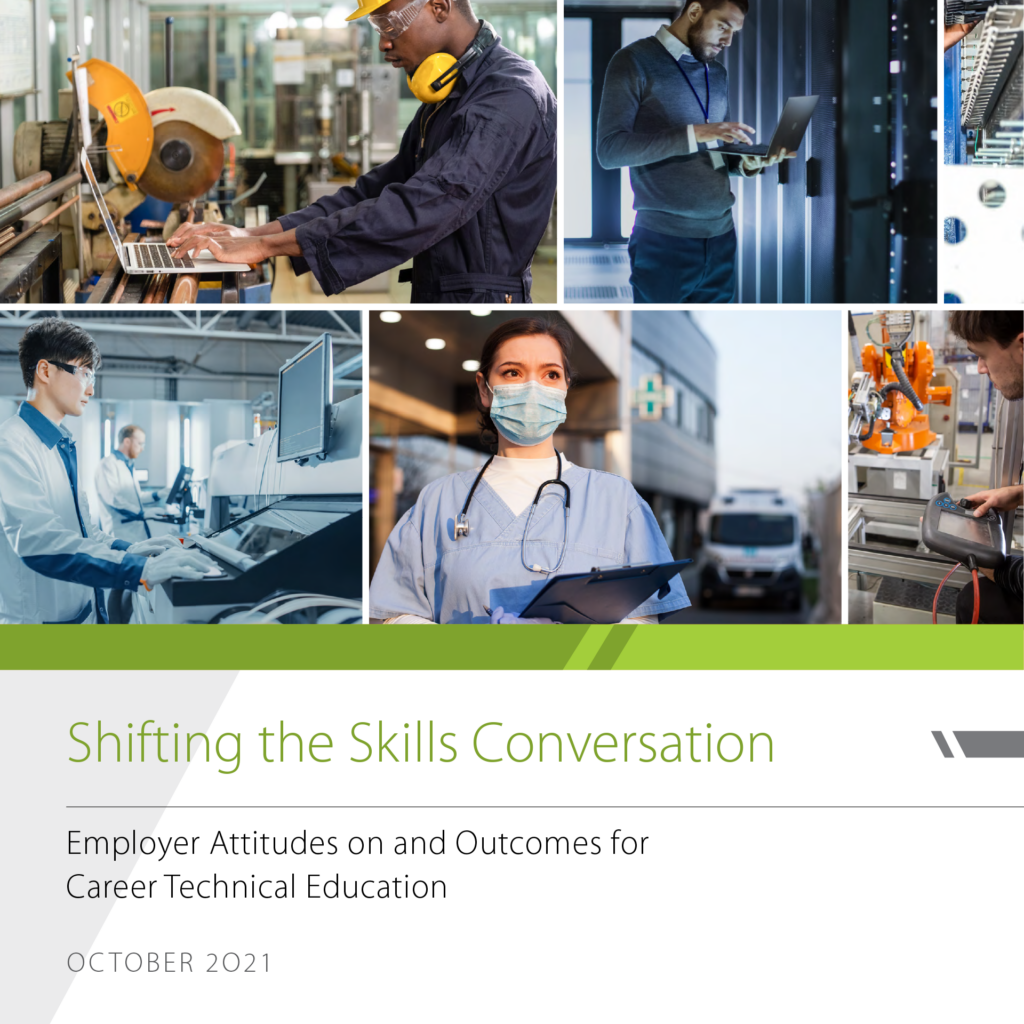
Shifting the Skills Conversation: Employer Attitudes and Outcomes of Career Technical Education
This resource may be shared with proper attribution to the organization.
This resource may be shared with proper attribution to the organization.
This resource provides tangible data points on employer attitudes toward Career Technical Education (CTE) and the positive return on investment CTE experiences provide for business and economic growth. Based on a national survey of more than 300 professionals actively involved in hiring decisions in in-demand fields, these new findings demonstrate that employers strongly support and see direct value in CTE. The findings also indicate that employer recognition and support for skills-focused hiring is growing and that employers back a greater public investment in CTE programs.
Playbook or Guidebook
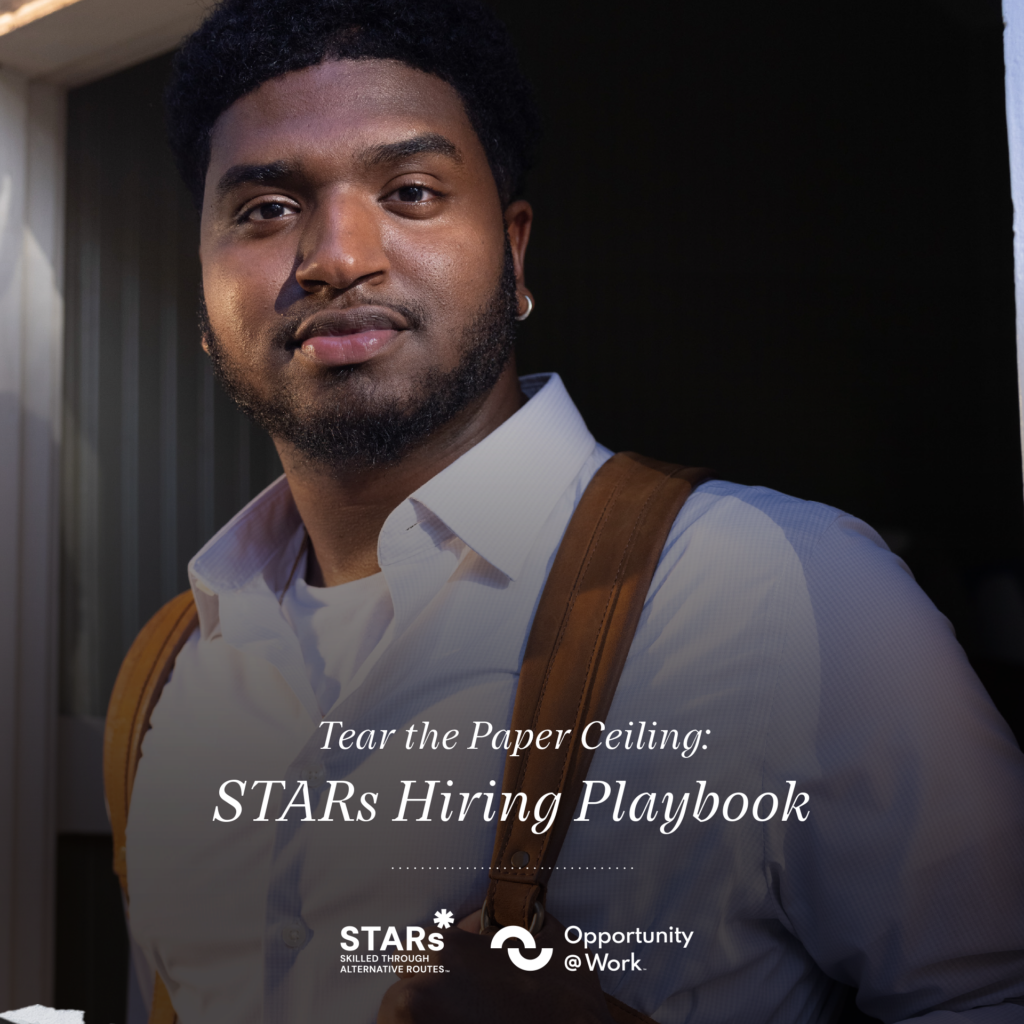
Tear the Paper Ceiling
This resource may be shared with proper attribution to the organization.
This resource may be shared with proper attribution to the organization.
The Tear the Paper Ceiling: STARs Hiring Playbook gives human resource professionals, talent leaders, and hiring managers practical tools and guidance to shift their hiring to include STARs - workers Skilled Through Alternative Routes.
Research Report
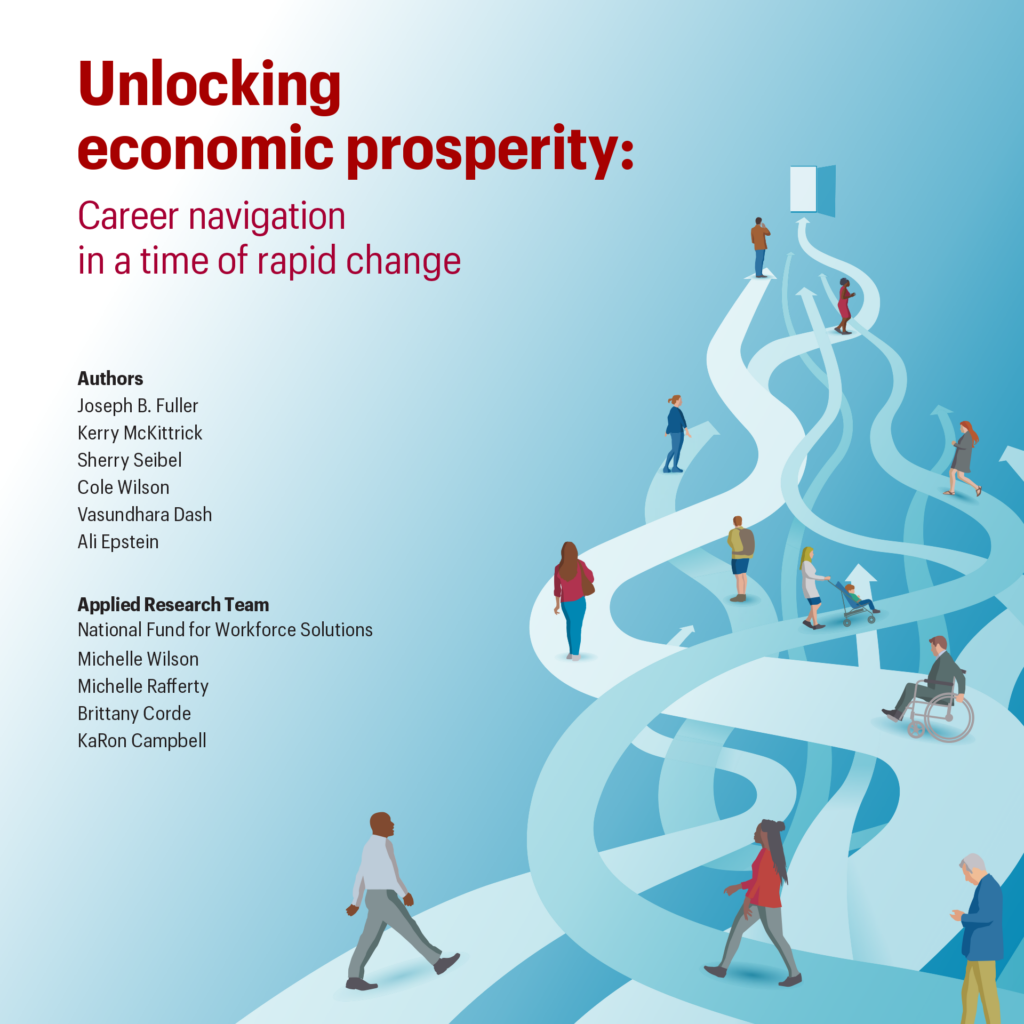
Unlocking Economic Prosperity
This resource may be shared with proper attribution to the organization.
This resource may be shared with proper attribution to the organization.
Playbook or Guidebook
Making the Case
This resource may be shared with proper attribution to the organization.
This resource may be shared with proper attribution to the organization.
This playbook gives people in the learn-and-work ecosystem key information they can use to make the case for incremental credentialing. Case-making requires different information for various audiences, including the campus community, employers and industry partners, funders, learners, and policymakers. The playbook covers: How to define incremental credentialing and incremental credentials, the benefits of incremental credentialing to various constituencies, and the four factors driving the case for incremental credentialing.
Filters
Research Report
The AI Paradox: More Exposure, Less Confidence Among Gen Z
This resource may be shared with proper attribution to the organization.
This resource may be shared with proper attribution to the organization.
This Gallup, Walton Family Foundation, and GSV report examines how Generation Z's relationship with artificial intelligence has evolved over the past year. Drawing on survey data from more than 1,500 14- to 29-year-olds, the report finds that while AI adoption has remained flat, negative sentiment has grown sharply, with declining excitement and hopefulness alongside rising anger and persistent anxiety. It explores Gen Z's skepticism toward AI's impact on creativity, critical thinking, and workplace trust, alongside growing recognition among students that AI skills will be essential for their education and careers.
Research Report
High School Awareness Research
This resource may be shared with proper attribution to the organization.
This resource may be shared with proper attribution to the organization.
This is a report containing the results of a study on new approaches in higher education, funded by the Charles Kock Foundation.
White Paper
Degrees of Risk: What Gen Z and Employers Think About Education-to-Career Pathways… and How Those Views are Changing
This resource may be shared with proper attribution to the organization.
This resource may be shared with proper attribution to the organization.
This is an examination of what is required to make a person employable, as well as what professional and educational success looks like. This study was commissioned by American Student Assistance (ASA) and Jobs for the Future (JFF). The research aimed to understand current familiarity with and perceptions of non-degree postsecondary pathways from both Gen Z and employer perspectives. This paper also makes recommendations for the way forward to expand high-quality postsecondary options for all learners.
Book
Choosing College
This resource may be shared with proper attribution to the organization.
This resource may be shared with proper attribution to the organization.
This report looks at how people make decisions regarding higher education through “Jobs-to-be-Done” theory which interrogates and exposes the real reasons people make personal choices, from buying a milk shake to make life-changing decisions. The analysis based on this theory, provides important insights, both for college-bound students and their families, but also institutions of higher education, many of which might be tooling themselves to perform the wrong job.
Research Report
Question the Status Quo: Gen Z Teens Have Changed Their Priorities for Education and Work
This resource may be shared with proper attribution to the organization.
This resource may be shared with proper attribution to the organization.
Research Report
Shifting the Skills Conversation: Employer Attitudes and Outcomes of Career Technical Education
This resource may be shared with proper attribution to the organization.
This resource may be shared with proper attribution to the organization.
This resource provides tangible data points on employer attitudes toward Career Technical Education (CTE) and the positive return on investment CTE experiences provide for business and economic growth. Based on a national survey of more than 300 professionals actively involved in hiring decisions in in-demand fields, these new findings demonstrate that employers strongly support and see direct value in CTE. The findings also indicate that employer recognition and support for skills-focused hiring is growing and that employers back a greater public investment in CTE programs.
Playbook or Guidebook
Tear the Paper Ceiling
This resource may be shared with proper attribution to the organization.
This resource may be shared with proper attribution to the organization.
The Tear the Paper Ceiling: STARs Hiring Playbook gives human resource professionals, talent leaders, and hiring managers practical tools and guidance to shift their hiring to include STARs - workers Skilled Through Alternative Routes.
Research Report
Unlocking Economic Prosperity
This resource may be shared with proper attribution to the organization.
This resource may be shared with proper attribution to the organization.
Playbook or Guidebook
Making the Case
This resource may be shared with proper attribution to the organization.
This resource may be shared with proper attribution to the organization.
This playbook gives people in the learn-and-work ecosystem key information they can use to make the case for incremental credentialing. Case-making requires different information for various audiences, including the campus community, employers and industry partners, funders, learners, and policymakers. The playbook covers: How to define incremental credentialing and incremental credentials, the benefits of incremental credentialing to various constituencies, and the four factors driving the case for incremental credentialing.