Pathways Resource Library
Tools to help people understand their options
Explore messaging, research, and resources from across the field—along with customizable, white-label tools that you can adapt, brand as your own, and use in your organization’s communications—to help you reach key audiences with language that builds confidence and expands what’s possible.
Research Report
Education at a Crossroads
This resource may be shared with proper attribution to the organization.
This resource may be shared with proper attribution to the organization.
High school graduates no longer see the traditional 4-year college pathway as their only postsecondary option, according to the latest research from YouScience®. This report contains insights into pathways students are choosing instead, where they turn for influence and guidance, and where there are opportunities for improvement. The report includes data and solutions for:
- Career and Technical Education (CTE) awareness.
- Post-graduation satisfaction.
- Educator/student interactions.
- Counselor impact.
- Aptitude discovery.
Book
Choosing College
This resource may be shared with proper attribution to the organization.
This resource may be shared with proper attribution to the organization.
This report looks at how people make decisions regarding higher education through “Jobs-to-be-Done” theory which interrogates and exposes the real reasons people make personal choices, from buying a milk shake to make life-changing decisions. The analysis based on this theory, provides important insights, both for college-bound students and their families, but also institutions of higher education, many of which might be tooling themselves to perform the wrong job.
Research Report
The American Workforce Index
This resource may be shared with proper attribution to the organization.
This resource may be shared with proper attribution to the organization.
Playbook or Guidebook
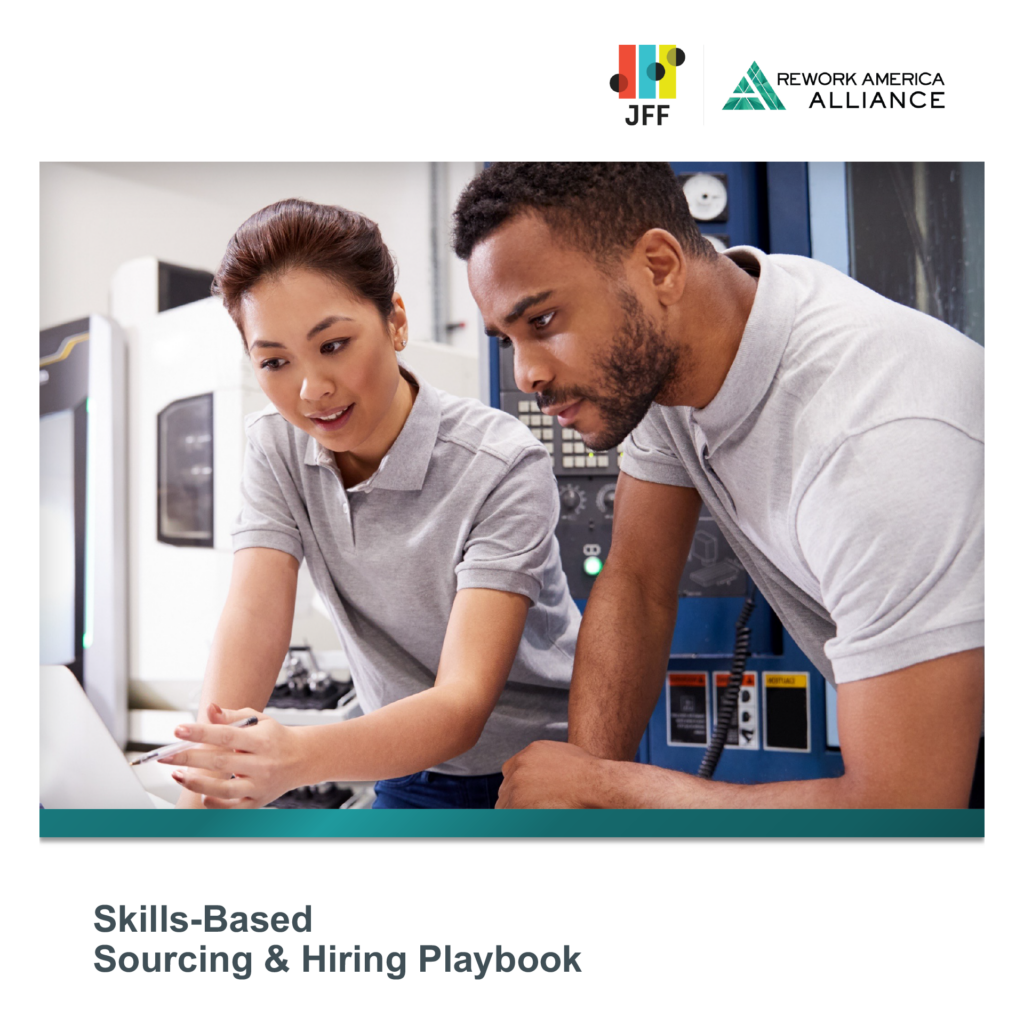
Skills-Based Sourcing and Hiring Playbook
This resource may be shared with proper attribution to the organization.
This resource may be shared with proper attribution to the organization.
This playbook is a step-by-step guide to implementing more equitable and effective approaches to employee recruiting, hiring, and advancement by embracing skills-first talent management practices.
Toolkit
What does it take to engage in narrative change
This resource may be shared with proper attribution to the organization.
This resource may be shared with proper attribution to the organization.
This website captures insights and lessons learned from the Pathways Narrative Project and shares tools and resources for organizations interested in engaging in narrative change as part of their mission and work. The Pathways Narrative Project is a two-year collaborative initiative, led by Wonder: Strategies for Good and supported by the Bill & Melinda Gates Foundation, Walton Family Foundation and others, that convened nine organizations to improve education and career pathways for young people. Together the cohort explored how to leverage the power of narrative to advance programs and systems change in the pathways space.
Toolkit
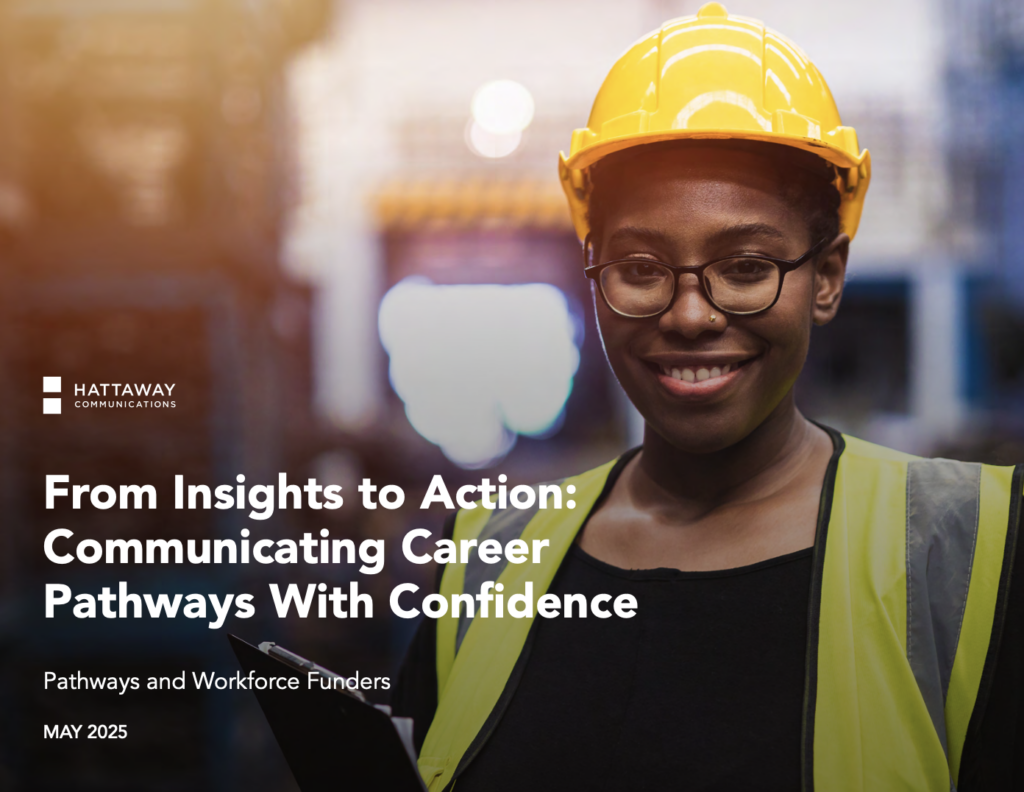
From Insights to Action: Communicating Career Pathways With Confidence
This resource may be shared with proper attribution to the organization.
This resource may be shared with proper attribution to the organization.
This communications toolkit is designed to help organizations and advocates effectively engage learners and employers regarding the value of career education and training programs as well as skill-based hiring. It offers research-backed messaging that reflects what people care about most—and what motivates them to take action. These messages don’t just describe the benefits of pathways programs, they also help audiences see these options as relevant, accessible, and worth pursuing. The guidance in this manual is grounded in science-based communication practices and shaped by extensive research, including a landscape analysis of messaging in the field and media, a nationally representative survey with message testing, roundtable discussions with learners and employers, and a series of pulse surveys.
This toolkit offers adaptable, ready-to-use messages, language, and themes to support outreach, engagement, and storytelling. Use them to strengthen your communications—whether you're writing a social post, developing a presentation, or talking with partners and stakeholders. The messages are designed to be flexible; feel free to use them as written or tailor them to fit your audience and voice.
Research Report
The Pathways Narrative Project
This resource may be shared with proper attribution to the organization.
This resource may be shared with proper attribution to the organization.
Pathways Narrative is a cohort-based pilot project focused on the education and career pathways space. Each of the nine organizations in the cohort works with dedicated strategists from Wonder: Strategies for Good to develop a narrative change research project that aligns with and advances the organization’s goals. Get to know the cohort partners here, and explore the many possible approaches to narrative change.
Research Report
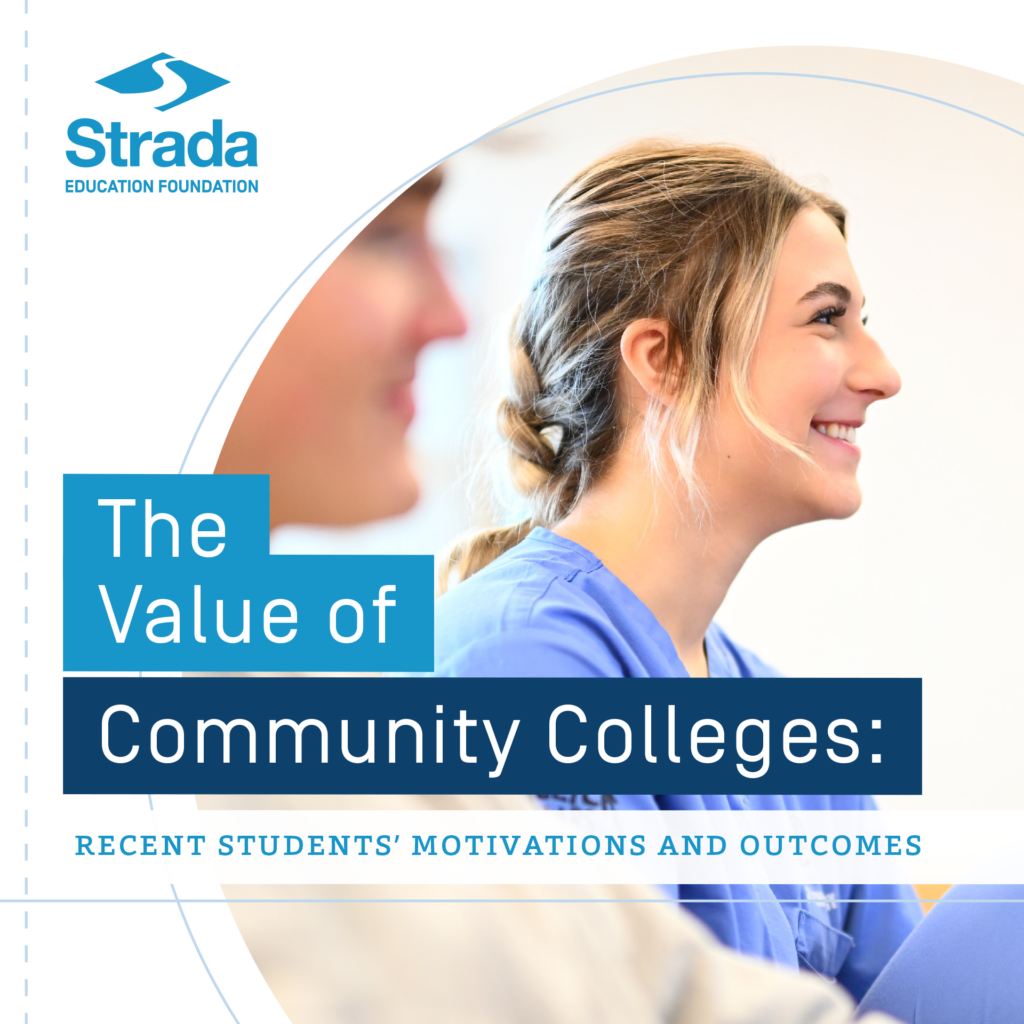
The Value of Community Colleges: Recent Students’ Motivations and Outcomes
This resource may be shared with proper attribution to the organization.
This resource may be shared with proper attribution to the organization.
This study offers new insights about value community colleges provide and the range of needs that they serve. It examines recent community college students' motivations for enrolling, and their self-reported perceptions of the value of their education and training experiences, and the degree to which they acheived their goals for enrolling.
White Paper
Accepting that Four Year College is No Longer a Pancea
This resource may be shared with proper attribution to the organization.
This resource may be shared with proper attribution to the organization.
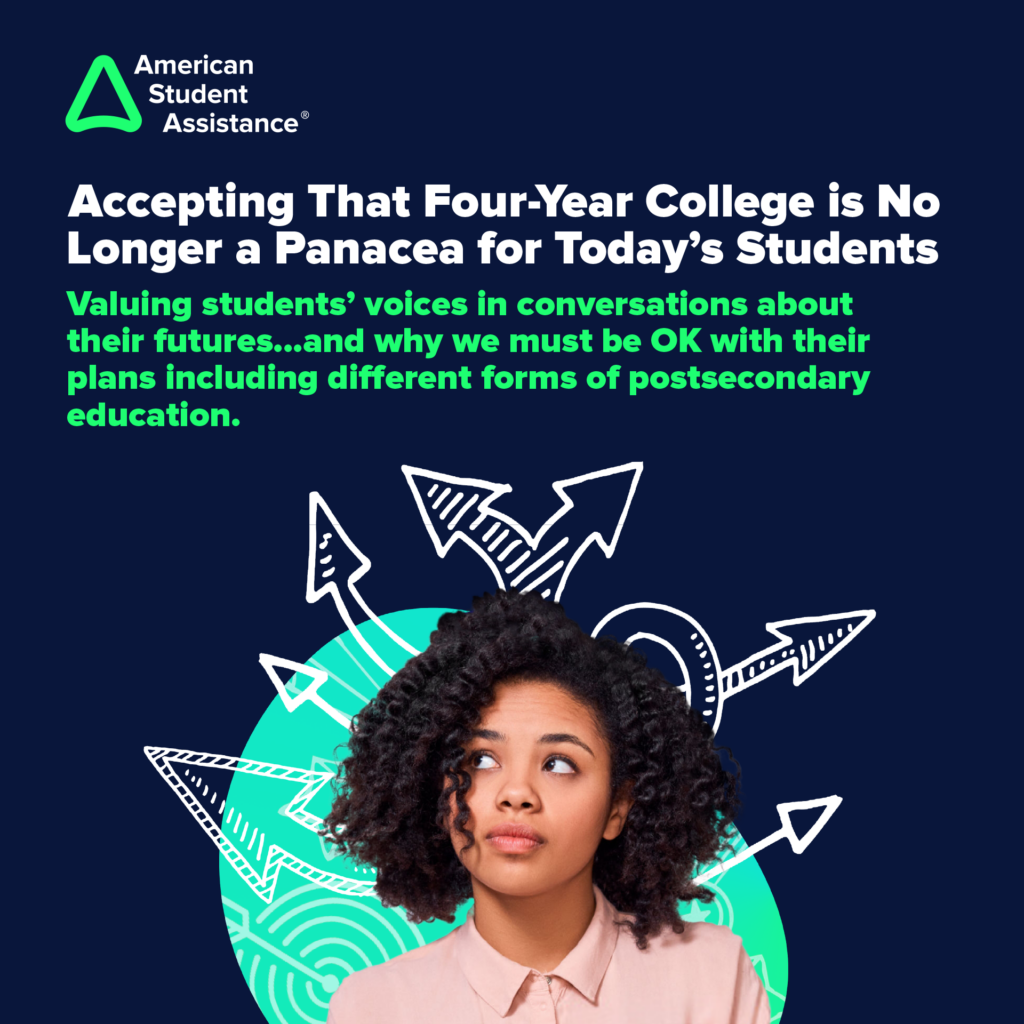
This whitepaper resource by the American Student Assistance explains the importance of valuing students’ voices in conversations about their futures, and why families and communities must be OK with their plans including different forms of postsecondary education. Coverage includes the contextual differences of the college landscape "then vs. now", the pressures of decisionmaking and college attendence, policy recommendation, college students' aspirations, and how to guide them in times of uncertainty.
Filters
Research Report
Education at a Crossroads
This resource may be shared with proper attribution to the organization.
This resource may be shared with proper attribution to the organization.
High school graduates no longer see the traditional 4-year college pathway as their only postsecondary option, according to the latest research from YouScience®. This report contains insights into pathways students are choosing instead, where they turn for influence and guidance, and where there are opportunities for improvement. The report includes data and solutions for:
- Career and Technical Education (CTE) awareness.
- Post-graduation satisfaction.
- Educator/student interactions.
- Counselor impact.
- Aptitude discovery.
Book
Choosing College
This resource may be shared with proper attribution to the organization.
This resource may be shared with proper attribution to the organization.
This report looks at how people make decisions regarding higher education through “Jobs-to-be-Done” theory which interrogates and exposes the real reasons people make personal choices, from buying a milk shake to make life-changing decisions. The analysis based on this theory, provides important insights, both for college-bound students and their families, but also institutions of higher education, many of which might be tooling themselves to perform the wrong job.
Research Report
The American Workforce Index
This resource may be shared with proper attribution to the organization.
This resource may be shared with proper attribution to the organization.
Playbook or Guidebook
Skills-Based Sourcing and Hiring Playbook
This resource may be shared with proper attribution to the organization.
This resource may be shared with proper attribution to the organization.
This playbook is a step-by-step guide to implementing more equitable and effective approaches to employee recruiting, hiring, and advancement by embracing skills-first talent management practices.
Toolkit
What does it take to engage in narrative change
This resource may be shared with proper attribution to the organization.
This resource may be shared with proper attribution to the organization.
This website captures insights and lessons learned from the Pathways Narrative Project and shares tools and resources for organizations interested in engaging in narrative change as part of their mission and work. The Pathways Narrative Project is a two-year collaborative initiative, led by Wonder: Strategies for Good and supported by the Bill & Melinda Gates Foundation, Walton Family Foundation and others, that convened nine organizations to improve education and career pathways for young people. Together the cohort explored how to leverage the power of narrative to advance programs and systems change in the pathways space.
Toolkit
From Insights to Action: Communicating Career Pathways With Confidence
This resource may be shared with proper attribution to the organization.
This resource may be shared with proper attribution to the organization.
This communications toolkit is designed to help organizations and advocates effectively engage learners and employers regarding the value of career education and training programs as well as skill-based hiring. It offers research-backed messaging that reflects what people care about most—and what motivates them to take action. These messages don’t just describe the benefits of pathways programs, they also help audiences see these options as relevant, accessible, and worth pursuing. The guidance in this manual is grounded in science-based communication practices and shaped by extensive research, including a landscape analysis of messaging in the field and media, a nationally representative survey with message testing, roundtable discussions with learners and employers, and a series of pulse surveys.
This toolkit offers adaptable, ready-to-use messages, language, and themes to support outreach, engagement, and storytelling. Use them to strengthen your communications—whether you're writing a social post, developing a presentation, or talking with partners and stakeholders. The messages are designed to be flexible; feel free to use them as written or tailor them to fit your audience and voice.
Research Report
The Pathways Narrative Project
This resource may be shared with proper attribution to the organization.
This resource may be shared with proper attribution to the organization.
Pathways Narrative is a cohort-based pilot project focused on the education and career pathways space. Each of the nine organizations in the cohort works with dedicated strategists from Wonder: Strategies for Good to develop a narrative change research project that aligns with and advances the organization’s goals. Get to know the cohort partners here, and explore the many possible approaches to narrative change.
Research Report
The Value of Community Colleges: Recent Students’ Motivations and Outcomes
This resource may be shared with proper attribution to the organization.
This resource may be shared with proper attribution to the organization.
This study offers new insights about value community colleges provide and the range of needs that they serve. It examines recent community college students' motivations for enrolling, and their self-reported perceptions of the value of their education and training experiences, and the degree to which they acheived their goals for enrolling.
White Paper
Accepting that Four Year College is No Longer a Pancea
This resource may be shared with proper attribution to the organization.
This resource may be shared with proper attribution to the organization.
This whitepaper resource by the American Student Assistance explains the importance of valuing students’ voices in conversations about their futures, and why families and communities must be OK with their plans including different forms of postsecondary education. Coverage includes the contextual differences of the college landscape "then vs. now", the pressures of decisionmaking and college attendence, policy recommendation, college students' aspirations, and how to guide them in times of uncertainty.