Pathways Resource Library
Tools to help people understand their options
Explore messaging, research, and resources from across the field—along with customizable, white-label tools that you can adapt, brand as your own, and use in your organization’s communications—to help you reach key audiences with language that builds confidence and expands what’s possible.
Toolkit
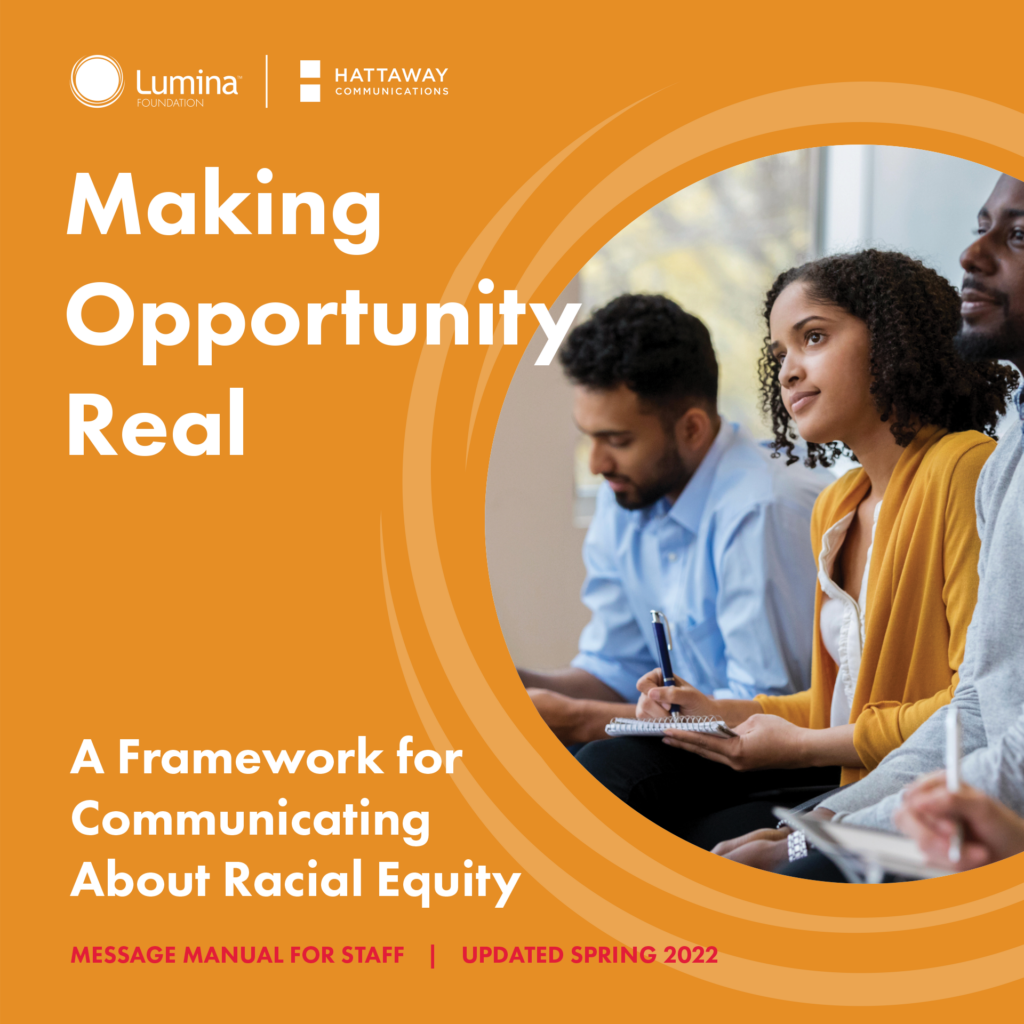
Making Opportunity Real: A Framework for Communicating About Racial Justice
This resource may be shared with proper attribution to the organization.
This resource may be shared with proper attribution to the organization.
This Message Manual contains research-based language and guidance for anyone communicating about racial justice and equity in education. The manual introduces a Racial Justice and Racial Equity Frame that provides guidance for communicating about justice and equity in aspirational ways that move beyond buzzwords and invite new audiences into the conversation. The guide provides research-tested language and specific examples of how to apply the frame when sharing data, crafting story-driven content, and tailoring messages for different audiences.
Playbook or Guidebook
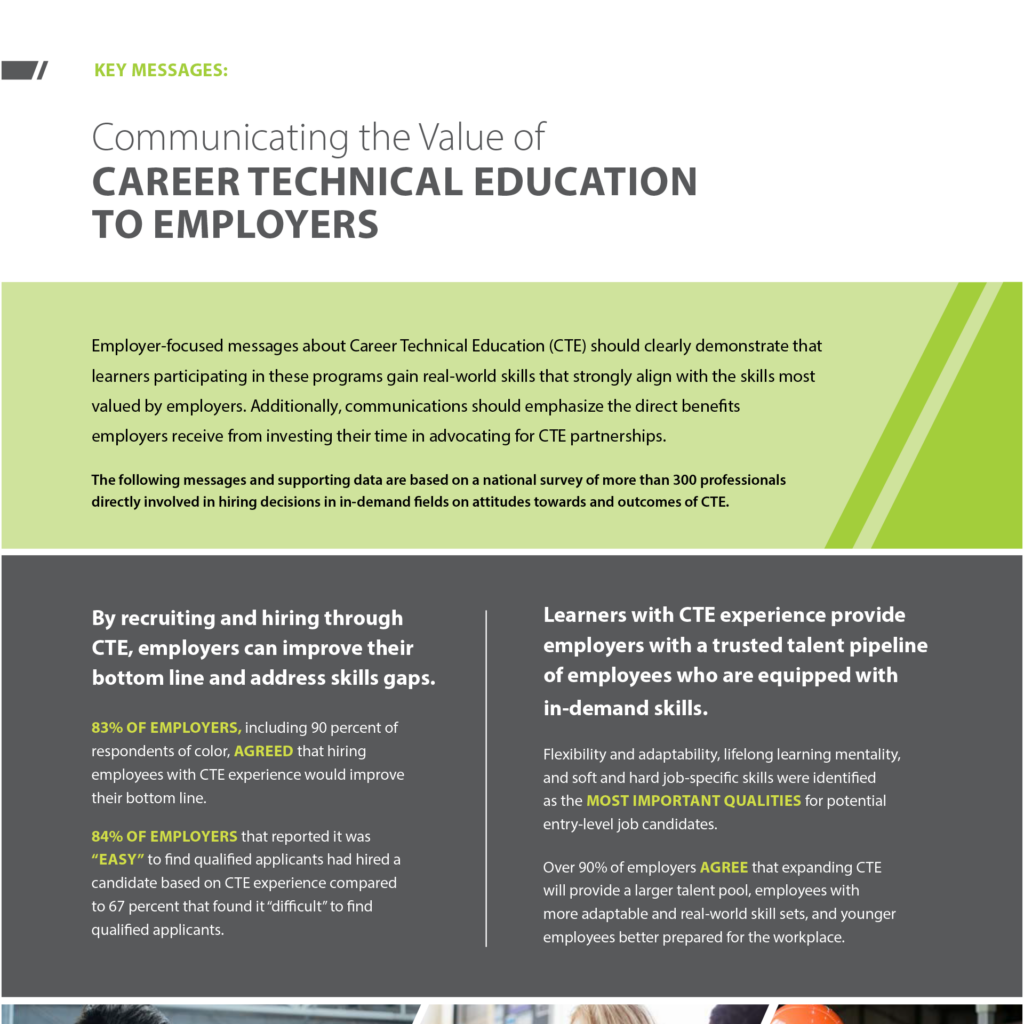
Shifting the Skills Conversation: Employer Attitudes on and Outcomes for Career Technical Education
This resource may be shared with proper attribution to the organization.
This resource may be shared with proper attribution to the organization.
Shifting the Skills Conversation: Employer Attitudes and Outcomes of Career Technical Education provides tangible data points on employer attitudes toward Career Technical Education (CTE) and the positive return on investment CTE experiences provide for business and economic growth. Based on a national survey of more than 300 professionals actively involved in hiring decisions in in-demand fields, these new findings demonstrate that employers strongly support and see direct value in CTE. The findings also indicate that employer recognition and support for skills-focused hiring is growing and that employers back a greater public investment in CTE programs and supports
Toolkit
What does it take to engage in narrative change
This resource may be shared with proper attribution to the organization.
This resource may be shared with proper attribution to the organization.
This website captures insights and lessons learned from the Pathways Narrative Project and shares tools and resources for organizations interested in engaging in narrative change as part of their mission and work. The Pathways Narrative Project is a two-year collaborative initiative, led by Wonder: Strategies for Good and supported by the Bill & Melinda Gates Foundation, Walton Family Foundation and others, that convened nine organizations to improve education and career pathways for young people. Together the cohort explored how to leverage the power of narrative to advance programs and systems change in the pathways space.
White Paper
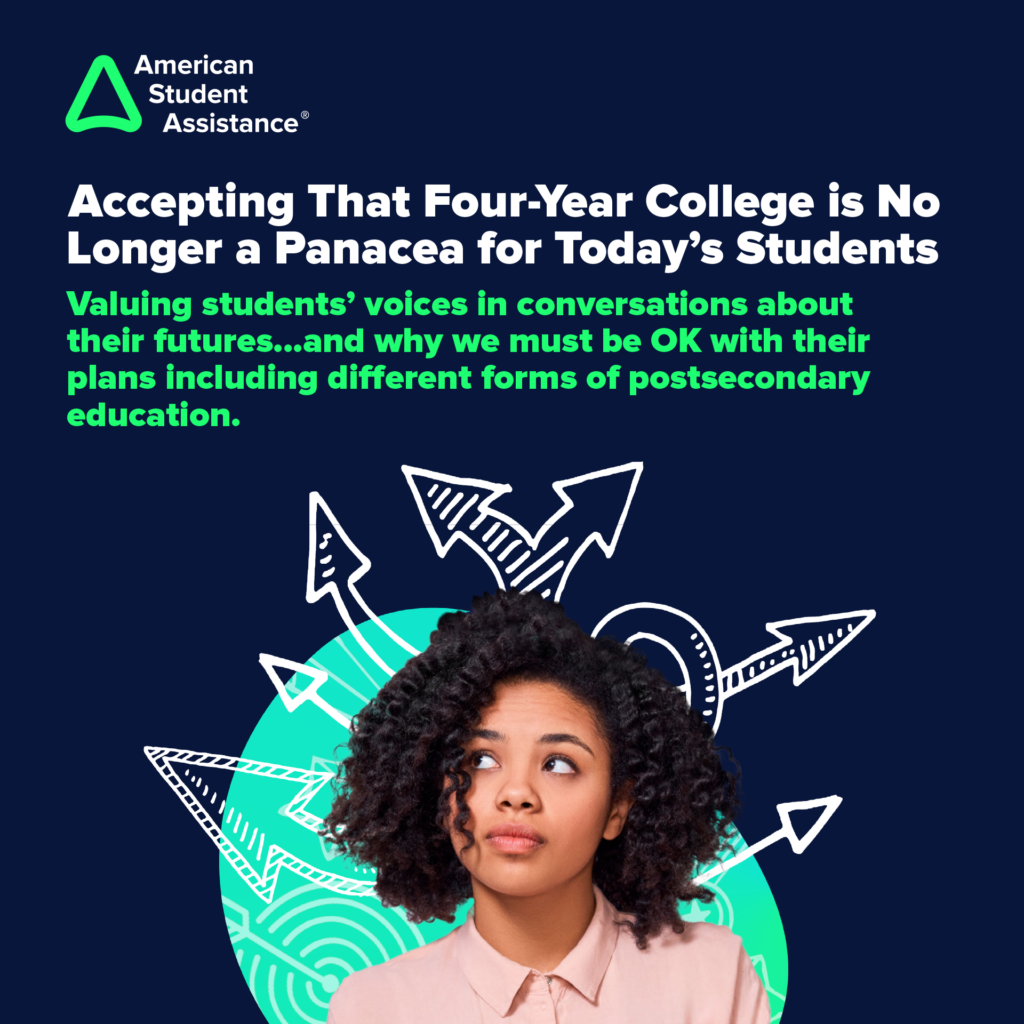
Accepting that Four Year College is No Longer a Pancea
This resource may be shared with proper attribution to the organization.
This resource may be shared with proper attribution to the organization.
This whitepaper resource by the American Student Assistance explains the importance of valuing students’ voices in conversations about their futures, and why families and communities must be OK with their plans including different forms of postsecondary education. Coverage includes the contextual differences of the college landscape "then vs. now", the pressures of decisionmaking and college attendence, policy recommendation, college students' aspirations, and how to guide them in times of uncertainty.
Research Report
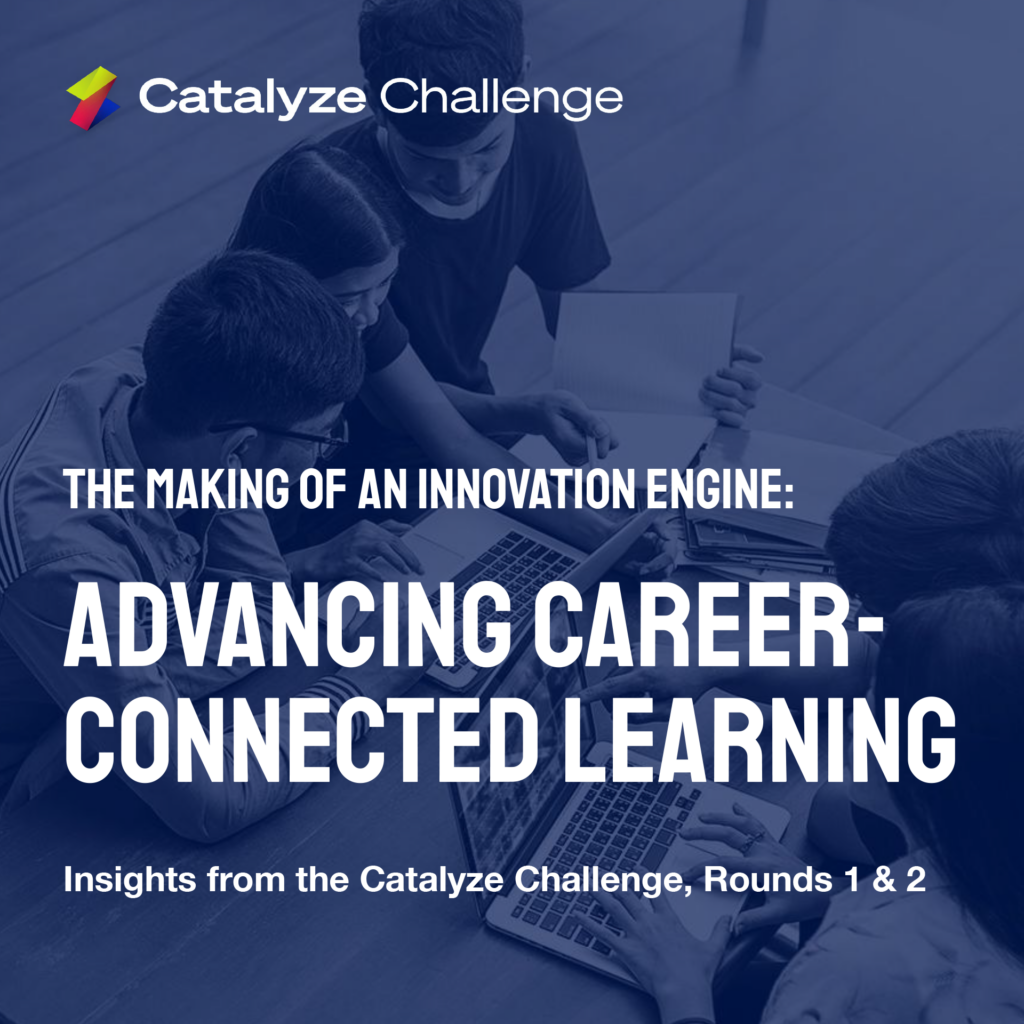
The Making of an Innovation Engine: Advancing Career-Connected Learning
This resource may be shared with proper attribution to the organization.
This resource may be shared with proper attribution to the organization.
The Catalyze Challenge set out to answer two core research questions: was it successful in catalyzing new innovation and, if so, what type? It employs a three-stage review process involving a collective effort to identify unique, groundbreaking career-connected models that are heavily invested in the communities they serve. The key takeaways that are explored in depth throughout this report.
Research Report
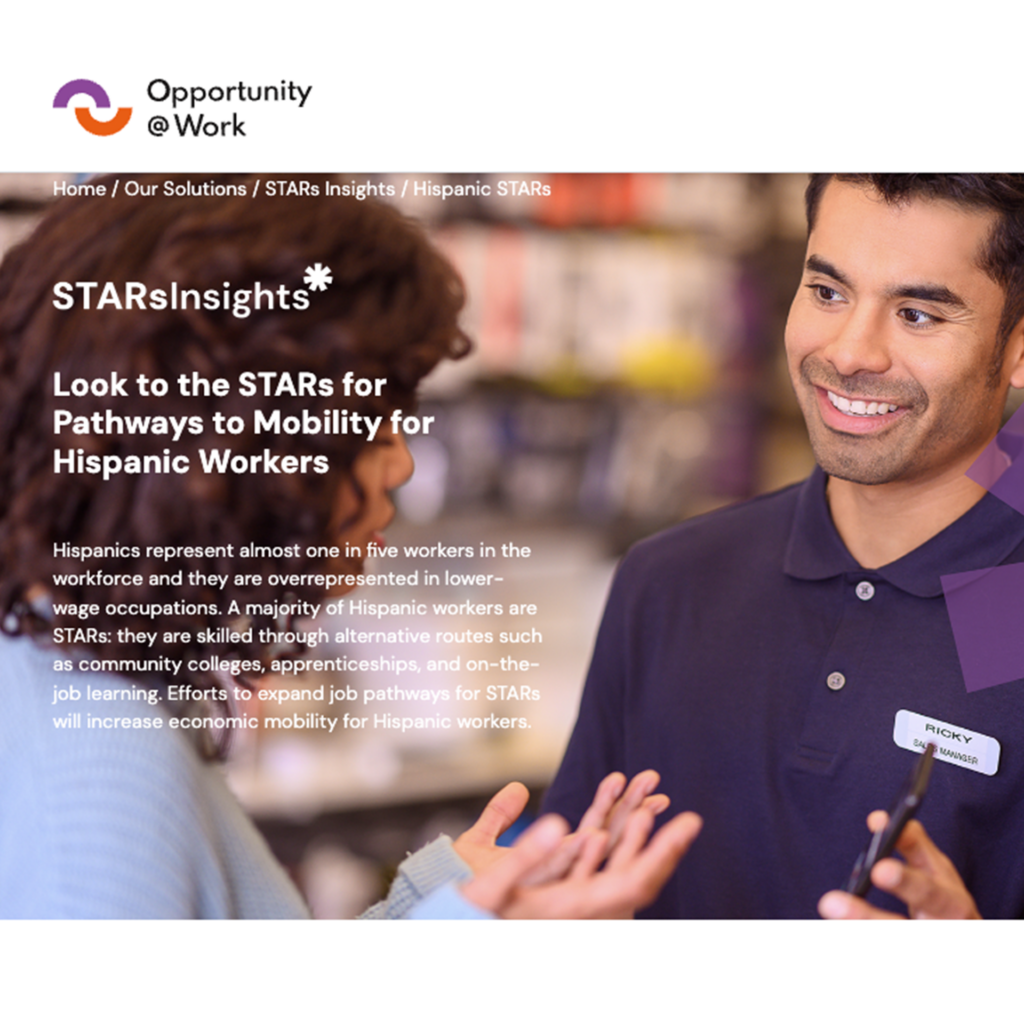
Hispanic STARs: Smart Employers Aim for Hispanic STARs
This resource may be shared with proper attribution to the organization.
This resource may be shared with proper attribution to the organization.
This report highlights the significant presence of Hispanic workers who are skilled through alternative routes (STARs) in the workforce and their overrepresentation in lower-wage occupations. It discusses the barriers these workers face due to degree requirements and suggests that employers prioritize skills over formal education to improve economic mobility for Hispanic STARs.
Research Report
Family Voices
This resource may be shared with proper attribution to the organization.
This resource may be shared with proper attribution to the organization.
Faced with unprecedented change in the postsecondary landscape, America's families are wrestling with questions of college, careers, skills development and meaningful work. This study aimed to understand American parents' aspirations for their children after high school, as well as the barriers they face to following a preferred postsecondary path.
Playbook or Guidebook
Tear the Paper Ceiling
This resource may be shared with proper attribution to the organization.
This resource may be shared with proper attribution to the organization.
The Tear the Paper Ceiling: STARs Hiring Playbook gives human resource professionals, talent leaders, and hiring managers practical tools and guidance to shift their hiring to include STARs - workers Skilled Through Alternative Routes.
White Paper
Degrees of Risk: What Gen Z and Employers Think About Education-to-Career Pathways… and How Those Views are Changing
This resource may be shared with proper attribution to the organization.
This resource may be shared with proper attribution to the organization.
This is an examination of what is required to make a person employable, as well as what professional and educational success looks like. This study was commissioned by American Student Assistance (ASA) and Jobs for the Future (JFF). The research aimed to understand current familiarity with and perceptions of non-degree postsecondary pathways from both Gen Z and employer perspectives. This paper also makes recommendations for the way forward to expand high-quality postsecondary options for all learners.
Filters
Toolkit
Making Opportunity Real: A Framework for Communicating About Racial Justice
This resource may be shared with proper attribution to the organization.
This resource may be shared with proper attribution to the organization.
This Message Manual contains research-based language and guidance for anyone communicating about racial justice and equity in education. The manual introduces a Racial Justice and Racial Equity Frame that provides guidance for communicating about justice and equity in aspirational ways that move beyond buzzwords and invite new audiences into the conversation. The guide provides research-tested language and specific examples of how to apply the frame when sharing data, crafting story-driven content, and tailoring messages for different audiences.
Playbook or Guidebook
Shifting the Skills Conversation: Employer Attitudes on and Outcomes for Career Technical Education
This resource may be shared with proper attribution to the organization.
This resource may be shared with proper attribution to the organization.
Shifting the Skills Conversation: Employer Attitudes and Outcomes of Career Technical Education provides tangible data points on employer attitudes toward Career Technical Education (CTE) and the positive return on investment CTE experiences provide for business and economic growth. Based on a national survey of more than 300 professionals actively involved in hiring decisions in in-demand fields, these new findings demonstrate that employers strongly support and see direct value in CTE. The findings also indicate that employer recognition and support for skills-focused hiring is growing and that employers back a greater public investment in CTE programs and supports
Toolkit
What does it take to engage in narrative change
This resource may be shared with proper attribution to the organization.
This resource may be shared with proper attribution to the organization.
This website captures insights and lessons learned from the Pathways Narrative Project and shares tools and resources for organizations interested in engaging in narrative change as part of their mission and work. The Pathways Narrative Project is a two-year collaborative initiative, led by Wonder: Strategies for Good and supported by the Bill & Melinda Gates Foundation, Walton Family Foundation and others, that convened nine organizations to improve education and career pathways for young people. Together the cohort explored how to leverage the power of narrative to advance programs and systems change in the pathways space.
White Paper
Accepting that Four Year College is No Longer a Pancea
This resource may be shared with proper attribution to the organization.
This resource may be shared with proper attribution to the organization.
This whitepaper resource by the American Student Assistance explains the importance of valuing students’ voices in conversations about their futures, and why families and communities must be OK with their plans including different forms of postsecondary education. Coverage includes the contextual differences of the college landscape "then vs. now", the pressures of decisionmaking and college attendence, policy recommendation, college students' aspirations, and how to guide them in times of uncertainty.
Research Report
The Making of an Innovation Engine: Advancing Career-Connected Learning
This resource may be shared with proper attribution to the organization.
This resource may be shared with proper attribution to the organization.
The Catalyze Challenge set out to answer two core research questions: was it successful in catalyzing new innovation and, if so, what type? It employs a three-stage review process involving a collective effort to identify unique, groundbreaking career-connected models that are heavily invested in the communities they serve. The key takeaways that are explored in depth throughout this report.
Research Report
Hispanic STARs: Smart Employers Aim for Hispanic STARs
This resource may be shared with proper attribution to the organization.
This resource may be shared with proper attribution to the organization.
This report highlights the significant presence of Hispanic workers who are skilled through alternative routes (STARs) in the workforce and their overrepresentation in lower-wage occupations. It discusses the barriers these workers face due to degree requirements and suggests that employers prioritize skills over formal education to improve economic mobility for Hispanic STARs.
Research Report
Family Voices
This resource may be shared with proper attribution to the organization.
This resource may be shared with proper attribution to the organization.
Faced with unprecedented change in the postsecondary landscape, America's families are wrestling with questions of college, careers, skills development and meaningful work. This study aimed to understand American parents' aspirations for their children after high school, as well as the barriers they face to following a preferred postsecondary path.
Playbook or Guidebook
Tear the Paper Ceiling
This resource may be shared with proper attribution to the organization.
This resource may be shared with proper attribution to the organization.
The Tear the Paper Ceiling: STARs Hiring Playbook gives human resource professionals, talent leaders, and hiring managers practical tools and guidance to shift their hiring to include STARs - workers Skilled Through Alternative Routes.
White Paper
Degrees of Risk: What Gen Z and Employers Think About Education-to-Career Pathways… and How Those Views are Changing
This resource may be shared with proper attribution to the organization.
This resource may be shared with proper attribution to the organization.
This is an examination of what is required to make a person employable, as well as what professional and educational success looks like. This study was commissioned by American Student Assistance (ASA) and Jobs for the Future (JFF). The research aimed to understand current familiarity with and perceptions of non-degree postsecondary pathways from both Gen Z and employer perspectives. This paper also makes recommendations for the way forward to expand high-quality postsecondary options for all learners.