Pathways Resource Library
Tools to help people understand their options
Explore messaging, research, and resources from across the field—along with customizable, white-label tools that you can adapt, brand as your own, and use in your organization’s communications—to help you reach key audiences with language that builds confidence and expands what’s possible.
Playbook or Guidebook
Making the Case
This resource may be shared with proper attribution to the organization.
This resource may be shared with proper attribution to the organization.
This playbook gives people in the learn-and-work ecosystem key information they can use to make the case for incremental credentialing. Case-making requires different information for various audiences, including the campus community, employers and industry partners, funders, learners, and policymakers. The playbook covers: How to define incremental credentialing and incremental credentials, the benefits of incremental credentialing to various constituencies, and the four factors driving the case for incremental credentialing.
Research Report
Student Ability Report
This resource may be shared with proper attribution to the organization.
This resource may be shared with proper attribution to the organization.
The State of the Future U.S. Workforce: Student Ability Report analyzes anonymized data from the YouScience Discovery aptitude-based career guidance assessments taken in U.S. high schools (grades 9 through 12) across all 50 states in 2021. They outline our findings and suggest solutions that address the challenge in a holistic, practical way in this report.
Playbook or Guidebook
Building a Communications and Marketing Strategy in a State or Institution for Incremental Credentialing
This resource may be shared with proper attribution to the organization.
This resource may be shared with proper attribution to the organization.
Communications and marketing are critical in the effort to transform the nation’s degree-centric postsecondary model to an incremental credentialing system. To support such a major transformation, communications and marketing are needed at three levels: state and institution Wide, individual credential and program levels, and nationwide. This Playbook focuses on the first of these.

Community Resource
Career Ready Network
This resource may be shared with proper attribution to the organization.
This resource may be shared with proper attribution to the organization.
A unified directory of organizations and employers offering work-based learning opportunities—such as internships, job shadows, and apprenticeships— to help decision-makers find, compare, and connect with providers.
Playbook or Guidebook
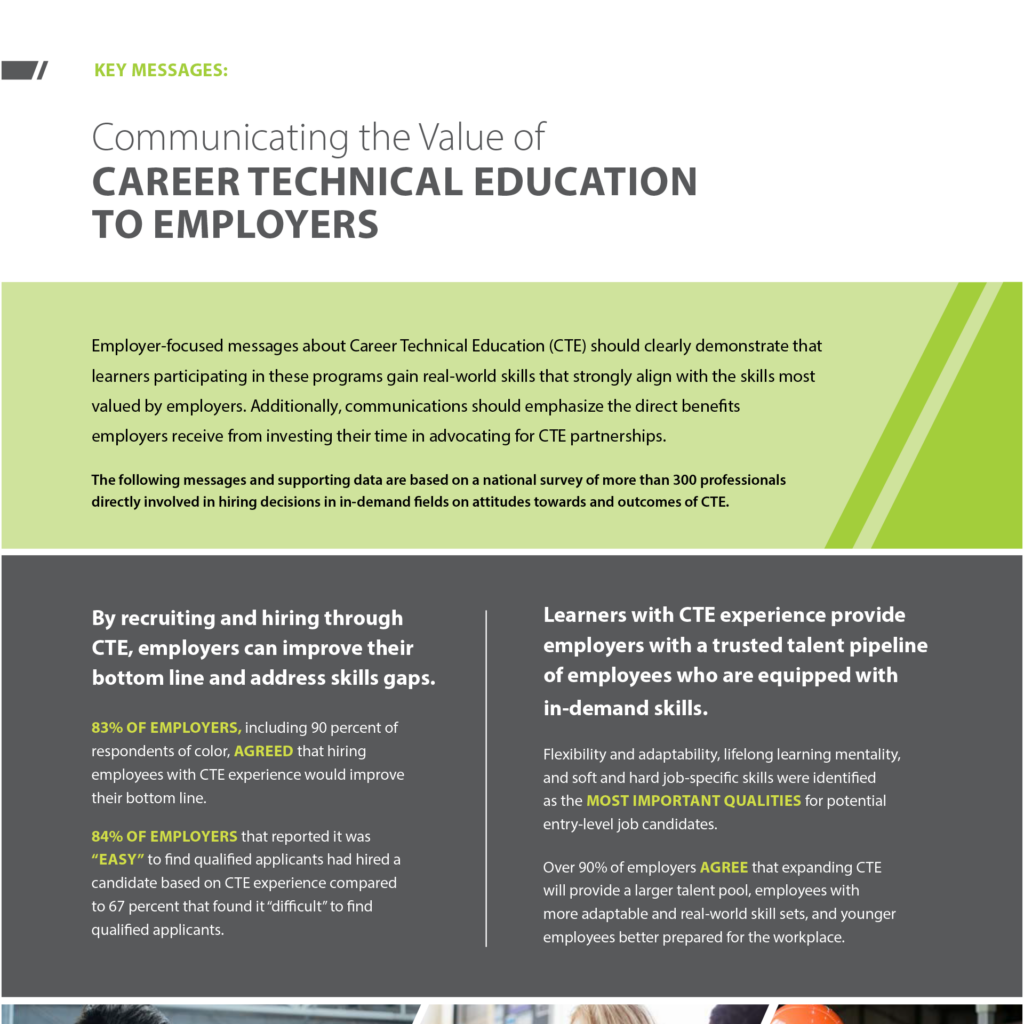
Shifting the Skills Conversation: Employer Attitudes on and Outcomes for Career Technical Education
This resource may be shared with proper attribution to the organization.
This resource may be shared with proper attribution to the organization.
Shifting the Skills Conversation: Employer Attitudes and Outcomes of Career Technical Education provides tangible data points on employer attitudes toward Career Technical Education (CTE) and the positive return on investment CTE experiences provide for business and economic growth. Based on a national survey of more than 300 professionals actively involved in hiring decisions in in-demand fields, these new findings demonstrate that employers strongly support and see direct value in CTE. The findings also indicate that employer recognition and support for skills-focused hiring is growing and that employers back a greater public investment in CTE programs and supports
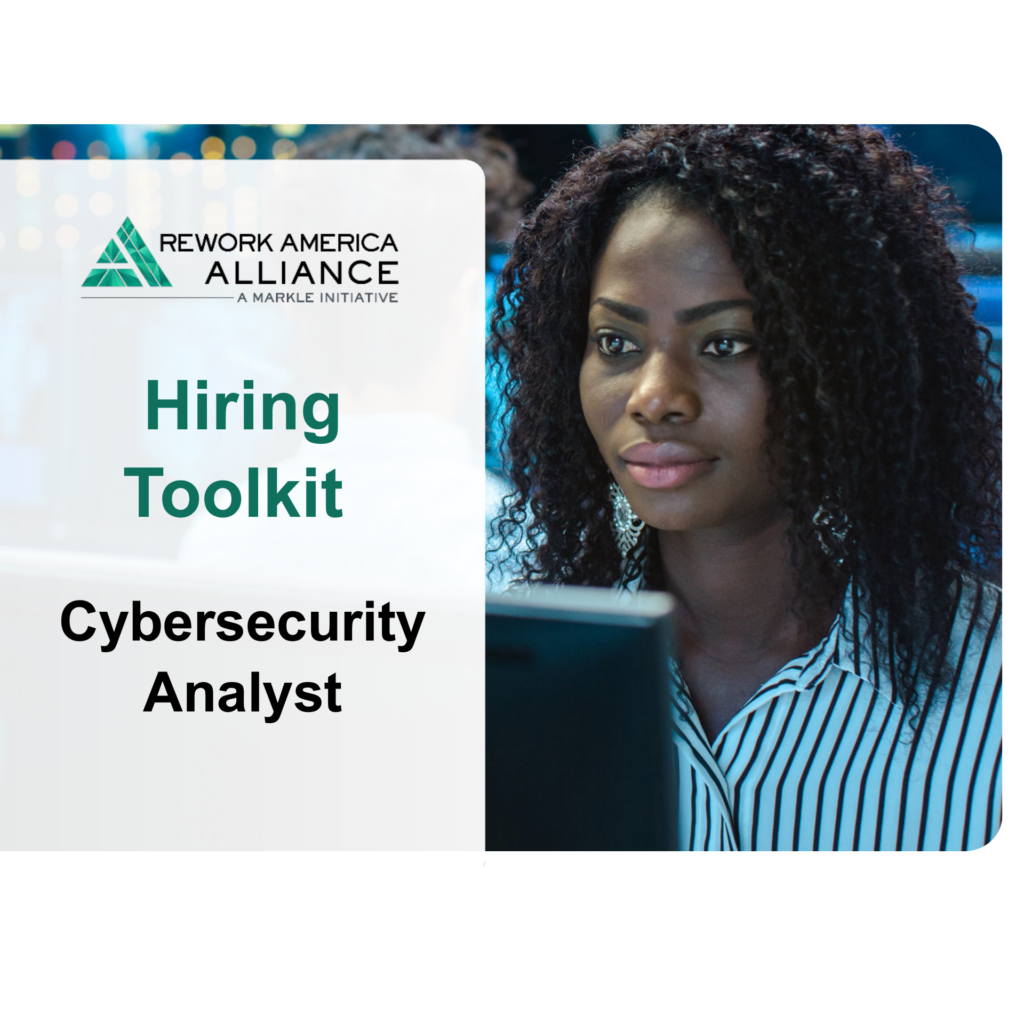
Toolkit
Skills-Based Hiring Toolkit
This resource may be shared with proper attribution to the organization.
This resource may be shared with proper attribution to the organization.
This resource includes a set of skills-based hiring toolkits that include a skills-based job-posting, interview questions, and onboarding plans. Each Skills-Based Hiring Toolkit is packed with valuable resources that will help you transform your hiring strategy.
Toolkit
What does it take to engage in narrative change
This resource may be shared with proper attribution to the organization.
This resource may be shared with proper attribution to the organization.
This website captures insights and lessons learned from the Pathways Narrative Project and shares tools and resources for organizations interested in engaging in narrative change as part of their mission and work. The Pathways Narrative Project is a two-year collaborative initiative, led by Wonder: Strategies for Good and supported by the Bill & Melinda Gates Foundation, Walton Family Foundation and others, that convened nine organizations to improve education and career pathways for young people. Together the cohort explored how to leverage the power of narrative to advance programs and systems change in the pathways space.
Research Report
Skills-Based Hiring
This resource may be shared with proper attribution to the organization.
This resource may be shared with proper attribution to the organization.
While headlines trumpet the demise of the college degree, this joint report with Harvard Business School Project on Managing the Future of Work reveals a different reality. Many companies have announced dropping degree requirements, but sustained hiring changes remain elusive for most. This report identifies where the reality of skills-based hiring might be lagging well-meaning ambitions, and shows which companies are getting it right.
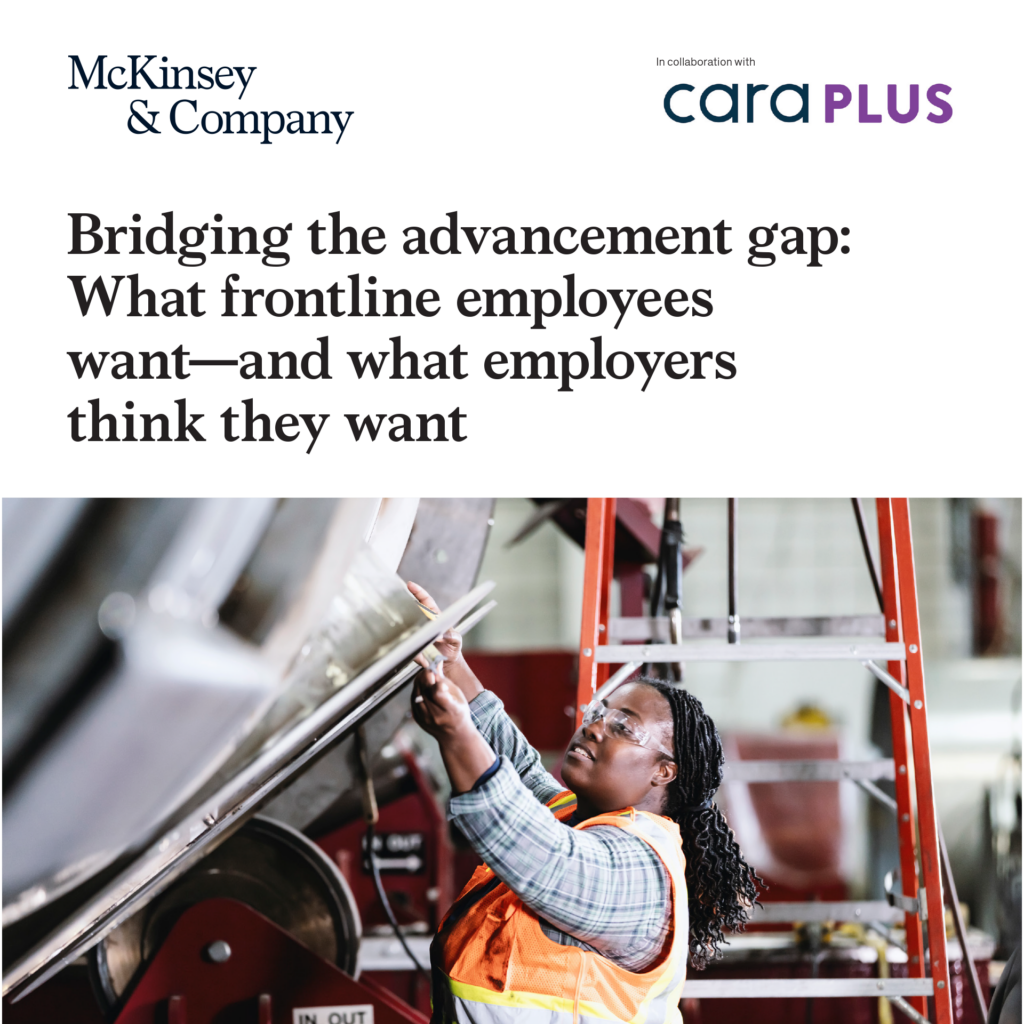
Article
Bridging the Advancement Gap
This resource may be shared with proper attribution to the organization.
This resource may be shared with proper attribution to the organization.
To better understand frontline employee perspectives, McKinsey, in collaboration with Cara Plus, conducted separate surveys of frontline employees and managers of frontline employees across the country in March 2022. This article explores frontline employee career advancement in four parts: first, what frontline employees say they need; second, what employers perceive as the career advancement priorities of frontline employees; third, the common barriers to career advancement; and last, how employers can bridge the differences, with a focus on tactical actions to meaningfully improve career advancement outcomes.
Filters
Playbook or Guidebook
Making the Case
This resource may be shared with proper attribution to the organization.
This resource may be shared with proper attribution to the organization.
This playbook gives people in the learn-and-work ecosystem key information they can use to make the case for incremental credentialing. Case-making requires different information for various audiences, including the campus community, employers and industry partners, funders, learners, and policymakers. The playbook covers: How to define incremental credentialing and incremental credentials, the benefits of incremental credentialing to various constituencies, and the four factors driving the case for incremental credentialing.
Research Report
Student Ability Report
This resource may be shared with proper attribution to the organization.
This resource may be shared with proper attribution to the organization.
The State of the Future U.S. Workforce: Student Ability Report analyzes anonymized data from the YouScience Discovery aptitude-based career guidance assessments taken in U.S. high schools (grades 9 through 12) across all 50 states in 2021. They outline our findings and suggest solutions that address the challenge in a holistic, practical way in this report.
Playbook or Guidebook
Building a Communications and Marketing Strategy in a State or Institution for Incremental Credentialing
This resource may be shared with proper attribution to the organization.
This resource may be shared with proper attribution to the organization.
Communications and marketing are critical in the effort to transform the nation’s degree-centric postsecondary model to an incremental credentialing system. To support such a major transformation, communications and marketing are needed at three levels: state and institution Wide, individual credential and program levels, and nationwide. This Playbook focuses on the first of these.
Community Resource
Career Ready Network
This resource may be shared with proper attribution to the organization.
This resource may be shared with proper attribution to the organization.
A unified directory of organizations and employers offering work-based learning opportunities—such as internships, job shadows, and apprenticeships— to help decision-makers find, compare, and connect with providers.
Playbook or Guidebook
Shifting the Skills Conversation: Employer Attitudes on and Outcomes for Career Technical Education
This resource may be shared with proper attribution to the organization.
This resource may be shared with proper attribution to the organization.
Shifting the Skills Conversation: Employer Attitudes and Outcomes of Career Technical Education provides tangible data points on employer attitudes toward Career Technical Education (CTE) and the positive return on investment CTE experiences provide for business and economic growth. Based on a national survey of more than 300 professionals actively involved in hiring decisions in in-demand fields, these new findings demonstrate that employers strongly support and see direct value in CTE. The findings also indicate that employer recognition and support for skills-focused hiring is growing and that employers back a greater public investment in CTE programs and supports
Toolkit
Skills-Based Hiring Toolkit
This resource may be shared with proper attribution to the organization.
This resource may be shared with proper attribution to the organization.
This resource includes a set of skills-based hiring toolkits that include a skills-based job-posting, interview questions, and onboarding plans. Each Skills-Based Hiring Toolkit is packed with valuable resources that will help you transform your hiring strategy.
Toolkit
What does it take to engage in narrative change
This resource may be shared with proper attribution to the organization.
This resource may be shared with proper attribution to the organization.
This website captures insights and lessons learned from the Pathways Narrative Project and shares tools and resources for organizations interested in engaging in narrative change as part of their mission and work. The Pathways Narrative Project is a two-year collaborative initiative, led by Wonder: Strategies for Good and supported by the Bill & Melinda Gates Foundation, Walton Family Foundation and others, that convened nine organizations to improve education and career pathways for young people. Together the cohort explored how to leverage the power of narrative to advance programs and systems change in the pathways space.
Research Report
Skills-Based Hiring
This resource may be shared with proper attribution to the organization.
This resource may be shared with proper attribution to the organization.
While headlines trumpet the demise of the college degree, this joint report with Harvard Business School Project on Managing the Future of Work reveals a different reality. Many companies have announced dropping degree requirements, but sustained hiring changes remain elusive for most. This report identifies where the reality of skills-based hiring might be lagging well-meaning ambitions, and shows which companies are getting it right.
Article
Bridging the Advancement Gap
This resource may be shared with proper attribution to the organization.
This resource may be shared with proper attribution to the organization.
To better understand frontline employee perspectives, McKinsey, in collaboration with Cara Plus, conducted separate surveys of frontline employees and managers of frontline employees across the country in March 2022. This article explores frontline employee career advancement in four parts: first, what frontline employees say they need; second, what employers perceive as the career advancement priorities of frontline employees; third, the common barriers to career advancement; and last, how employers can bridge the differences, with a focus on tactical actions to meaningfully improve career advancement outcomes.