Reaching Employers
Engage employers in new ways of thinking about talent
Employers are essential partners—but may need new language and framing to engage in new approaches to talent development and skills-based hiring.
Use these tools to:
- Communicate the value of skills and experience alongside credentials
- Highlight real business benefits and outcomes
- Encourage adoption of more inclusive hiring practices
Explore resources for reaching employers below
Article
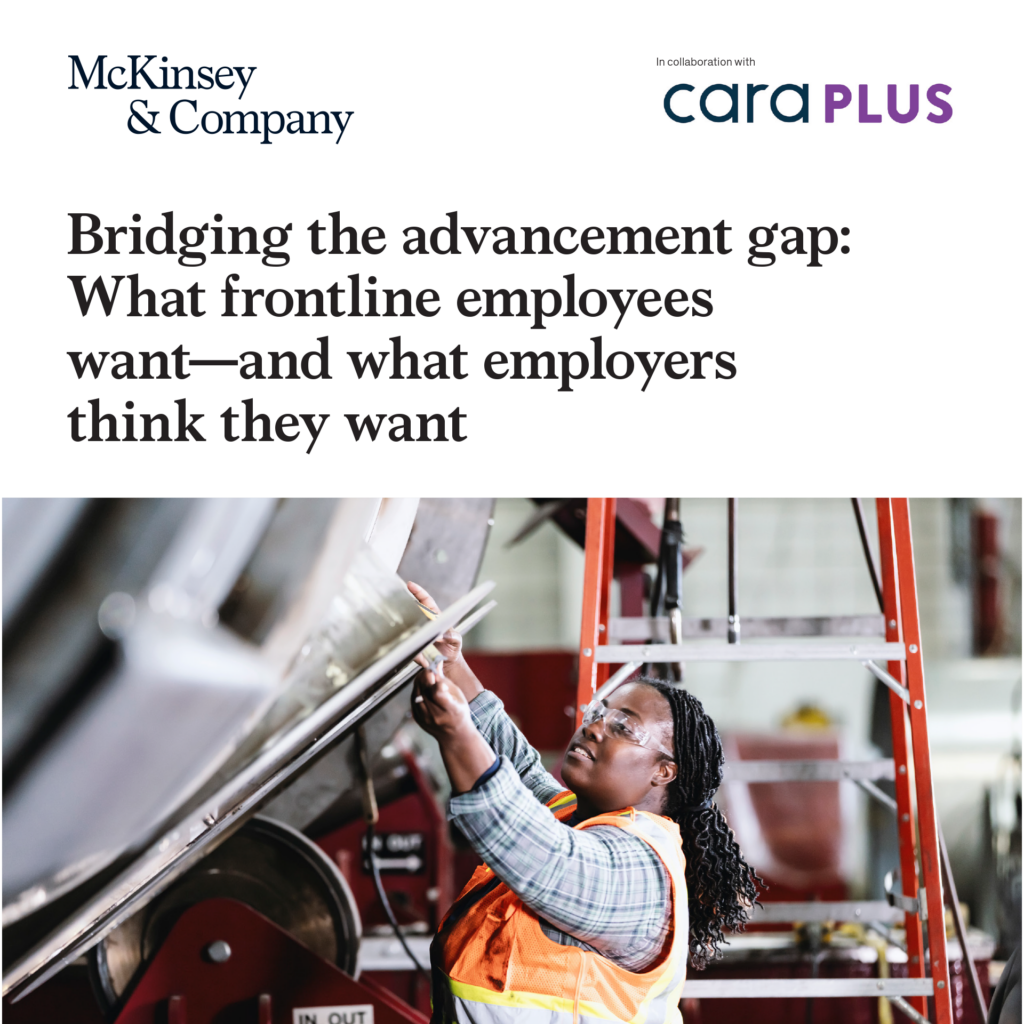
Bridging the Advancement Gap
This resource may be shared with proper attribution to the organization.
This resource may be shared with proper attribution to the organization.
To better understand frontline employee perspectives, McKinsey, in collaboration with Cara Plus, conducted separate surveys of frontline employees and managers of frontline employees across the country in March 2022. This article explores frontline employee career advancement in four parts: first, what frontline employees say they need; second, what employers perceive as the career advancement priorities of frontline employees; third, the common barriers to career advancement; and last, how employers can bridge the differences, with a focus on tactical actions to meaningfully improve career advancement outcomes.

Article
How does Gen Z see its place in the working world? With trepidation
This resource may be shared with proper attribution to the organization.
This resource may be shared with proper attribution to the organization.
The purpose of the report is to explore and highlight the unique challenges and perceptions of Generation Z as they enter the workforce amid various global crises. It presents data from McKinsey's American Opportunity Survey, revealing Gen Z's higher likelihood of working multiple jobs, financial insecurity, mental health struggles, and pessimism about economic milestones like homeownership and retirement. The report aims to inform employers and other stakeholders about these generational differences to better support Gen Z in the workplace and address their specific needs and concerns.
Toolkit
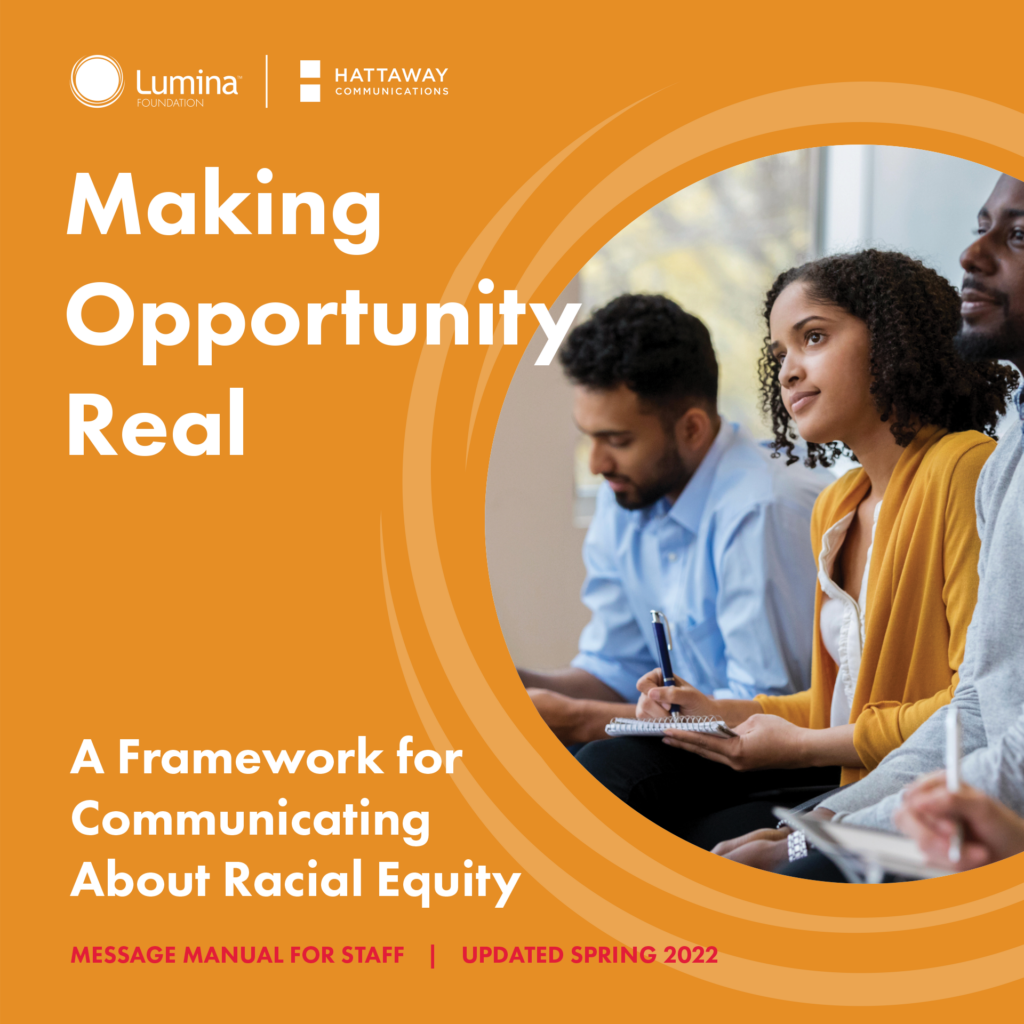
Making Opportunity Real: A Framework for Communicating About Racial Justice
This resource may be shared with proper attribution to the organization.
This resource may be shared with proper attribution to the organization.
This Message Manual contains research-based language and guidance for anyone communicating about racial justice and equity in education. The manual introduces a Racial Justice and Racial Equity Frame that provides guidance for communicating about justice and equity in aspirational ways that move beyond buzzwords and invite new audiences into the conversation. The guide provides research-tested language and specific examples of how to apply the frame when sharing data, crafting story-driven content, and tailoring messages for different audiences.
Research Report
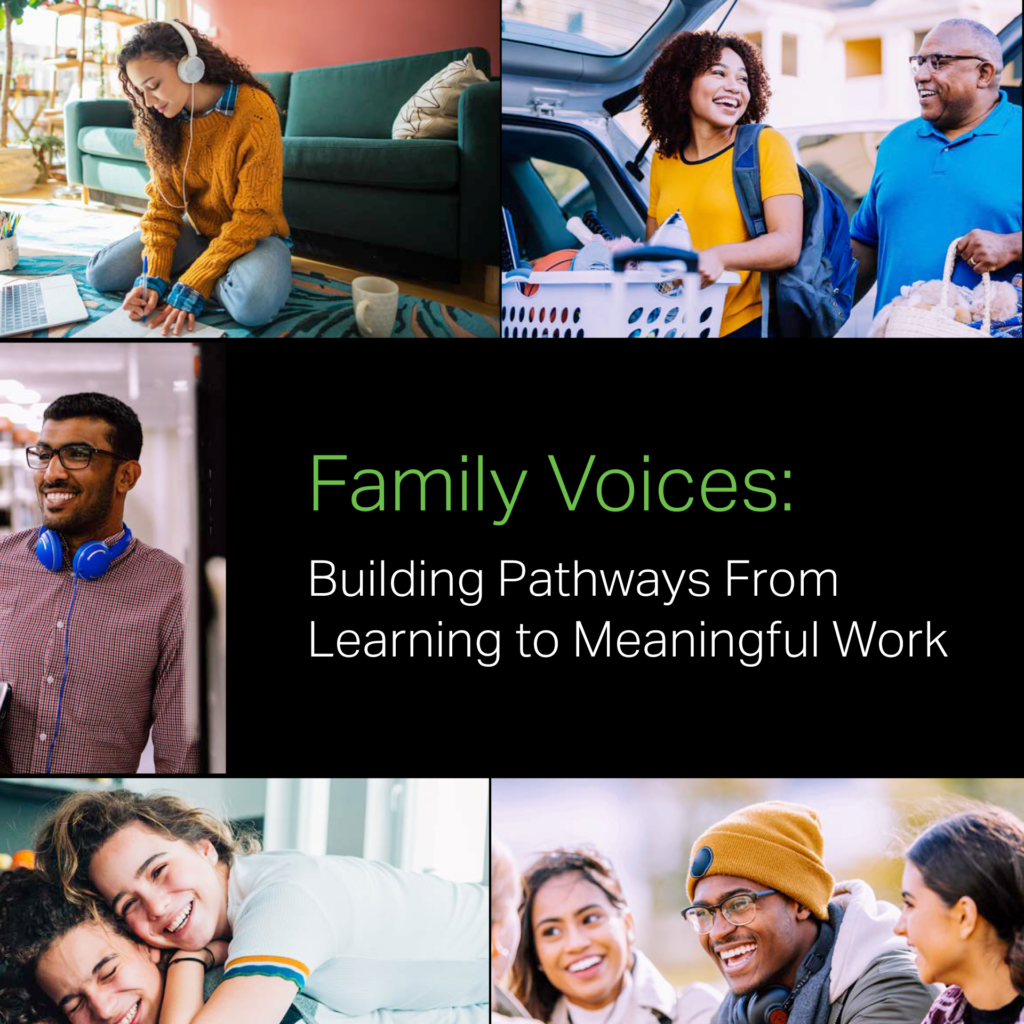
Family Voices
This resource may be shared with proper attribution to the organization.
This resource may be shared with proper attribution to the organization.
Faced with unprecedented change in the postsecondary landscape, America's families are wrestling with questions of college, careers, skills development and meaningful work. This study aimed to understand American parents' aspirations for their children after high school, as well as the barriers they face to following a preferred postsecondary path.
Research Report
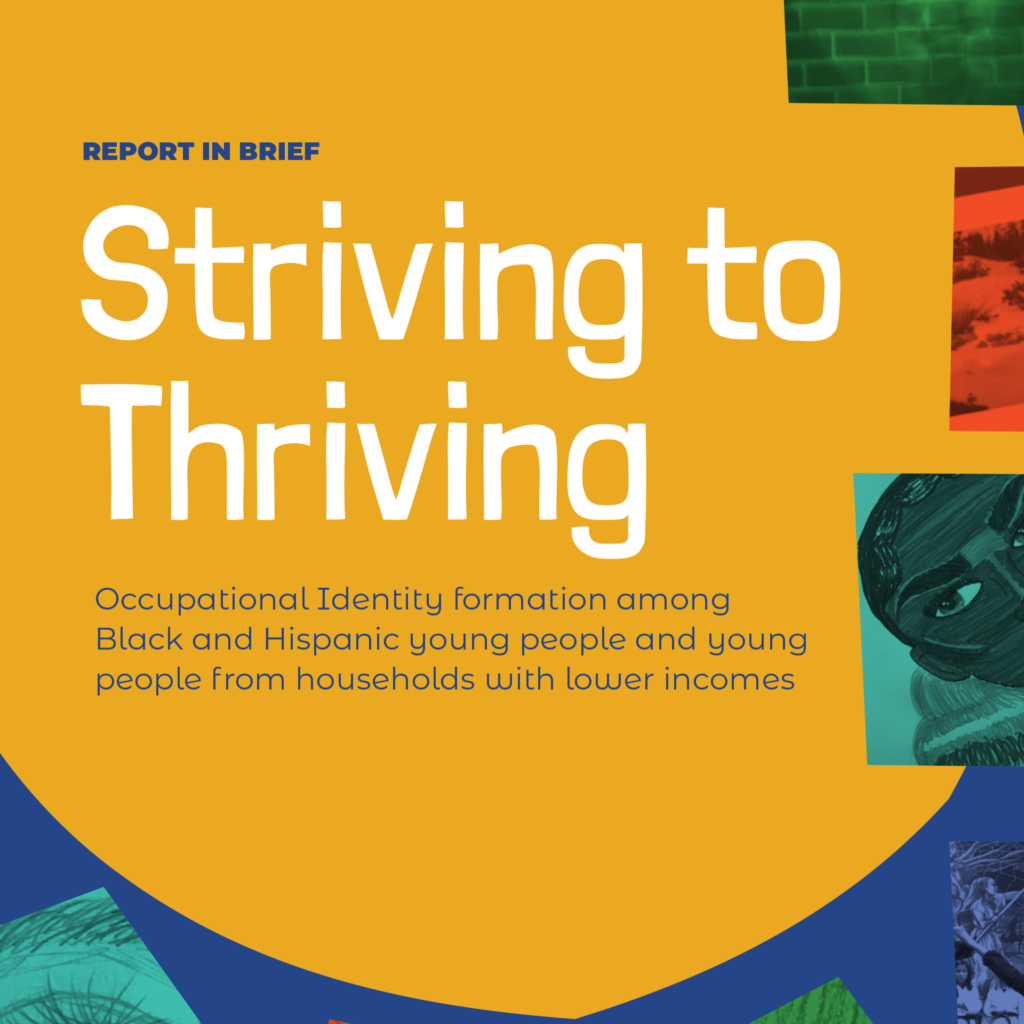
Striving to Thrive
This resource may be shared with proper attribution to the organization.
This resource may be shared with proper attribution to the organization.
This is a set of research about how young people form their occupational identities. From 2018-2019, Equitable Futures gathered key insights from qualitative and quantitative research with over 4,000 young people on how they see themselves and the opportunities and challenges they anticipate in pursuing their career and life goals.
Research Report
The Features of Narratives: A Model of Narrative Form for Social Change Efforts
This resource may be shared with proper attribution to the organization.
This resource may be shared with proper attribution to the organization.
Calls for narrative change abound in social change work. But what kinds of patterns qualify as narratives, and how narratives are embedded within particular stories, remains hazy. This report introduces a model of narrative, defining the elements and identifying the patterns in stories that comprise the narrative form. Our model identifies a set of features that make up a narrative, offering a practical tool for those working to change narratives within and beyond the issue of poverty.
Research Report
Question the Status Quo: Gen Z Teens Have Changed Their Priorities for Education and Work
This resource may be shared with proper attribution to the organization.
This resource may be shared with proper attribution to the organization.
Toolkit
What does it take to engage in narrative change
This resource may be shared with proper attribution to the organization.
This resource may be shared with proper attribution to the organization.
This website captures insights and lessons learned from the Pathways Narrative Project and shares tools and resources for organizations interested in engaging in narrative change as part of their mission and work. The Pathways Narrative Project is a two-year collaborative initiative, led by Wonder: Strategies for Good and supported by the Bill & Melinda Gates Foundation, Walton Family Foundation and others, that convened nine organizations to improve education and career pathways for young people. Together the cohort explored how to leverage the power of narrative to advance programs and systems change in the pathways space.
Research Report
The Making of an Innovation Engine: Advancing Career-Connected Learning
This resource may be shared with proper attribution to the organization.
This resource may be shared with proper attribution to the organization.
The Catalyze Challenge set out to answer two core research questions: was it successful in catalyzing new innovation and, if so, what type? It employs a three-stage review process involving a collective effort to identify unique, groundbreaking career-connected models that are heavily invested in the communities they serve. The key takeaways that are explored in depth throughout this report.
Research Report
Skills-Based Hiring
This resource may be shared with proper attribution to the organization.
This resource may be shared with proper attribution to the organization.
While headlines trumpet the demise of the college degree, this joint report with Harvard Business School Project on Managing the Future of Work reveals a different reality. Many companies have announced dropping degree requirements, but sustained hiring changes remain elusive for most. This report identifies where the reality of skills-based hiring might be lagging well-meaning ambitions, and shows which companies are getting it right.
Filters
Article
Bridging the Advancement Gap
This resource may be shared with proper attribution to the organization.
This resource may be shared with proper attribution to the organization.
To better understand frontline employee perspectives, McKinsey, in collaboration with Cara Plus, conducted separate surveys of frontline employees and managers of frontline employees across the country in March 2022. This article explores frontline employee career advancement in four parts: first, what frontline employees say they need; second, what employers perceive as the career advancement priorities of frontline employees; third, the common barriers to career advancement; and last, how employers can bridge the differences, with a focus on tactical actions to meaningfully improve career advancement outcomes.
Article
How does Gen Z see its place in the working world? With trepidation
This resource may be shared with proper attribution to the organization.
This resource may be shared with proper attribution to the organization.
The purpose of the report is to explore and highlight the unique challenges and perceptions of Generation Z as they enter the workforce amid various global crises. It presents data from McKinsey's American Opportunity Survey, revealing Gen Z's higher likelihood of working multiple jobs, financial insecurity, mental health struggles, and pessimism about economic milestones like homeownership and retirement. The report aims to inform employers and other stakeholders about these generational differences to better support Gen Z in the workplace and address their specific needs and concerns.
Toolkit
Making Opportunity Real: A Framework for Communicating About Racial Justice
This resource may be shared with proper attribution to the organization.
This resource may be shared with proper attribution to the organization.
This Message Manual contains research-based language and guidance for anyone communicating about racial justice and equity in education. The manual introduces a Racial Justice and Racial Equity Frame that provides guidance for communicating about justice and equity in aspirational ways that move beyond buzzwords and invite new audiences into the conversation. The guide provides research-tested language and specific examples of how to apply the frame when sharing data, crafting story-driven content, and tailoring messages for different audiences.
Research Report
Family Voices
This resource may be shared with proper attribution to the organization.
This resource may be shared with proper attribution to the organization.
Faced with unprecedented change in the postsecondary landscape, America's families are wrestling with questions of college, careers, skills development and meaningful work. This study aimed to understand American parents' aspirations for their children after high school, as well as the barriers they face to following a preferred postsecondary path.
Research Report
Striving to Thrive
This resource may be shared with proper attribution to the organization.
This resource may be shared with proper attribution to the organization.
This is a set of research about how young people form their occupational identities. From 2018-2019, Equitable Futures gathered key insights from qualitative and quantitative research with over 4,000 young people on how they see themselves and the opportunities and challenges they anticipate in pursuing their career and life goals.
Research Report
The Features of Narratives: A Model of Narrative Form for Social Change Efforts
This resource may be shared with proper attribution to the organization.
This resource may be shared with proper attribution to the organization.
Calls for narrative change abound in social change work. But what kinds of patterns qualify as narratives, and how narratives are embedded within particular stories, remains hazy. This report introduces a model of narrative, defining the elements and identifying the patterns in stories that comprise the narrative form. Our model identifies a set of features that make up a narrative, offering a practical tool for those working to change narratives within and beyond the issue of poverty.
Research Report
Question the Status Quo: Gen Z Teens Have Changed Their Priorities for Education and Work
This resource may be shared with proper attribution to the organization.
This resource may be shared with proper attribution to the organization.
Toolkit
What does it take to engage in narrative change
This resource may be shared with proper attribution to the organization.
This resource may be shared with proper attribution to the organization.
This website captures insights and lessons learned from the Pathways Narrative Project and shares tools and resources for organizations interested in engaging in narrative change as part of their mission and work. The Pathways Narrative Project is a two-year collaborative initiative, led by Wonder: Strategies for Good and supported by the Bill & Melinda Gates Foundation, Walton Family Foundation and others, that convened nine organizations to improve education and career pathways for young people. Together the cohort explored how to leverage the power of narrative to advance programs and systems change in the pathways space.
Research Report
The Making of an Innovation Engine: Advancing Career-Connected Learning
This resource may be shared with proper attribution to the organization.
This resource may be shared with proper attribution to the organization.
The Catalyze Challenge set out to answer two core research questions: was it successful in catalyzing new innovation and, if so, what type? It employs a three-stage review process involving a collective effort to identify unique, groundbreaking career-connected models that are heavily invested in the communities they serve. The key takeaways that are explored in depth throughout this report.
Research Report
Skills-Based Hiring
This resource may be shared with proper attribution to the organization.
This resource may be shared with proper attribution to the organization.
While headlines trumpet the demise of the college degree, this joint report with Harvard Business School Project on Managing the Future of Work reveals a different reality. Many companies have announced dropping degree requirements, but sustained hiring changes remain elusive for most. This report identifies where the reality of skills-based hiring might be lagging well-meaning ambitions, and shows which companies are getting it right.