Pathways Resource Library
Tools to help people understand their options
Explore messaging, research, and resources from across the field—along with customizable, white-label tools that you can adapt, brand as your own, and use in your organization’s communications—to help you reach key audiences with language that builds confidence and expands what’s possible.
Toolkit
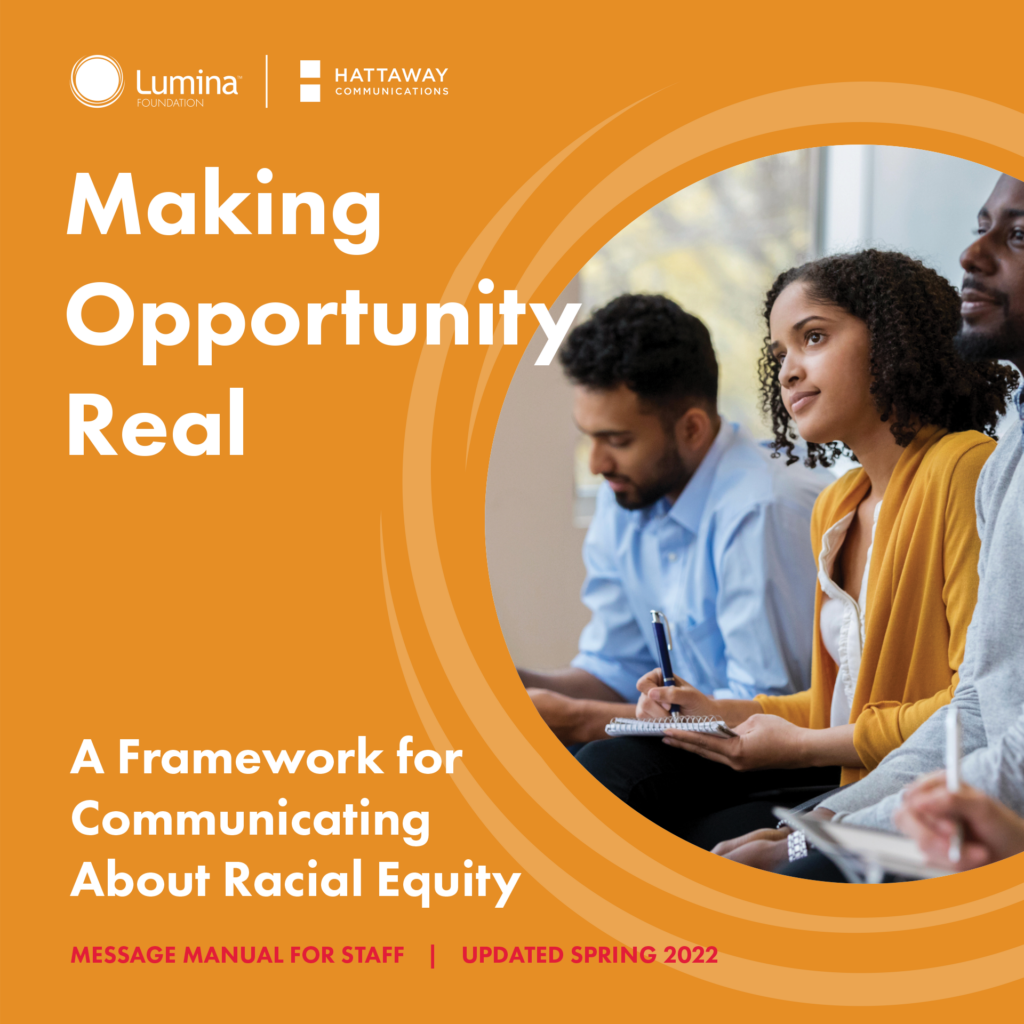
Making Opportunity Real: A Framework for Communicating About Racial Justice
This resource may be shared with proper attribution to the organization.
This resource may be shared with proper attribution to the organization.
This Message Manual contains research-based language and guidance for anyone communicating about racial justice and equity in education. The manual introduces a Racial Justice and Racial Equity Frame that provides guidance for communicating about justice and equity in aspirational ways that move beyond buzzwords and invite new audiences into the conversation. The guide provides research-tested language and specific examples of how to apply the frame when sharing data, crafting story-driven content, and tailoring messages for different audiences.
Toolkit
Communicating the Value of Apprenticeships
This resource may be shared with proper attribution to the organization.
This resource may be shared with proper attribution to the organization.
This short tool offers persuasive arguments that shows how youth apprenticeships benefit both young career seekers and businesses alike. For employers, it demonstrates how apprenticeships can fill labor gaps across industries, and act as a reliable source of nationally credentialed, ready-to-work job candidates. Youth are offered access to paid work-based training in high-growth fields and the significant earnings potential.
Infographics
Opportunity@Work Tool: Infographics
This resource may be shared with proper attribution to the organization.
This resource may be shared with proper attribution to the organization.
Infographics demonstrating degree inflation, which caused labor shortage and opportunity gap. This can be used to talk with employers and government about the importance of skill-based hiring.
Research Report
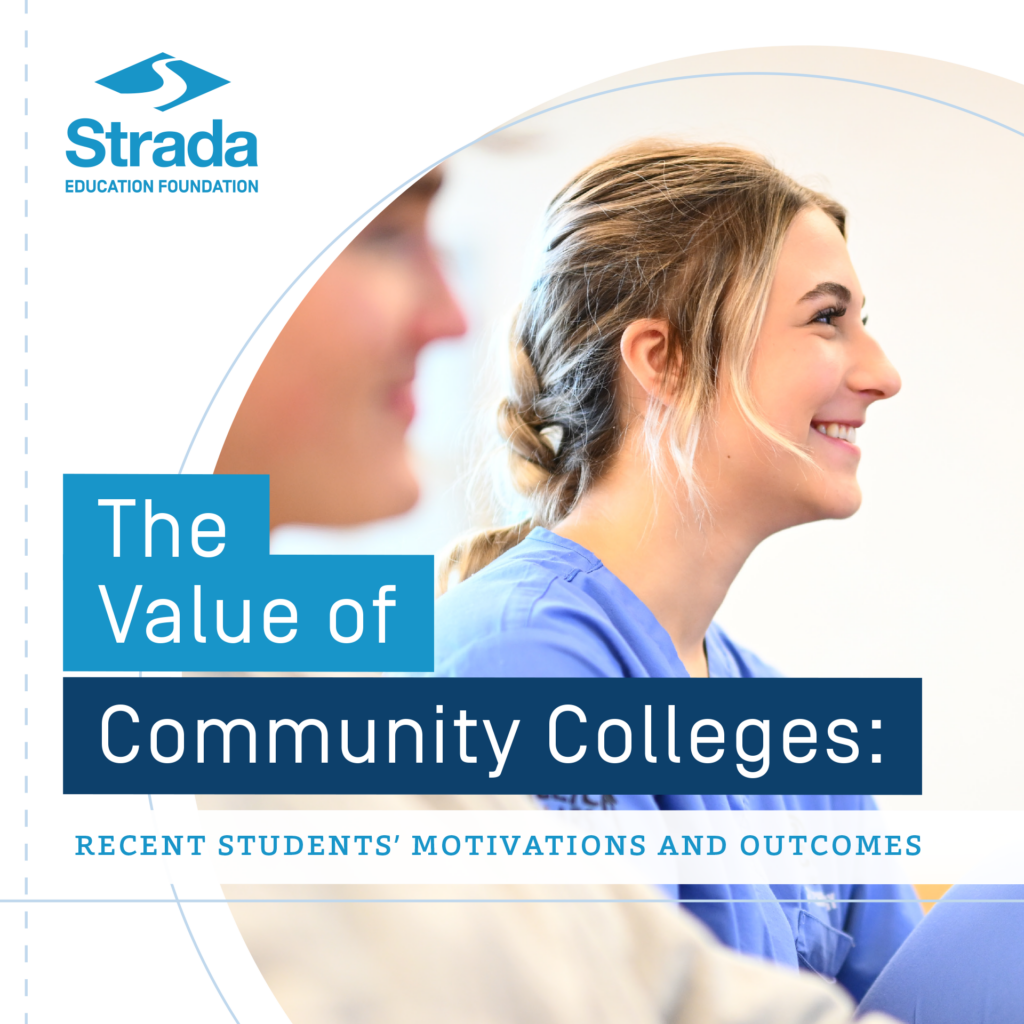
The Value of Community Colleges: Recent Students’ Motivations and Outcomes
This resource may be shared with proper attribution to the organization.
This resource may be shared with proper attribution to the organization.
This study offers new insights about value community colleges provide and the range of needs that they serve. It examines recent community college students' motivations for enrolling, and their self-reported perceptions of the value of their education and training experiences, and the degree to which they acheived their goals for enrolling.
Research Report
The Pathways Narrative Project
This resource may be shared with proper attribution to the organization.
This resource may be shared with proper attribution to the organization.
Pathways Narrative is a cohort-based pilot project focused on the education and career pathways space. Each of the nine organizations in the cohort works with dedicated strategists from Wonder: Strategies for Good to develop a narrative change research project that aligns with and advances the organization’s goals. Get to know the cohort partners here, and explore the many possible approaches to narrative change.
White Paper
Degrees of Risk: What Gen Z and Employers Think About Education-to-Career Pathways… and How Those Views are Changing
This resource may be shared with proper attribution to the organization.
This resource may be shared with proper attribution to the organization.
This is an examination of what is required to make a person employable, as well as what professional and educational success looks like. This study was commissioned by American Student Assistance (ASA) and Jobs for the Future (JFF). The research aimed to understand current familiarity with and perceptions of non-degree postsecondary pathways from both Gen Z and employer perspectives. This paper also makes recommendations for the way forward to expand high-quality postsecondary options for all learners.

Community Resource
Career Ready Network
This resource may be shared with proper attribution to the organization.
This resource may be shared with proper attribution to the organization.
A unified directory of organizations and employers offering work-based learning opportunities—such as internships, job shadows, and apprenticeships— to help decision-makers find, compare, and connect with providers.
Research Report
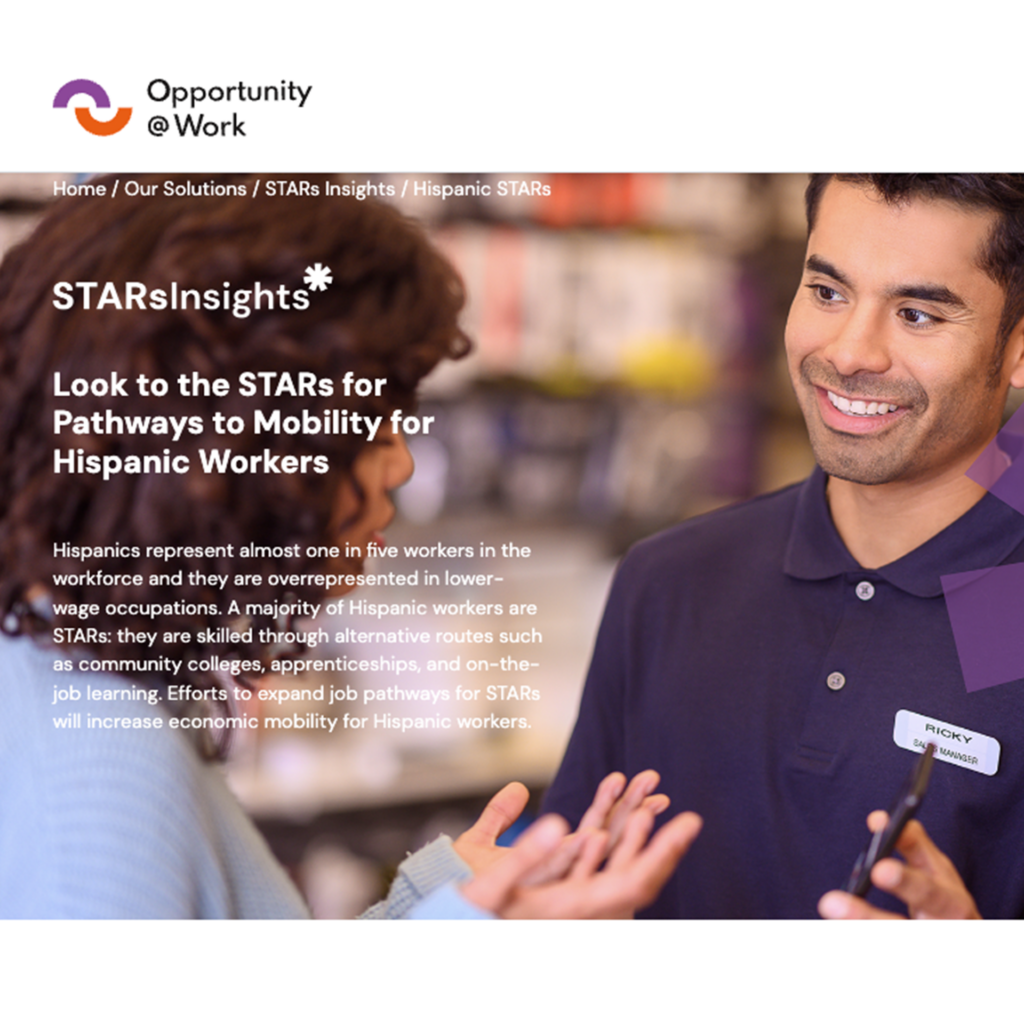
Hispanic STARs: Smart Employers Aim for Hispanic STARs
This resource may be shared with proper attribution to the organization.
This resource may be shared with proper attribution to the organization.
This report highlights the significant presence of Hispanic workers who are skilled through alternative routes (STARs) in the workforce and their overrepresentation in lower-wage occupations. It discusses the barriers these workers face due to degree requirements and suggests that employers prioritize skills over formal education to improve economic mobility for Hispanic STARs.
Research Report
Pathways Matter to Families: What Parents and Young Adults Believe and Want to Know About Education to Workforce Pathways
This resource may be shared with proper attribution to the organization.
This resource may be shared with proper attribution to the organization.
Pathways Matter to Families offers insights and actionable resources for students and families. The two complementary resources linked are informed by original research investigating what parents and young adults think and want to know about education-to-workforce pathways and experiences.
Filters
Toolkit
Making Opportunity Real: A Framework for Communicating About Racial Justice
This resource may be shared with proper attribution to the organization.
This resource may be shared with proper attribution to the organization.
This Message Manual contains research-based language and guidance for anyone communicating about racial justice and equity in education. The manual introduces a Racial Justice and Racial Equity Frame that provides guidance for communicating about justice and equity in aspirational ways that move beyond buzzwords and invite new audiences into the conversation. The guide provides research-tested language and specific examples of how to apply the frame when sharing data, crafting story-driven content, and tailoring messages for different audiences.
Toolkit
Communicating the Value of Apprenticeships
This resource may be shared with proper attribution to the organization.
This resource may be shared with proper attribution to the organization.
This short tool offers persuasive arguments that shows how youth apprenticeships benefit both young career seekers and businesses alike. For employers, it demonstrates how apprenticeships can fill labor gaps across industries, and act as a reliable source of nationally credentialed, ready-to-work job candidates. Youth are offered access to paid work-based training in high-growth fields and the significant earnings potential.
Infographics
Opportunity@Work Tool: Infographics
This resource may be shared with proper attribution to the organization.
This resource may be shared with proper attribution to the organization.
Infographics demonstrating degree inflation, which caused labor shortage and opportunity gap. This can be used to talk with employers and government about the importance of skill-based hiring.
Research Report
The Value of Community Colleges: Recent Students’ Motivations and Outcomes
This resource may be shared with proper attribution to the organization.
This resource may be shared with proper attribution to the organization.
This study offers new insights about value community colleges provide and the range of needs that they serve. It examines recent community college students' motivations for enrolling, and their self-reported perceptions of the value of their education and training experiences, and the degree to which they acheived their goals for enrolling.
Research Report
The Pathways Narrative Project
This resource may be shared with proper attribution to the organization.
This resource may be shared with proper attribution to the organization.
Pathways Narrative is a cohort-based pilot project focused on the education and career pathways space. Each of the nine organizations in the cohort works with dedicated strategists from Wonder: Strategies for Good to develop a narrative change research project that aligns with and advances the organization’s goals. Get to know the cohort partners here, and explore the many possible approaches to narrative change.
White Paper
Degrees of Risk: What Gen Z and Employers Think About Education-to-Career Pathways… and How Those Views are Changing
This resource may be shared with proper attribution to the organization.
This resource may be shared with proper attribution to the organization.
This is an examination of what is required to make a person employable, as well as what professional and educational success looks like. This study was commissioned by American Student Assistance (ASA) and Jobs for the Future (JFF). The research aimed to understand current familiarity with and perceptions of non-degree postsecondary pathways from both Gen Z and employer perspectives. This paper also makes recommendations for the way forward to expand high-quality postsecondary options for all learners.
Community Resource
Career Ready Network
This resource may be shared with proper attribution to the organization.
This resource may be shared with proper attribution to the organization.
A unified directory of organizations and employers offering work-based learning opportunities—such as internships, job shadows, and apprenticeships— to help decision-makers find, compare, and connect with providers.
Research Report
Hispanic STARs: Smart Employers Aim for Hispanic STARs
This resource may be shared with proper attribution to the organization.
This resource may be shared with proper attribution to the organization.
This report highlights the significant presence of Hispanic workers who are skilled through alternative routes (STARs) in the workforce and their overrepresentation in lower-wage occupations. It discusses the barriers these workers face due to degree requirements and suggests that employers prioritize skills over formal education to improve economic mobility for Hispanic STARs.
Research Report
Pathways Matter to Families: What Parents and Young Adults Believe and Want to Know About Education to Workforce Pathways
This resource may be shared with proper attribution to the organization.
This resource may be shared with proper attribution to the organization.
Pathways Matter to Families offers insights and actionable resources for students and families. The two complementary resources linked are informed by original research investigating what parents and young adults think and want to know about education-to-workforce pathways and experiences.