Narrative

Toolkit
From Insights to Action: Communicating Career Pathways With Confidence
This resource may be shared with proper attribution to the organization.
This resource may be shared with proper attribution to the organization.
This communications toolkit is designed to help organizations and advocates effectively engage learners and employers regarding the value of career education and training programs as well as skill-based hiring. It offers research-backed messaging that reflects what people care about most—and what motivates them to take action. These messages don’t just describe the benefits of pathways programs, they also help audiences see these options as relevant, accessible, and worth pursuing. The guidance in this manual is grounded in science-based communication practices and shaped by extensive research, including a landscape analysis of messaging in the field and media, a nationally representative survey with message testing, roundtable discussions with learners and employers, and a series of pulse surveys.
This toolkit offers adaptable, ready-to-use messages, language, and themes to support outreach, engagement, and storytelling. Use them to strengthen your communications—whether you're writing a social post, developing a presentation, or talking with partners and stakeholders. The messages are designed to be flexible; feel free to use them as written or tailor them to fit your audience and voice.
Narrative Framework
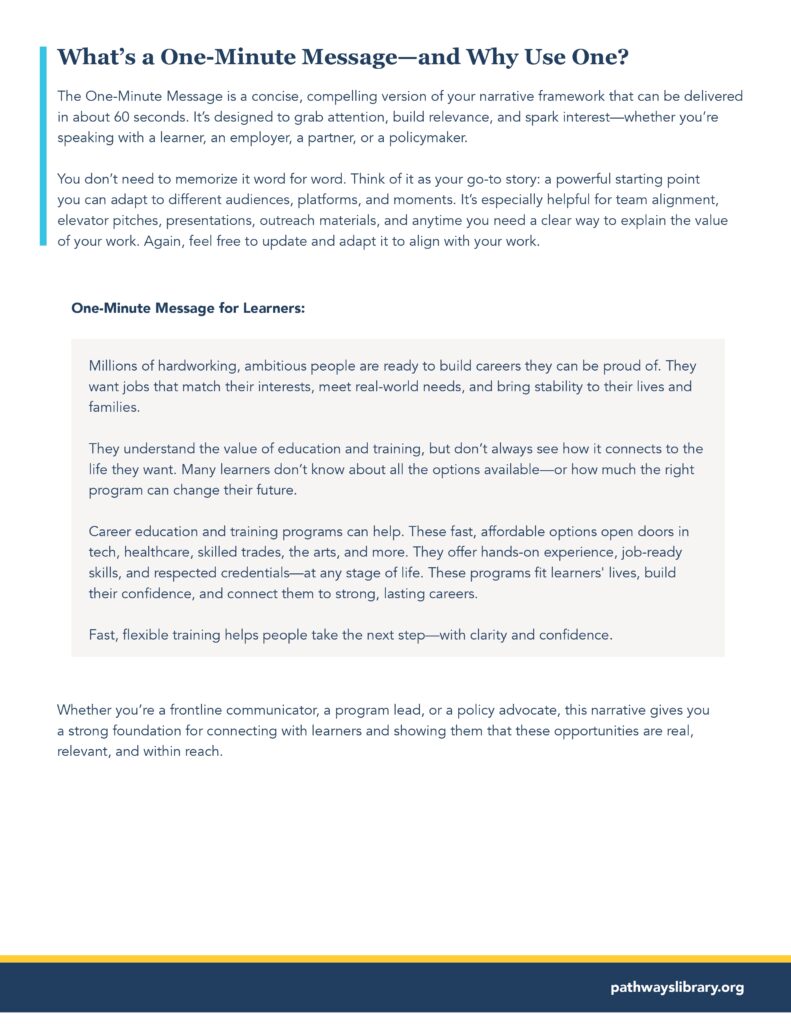
Narrative Framework for Engaging Learners
This is a white-label resource available for unrestricted use.
This is a white-label resource available for unrestricted use.
This narrative framework helps organizations communicate more clearly and consistently with learners about the value of career education and training. It offers a structured, research-backed way to tell a compelling story—from who learners are and what they want, to the barriers they face, the solution you offer, and the outcomes they care about. Built on science-based communications models and best practices, it’s designed to motivate action through language that is clear, credible, and emotionally resonant.
Narrative Framework
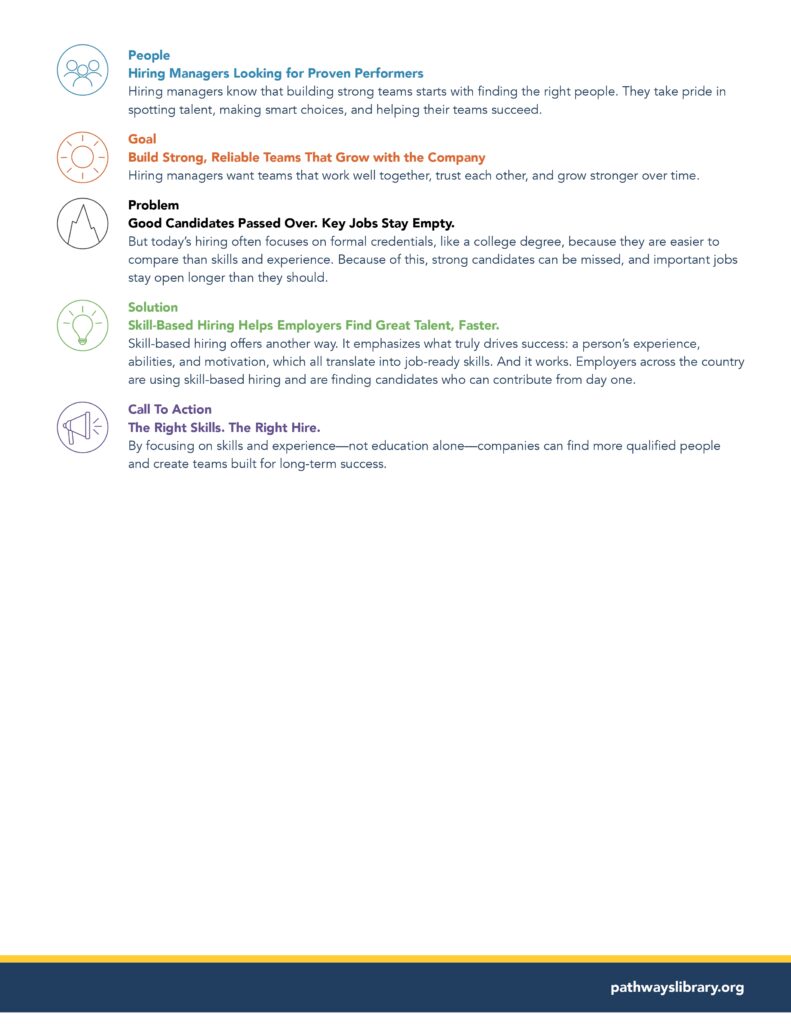
Narrative Framework for Engaging Employers
This is a white-label resource available for unrestricted use.
This is a white-label resource available for unrestricted use.
This narrative framework helps organizations communicate clearly and persuasively with employers about the value of skill-based hiring. It provides a simple, research-backed structure for telling a compelling story: who the audience is, what they care about, the barriers they face, the solution at hand, and the impact it can make. Built on proven communication strategies and shaped by insights from hiring managers, it’s designed to resonate—and drive action.
Toolkit
Roadtrip Nation Storytelling Toolkit
This resource may be shared with proper attribution to the organization.
This resource may be shared with proper attribution to the organization.
This storytelling toolkit outlined the fundamentals of Road Trip Nation's storytelling approach, developed over two decades of co-creating these stories with young people, so that other nonprofits and impact-minded organizations can amplify young people’s voices and stories in their own work.
Toolkit
Credit for Prior Learning Messaging Toolkit
This resource may be shared with proper attribution to the organization.
This resource may be shared with proper attribution to the organization.
This toolkit provides effective messages targeted to key audiences and strategies for dissemination to increase participation in Credit for Prior Learning among adult learners who are pursuing career pathways and CTE programs of study that lead to jobs in in-demand fields.
Research Report
The Pathways Narrative Project
This resource may be shared with proper attribution to the organization.
This resource may be shared with proper attribution to the organization.
Pathways Narrative is a cohort-based pilot project focused on the education and career pathways space. Each of the nine organizations in the cohort works with dedicated strategists from Wonder: Strategies for Good to develop a narrative change research project that aligns with and advances the organization’s goals. Get to know the cohort partners here, and explore the many possible approaches to narrative change.
Research Report
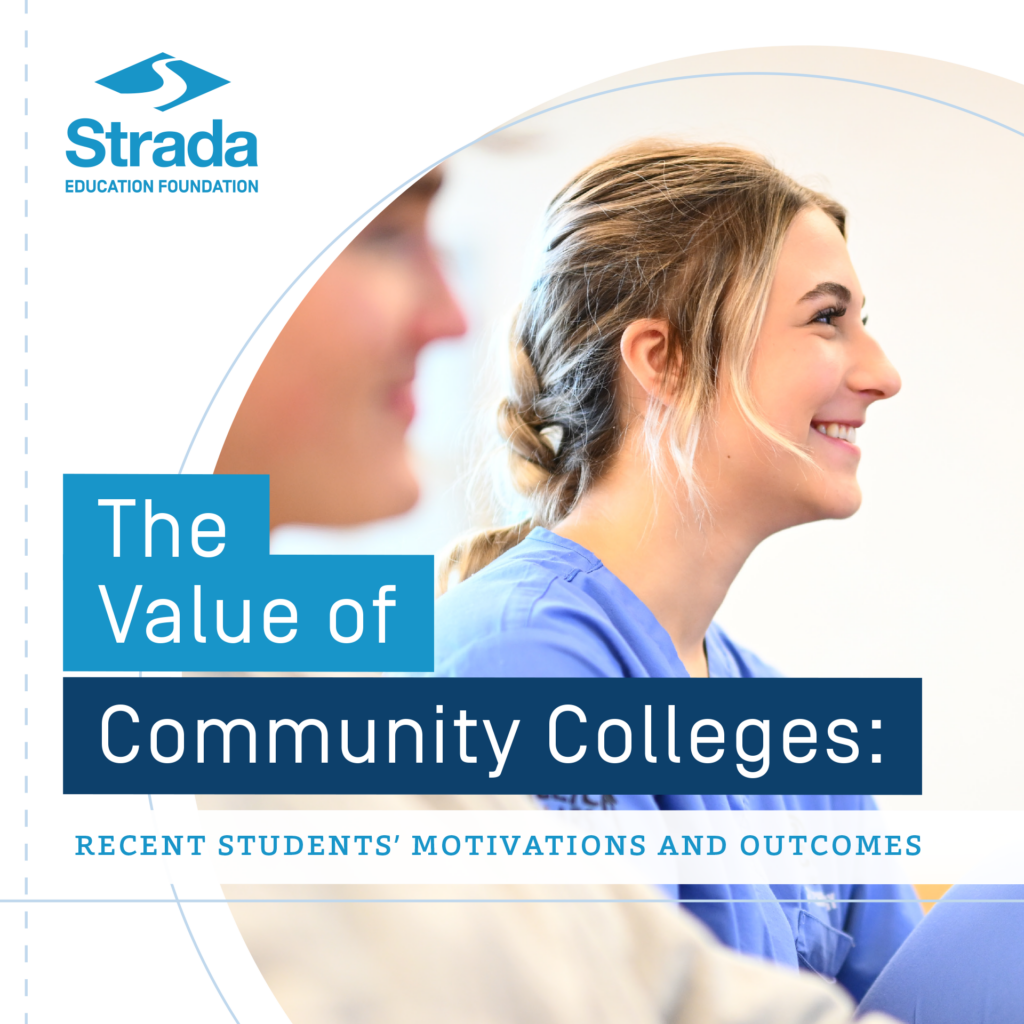
The Value of Community Colleges: Recent Students’ Motivations and Outcomes
This resource may be shared with proper attribution to the organization.
This resource may be shared with proper attribution to the organization.
This study offers new insights about value community colleges provide and the range of needs that they serve. It examines recent community college students' motivations for enrolling, and their self-reported perceptions of the value of their education and training experiences, and the degree to which they acheived their goals for enrolling.
Article
What it will take to change the narrative about career education
This resource may be shared with proper attribution to the organization.
This resource may be shared with proper attribution to the organization.
The article discusses the growing issue of young Americans aged 18-24 not engaging in college or work, exacerbated by the pandemic. Despite high job vacancies, there's skepticism toward non-college education and job-training programs. The article highlights policy recommendations to integrate workforce training and higher education, stressing that both traditional and non-degree credentials are essential for economic mobility. The purpose is to advocate for a broader, more inclusive approach to postsecondary education and workforce training, aiming to enhance economic opportunities for all.
Blog Post
Telling the Right Stories: How Narratives Can Change Community College
This resource may be shared with proper attribution to the organization.
This resource may be shared with proper attribution to the organization.
The post highlights the gap between community college students' aspirations to earn four-year degrees and the reality that only a small percentage achieve this goal. It criticizes current narratives and policies that hinder successful transfers, particularly for low-income and minority students, and advocates for a shift towards focusing on credit mobility and recognition. By changing the narrative to value students' prior achievements and creating more flexible, student-centered pathways, the aim is to foster equitable educational and economic outcomes.
Research Report
The Features of Narratives: A Model of Narrative Form for Social Change Efforts
This resource may be shared with proper attribution to the organization.
This resource may be shared with proper attribution to the organization.
Calls for narrative change abound in social change work. But what kinds of patterns qualify as narratives, and how narratives are embedded within particular stories, remains hazy. This report introduces a model of narrative, defining the elements and identifying the patterns in stories that comprise the narrative form. Our model identifies a set of features that make up a narrative, offering a practical tool for those working to change narratives within and beyond the issue of poverty.
Filters
Toolkit
From Insights to Action: Communicating Career Pathways With Confidence
This resource may be shared with proper attribution to the organization.
This resource may be shared with proper attribution to the organization.
This communications toolkit is designed to help organizations and advocates effectively engage learners and employers regarding the value of career education and training programs as well as skill-based hiring. It offers research-backed messaging that reflects what people care about most—and what motivates them to take action. These messages don’t just describe the benefits of pathways programs, they also help audiences see these options as relevant, accessible, and worth pursuing. The guidance in this manual is grounded in science-based communication practices and shaped by extensive research, including a landscape analysis of messaging in the field and media, a nationally representative survey with message testing, roundtable discussions with learners and employers, and a series of pulse surveys.
This toolkit offers adaptable, ready-to-use messages, language, and themes to support outreach, engagement, and storytelling. Use them to strengthen your communications—whether you're writing a social post, developing a presentation, or talking with partners and stakeholders. The messages are designed to be flexible; feel free to use them as written or tailor them to fit your audience and voice.
Narrative Framework
Narrative Framework for Engaging Learners
This is a white-label resource available for unrestricted use.
This is a white-label resource available for unrestricted use.
This narrative framework helps organizations communicate more clearly and consistently with learners about the value of career education and training. It offers a structured, research-backed way to tell a compelling story—from who learners are and what they want, to the barriers they face, the solution you offer, and the outcomes they care about. Built on science-based communications models and best practices, it’s designed to motivate action through language that is clear, credible, and emotionally resonant.
Narrative Framework
Narrative Framework for Engaging Employers
This is a white-label resource available for unrestricted use.
This is a white-label resource available for unrestricted use.
This narrative framework helps organizations communicate clearly and persuasively with employers about the value of skill-based hiring. It provides a simple, research-backed structure for telling a compelling story: who the audience is, what they care about, the barriers they face, the solution at hand, and the impact it can make. Built on proven communication strategies and shaped by insights from hiring managers, it’s designed to resonate—and drive action.
Toolkit
Roadtrip Nation Storytelling Toolkit
This resource may be shared with proper attribution to the organization.
This resource may be shared with proper attribution to the organization.
This storytelling toolkit outlined the fundamentals of Road Trip Nation's storytelling approach, developed over two decades of co-creating these stories with young people, so that other nonprofits and impact-minded organizations can amplify young people’s voices and stories in their own work.
Toolkit
Credit for Prior Learning Messaging Toolkit
This resource may be shared with proper attribution to the organization.
This resource may be shared with proper attribution to the organization.
This toolkit provides effective messages targeted to key audiences and strategies for dissemination to increase participation in Credit for Prior Learning among adult learners who are pursuing career pathways and CTE programs of study that lead to jobs in in-demand fields.
Research Report
The Pathways Narrative Project
This resource may be shared with proper attribution to the organization.
This resource may be shared with proper attribution to the organization.
Pathways Narrative is a cohort-based pilot project focused on the education and career pathways space. Each of the nine organizations in the cohort works with dedicated strategists from Wonder: Strategies for Good to develop a narrative change research project that aligns with and advances the organization’s goals. Get to know the cohort partners here, and explore the many possible approaches to narrative change.
Research Report
The Value of Community Colleges: Recent Students’ Motivations and Outcomes
This resource may be shared with proper attribution to the organization.
This resource may be shared with proper attribution to the organization.
This study offers new insights about value community colleges provide and the range of needs that they serve. It examines recent community college students' motivations for enrolling, and their self-reported perceptions of the value of their education and training experiences, and the degree to which they acheived their goals for enrolling.
Article
What it will take to change the narrative about career education
This resource may be shared with proper attribution to the organization.
This resource may be shared with proper attribution to the organization.
The article discusses the growing issue of young Americans aged 18-24 not engaging in college or work, exacerbated by the pandemic. Despite high job vacancies, there's skepticism toward non-college education and job-training programs. The article highlights policy recommendations to integrate workforce training and higher education, stressing that both traditional and non-degree credentials are essential for economic mobility. The purpose is to advocate for a broader, more inclusive approach to postsecondary education and workforce training, aiming to enhance economic opportunities for all.
Blog Post
Telling the Right Stories: How Narratives Can Change Community College
This resource may be shared with proper attribution to the organization.
This resource may be shared with proper attribution to the organization.
The post highlights the gap between community college students' aspirations to earn four-year degrees and the reality that only a small percentage achieve this goal. It criticizes current narratives and policies that hinder successful transfers, particularly for low-income and minority students, and advocates for a shift towards focusing on credit mobility and recognition. By changing the narrative to value students' prior achievements and creating more flexible, student-centered pathways, the aim is to foster equitable educational and economic outcomes.
Research Report
The Features of Narratives: A Model of Narrative Form for Social Change Efforts
This resource may be shared with proper attribution to the organization.
This resource may be shared with proper attribution to the organization.
Calls for narrative change abound in social change work. But what kinds of patterns qualify as narratives, and how narratives are embedded within particular stories, remains hazy. This report introduces a model of narrative, defining the elements and identifying the patterns in stories that comprise the narrative form. Our model identifies a set of features that make up a narrative, offering a practical tool for those working to change narratives within and beyond the issue of poverty.