Education
Research Report
Student Ability Report
This resource may be shared with proper attribution to the organization.
This resource may be shared with proper attribution to the organization.
The State of the Future U.S. Workforce: Student Ability Report analyzes anonymized data from the YouScience Discovery aptitude-based career guidance assessments taken in U.S. high schools (grades 9 through 12) across all 50 states in 2021. They outline our findings and suggest solutions that address the challenge in a holistic, practical way in this report.
Research Report
Voices of Gen Z
This resource may be shared with proper attribution to the organization.
This resource may be shared with proper attribution to the organization.
To better understand Gen Z’s unique perspectives, Gallup and the Walton Family Foundation have partnered to gather opinions directly from members of Gen Z and to track those opinions and experiences over time. This nationally representative, multiyear study of thousands of members of Gen Z between the ages of 12 and 26 gives policymakers and researchers an invaluable resource for not only understanding this generation’s needs, but for making data-driven decisions to address them.
Research Report
Exploring Equitable Postsecondary Value
This resource may be shared with proper attribution to the organization.
This resource may be shared with proper attribution to the organization.
Based on research from the Postsecondary Value Commission, this interactive data tool puts the power of the Value Framework at your fingertips, equipping you with data on the economic value that institutions deliver to their students.
Research Report
Lumina State of Higher Education
This resource may be shared with proper attribution to the organization.
This resource may be shared with proper attribution to the organization.
Gallup and Lumina Foundation conducted a report studying the most pressing issues facing higher education. Insights cover U.S. adults' interest in pursuing higher education, what's keeping them from enrolling and what's causing currently enrolled students to consider stopping out.
Toolkit
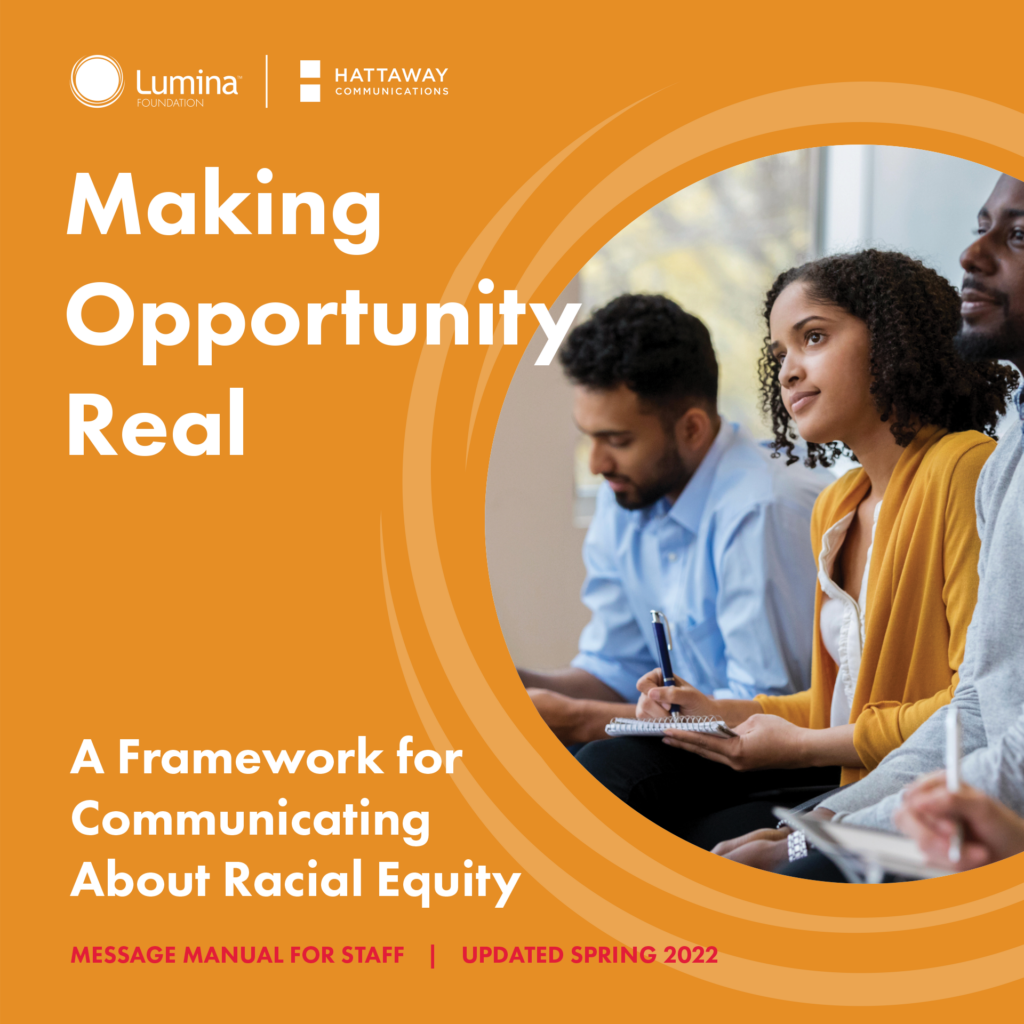
Making Opportunity Real: A Framework for Communicating About Racial Justice
This resource may be shared with proper attribution to the organization.
This resource may be shared with proper attribution to the organization.
This Message Manual contains research-based language and guidance for anyone communicating about racial justice and equity in education. The manual introduces a Racial Justice and Racial Equity Frame that provides guidance for communicating about justice and equity in aspirational ways that move beyond buzzwords and invite new audiences into the conversation. The guide provides research-tested language and specific examples of how to apply the frame when sharing data, crafting story-driven content, and tailoring messages for different audiences.
Research Report
Pathways Matter to Families: What Parents and Young Adults Believe and Want to Know About Education to Workforce Pathways
This resource may be shared with proper attribution to the organization.
This resource may be shared with proper attribution to the organization.
Pathways Matter to Families offers insights and actionable resources for students and families. The two complementary resources linked are informed by original research investigating what parents and young adults think and want to know about education-to-workforce pathways and experiences.
Toolkit
What does it take to engage in narrative change
This resource may be shared with proper attribution to the organization.
This resource may be shared with proper attribution to the organization.
This website captures insights and lessons learned from the Pathways Narrative Project and shares tools and resources for organizations interested in engaging in narrative change as part of their mission and work. The Pathways Narrative Project is a two-year collaborative initiative, led by Wonder: Strategies for Good and supported by the Bill & Melinda Gates Foundation, Walton Family Foundation and others, that convened nine organizations to improve education and career pathways for young people. Together the cohort explored how to leverage the power of narrative to advance programs and systems change in the pathways space.
White Paper
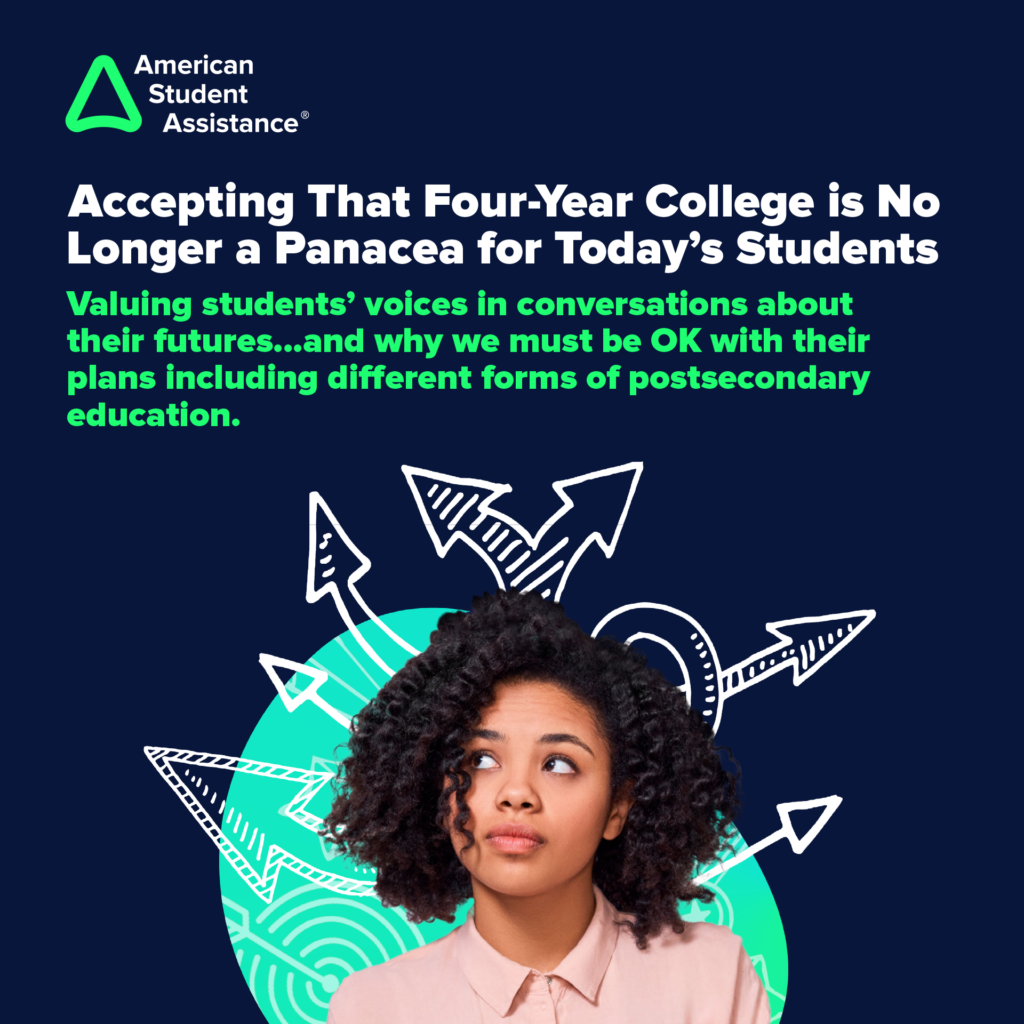
Accepting that Four Year College is No Longer a Pancea
This resource may be shared with proper attribution to the organization.
This resource may be shared with proper attribution to the organization.
This whitepaper resource by the American Student Assistance explains the importance of valuing students’ voices in conversations about their futures, and why families and communities must be OK with their plans including different forms of postsecondary education. Coverage includes the contextual differences of the college landscape "then vs. now", the pressures of decisionmaking and college attendence, policy recommendation, college students' aspirations, and how to guide them in times of uncertainty.
Article, Research Report
Failing on Purpose
This resource may be shared with proper attribution to the organization.
This resource may be shared with proper attribution to the organization.
This survey explores the perspectives and experiences of those in closest contact with the American education system—namely parents, current students, and recent graduates. In partnership with YouGov, American Compass surveyed representative American parents young adults about their views on the purpose of public education; their reflections on the way that the school system has performed; and their desire for reforms to both K–12 schools and higher education. They found that Americans want (1) a public education system less focused on college, more focused on preparing people to build decent lives in their communities, and (2) education reforms to emphasize non-college pathways.
Filters
Research Report
Student Ability Report
This resource may be shared with proper attribution to the organization.
This resource may be shared with proper attribution to the organization.
The State of the Future U.S. Workforce: Student Ability Report analyzes anonymized data from the YouScience Discovery aptitude-based career guidance assessments taken in U.S. high schools (grades 9 through 12) across all 50 states in 2021. They outline our findings and suggest solutions that address the challenge in a holistic, practical way in this report.
Research Report
Voices of Gen Z
This resource may be shared with proper attribution to the organization.
This resource may be shared with proper attribution to the organization.
To better understand Gen Z’s unique perspectives, Gallup and the Walton Family Foundation have partnered to gather opinions directly from members of Gen Z and to track those opinions and experiences over time. This nationally representative, multiyear study of thousands of members of Gen Z between the ages of 12 and 26 gives policymakers and researchers an invaluable resource for not only understanding this generation’s needs, but for making data-driven decisions to address them.
Research Report
Exploring Equitable Postsecondary Value
This resource may be shared with proper attribution to the organization.
This resource may be shared with proper attribution to the organization.
Based on research from the Postsecondary Value Commission, this interactive data tool puts the power of the Value Framework at your fingertips, equipping you with data on the economic value that institutions deliver to their students.
Research Report
Lumina State of Higher Education
This resource may be shared with proper attribution to the organization.
This resource may be shared with proper attribution to the organization.
Gallup and Lumina Foundation conducted a report studying the most pressing issues facing higher education. Insights cover U.S. adults' interest in pursuing higher education, what's keeping them from enrolling and what's causing currently enrolled students to consider stopping out.
Toolkit
Making Opportunity Real: A Framework for Communicating About Racial Justice
This resource may be shared with proper attribution to the organization.
This resource may be shared with proper attribution to the organization.
This Message Manual contains research-based language and guidance for anyone communicating about racial justice and equity in education. The manual introduces a Racial Justice and Racial Equity Frame that provides guidance for communicating about justice and equity in aspirational ways that move beyond buzzwords and invite new audiences into the conversation. The guide provides research-tested language and specific examples of how to apply the frame when sharing data, crafting story-driven content, and tailoring messages for different audiences.
Research Report
Pathways Matter to Families: What Parents and Young Adults Believe and Want to Know About Education to Workforce Pathways
This resource may be shared with proper attribution to the organization.
This resource may be shared with proper attribution to the organization.
Pathways Matter to Families offers insights and actionable resources for students and families. The two complementary resources linked are informed by original research investigating what parents and young adults think and want to know about education-to-workforce pathways and experiences.
Toolkit
What does it take to engage in narrative change
This resource may be shared with proper attribution to the organization.
This resource may be shared with proper attribution to the organization.
This website captures insights and lessons learned from the Pathways Narrative Project and shares tools and resources for organizations interested in engaging in narrative change as part of their mission and work. The Pathways Narrative Project is a two-year collaborative initiative, led by Wonder: Strategies for Good and supported by the Bill & Melinda Gates Foundation, Walton Family Foundation and others, that convened nine organizations to improve education and career pathways for young people. Together the cohort explored how to leverage the power of narrative to advance programs and systems change in the pathways space.
White Paper
Accepting that Four Year College is No Longer a Pancea
This resource may be shared with proper attribution to the organization.
This resource may be shared with proper attribution to the organization.
This whitepaper resource by the American Student Assistance explains the importance of valuing students’ voices in conversations about their futures, and why families and communities must be OK with their plans including different forms of postsecondary education. Coverage includes the contextual differences of the college landscape "then vs. now", the pressures of decisionmaking and college attendence, policy recommendation, college students' aspirations, and how to guide them in times of uncertainty.
Article, Research Report
Failing on Purpose
This resource may be shared with proper attribution to the organization.
This resource may be shared with proper attribution to the organization.
This survey explores the perspectives and experiences of those in closest contact with the American education system—namely parents, current students, and recent graduates. In partnership with YouGov, American Compass surveyed representative American parents young adults about their views on the purpose of public education; their reflections on the way that the school system has performed; and their desire for reforms to both K–12 schools and higher education. They found that Americans want (1) a public education system less focused on college, more focused on preparing people to build decent lives in their communities, and (2) education reforms to emphasize non-college pathways.