Communication
Research Report
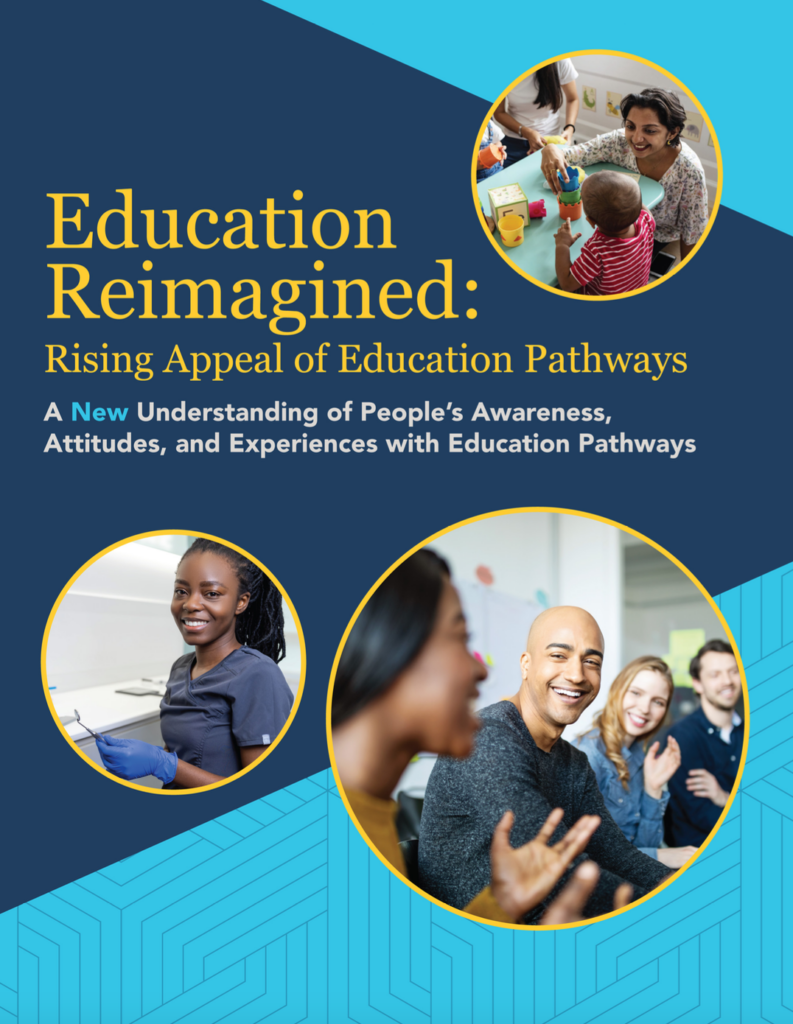
Education Reimagined: Rising Appeal of Education Pathways
This is a white-label resource available for unrestricted use.
This is a white-label resource available for unrestricted use.
This research report presents in-depth findings from a national study conducted by Hattaway Communications on behalf of the Pathways and Workforce Funders Group (PWF). The report explores how learners, parents, and employers understand and experience non-degree education pathways. Drawing on survey data from more than 3,000 participants—including high school students, young adults, parents, and hiring managers—it offers a comprehensive look at attitudes toward education and career training options beyond a four-year degree.
The findings reveal widespread support for pathways programs, shared motivations across audiences, and critical gaps in perceived accessibility, language, and relevance. The report also identifies communication challenges and provides actionable recommendations for practitioners, funders, and advocates to strengthen messaging, improve access, and increase enrollment.

Toolkit
From Insights to Action: Communicating Career Pathways With Confidence
This resource may be shared with proper attribution to the organization.
This resource may be shared with proper attribution to the organization.
This communications toolkit is designed to help organizations and advocates effectively engage learners and employers regarding the value of career education and training programs as well as skill-based hiring. It offers research-backed messaging that reflects what people care about most—and what motivates them to take action. These messages don’t just describe the benefits of pathways programs, they also help audiences see these options as relevant, accessible, and worth pursuing. The guidance in this manual is grounded in science-based communication practices and shaped by extensive research, including a landscape analysis of messaging in the field and media, a nationally representative survey with message testing, roundtable discussions with learners and employers, and a series of pulse surveys.
This toolkit offers adaptable, ready-to-use messages, language, and themes to support outreach, engagement, and storytelling. Use them to strengthen your communications—whether you're writing a social post, developing a presentation, or talking with partners and stakeholders. The messages are designed to be flexible; feel free to use them as written or tailor them to fit your audience and voice.

Toolkit
Communications Toolkit: Postsecondary Pathways and The Shifting American Economy.
This resource may be shared with proper attribution to the organization.
This resource may be shared with proper attribution to the organization.
A toolkit communicating pathways with students and families. it includes: a) how different pathways can look like; b) how pathway career ladder can look like; c) how pathway support systems can look like.
Toolkit
Communicating the Value of Apprenticeships
This resource may be shared with proper attribution to the organization.
This resource may be shared with proper attribution to the organization.
This short tool offers persuasive arguments that shows how youth apprenticeships benefit both young career seekers and businesses alike. For employers, it demonstrates how apprenticeships can fill labor gaps across industries, and act as a reliable source of nationally credentialed, ready-to-work job candidates. Youth are offered access to paid work-based training in high-growth fields and the significant earnings potential.
Toolkit
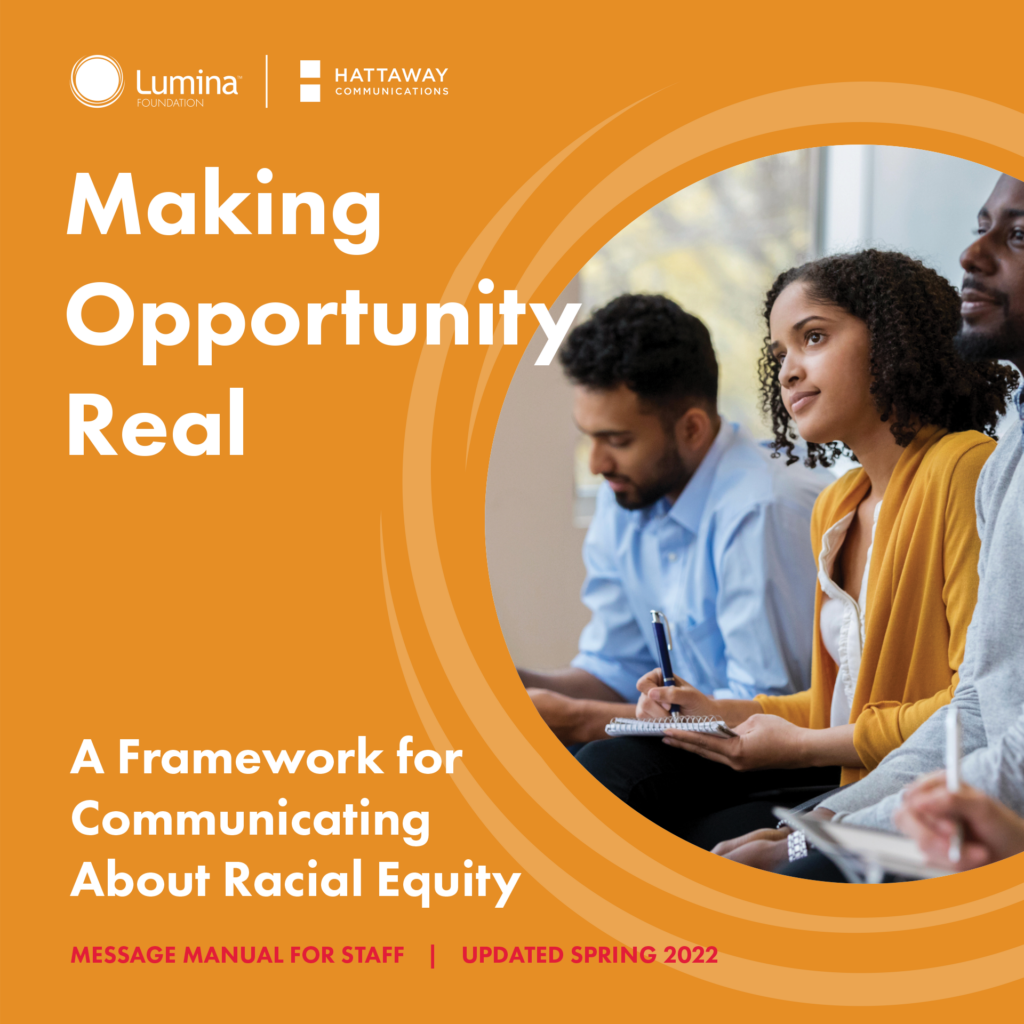
Making Opportunity Real: A Framework for Communicating About Racial Justice
This resource may be shared with proper attribution to the organization.
This resource may be shared with proper attribution to the organization.
This Message Manual contains research-based language and guidance for anyone communicating about racial justice and equity in education. The manual introduces a Racial Justice and Racial Equity Frame that provides guidance for communicating about justice and equity in aspirational ways that move beyond buzzwords and invite new audiences into the conversation. The guide provides research-tested language and specific examples of how to apply the frame when sharing data, crafting story-driven content, and tailoring messages for different audiences.
Playbook or Guidebook
Building a Communications and Marketing Strategy in a State or Institution for Incremental Credentialing
This resource may be shared with proper attribution to the organization.
This resource may be shared with proper attribution to the organization.
Communications and marketing are critical in the effort to transform the nation’s degree-centric postsecondary model to an incremental credentialing system. To support such a major transformation, communications and marketing are needed at three levels: state and institution Wide, individual credential and program levels, and nationwide. This Playbook focuses on the first of these.

Playbook or Guidebook
Making the Case
This resource may be shared with proper attribution to the organization.
This resource may be shared with proper attribution to the organization.
This playbook gives people in the learn-and-work ecosystem key information they can use to make the case for incremental credentialing. Case-making requires different information for various audiences, including the campus community, employers and industry partners, funders, learners, and policymakers. The playbook covers: How to define incremental credentialing and incremental credentials, the benefits of incremental credentialing to various constituencies, and the four factors driving the case for incremental credentialing.
Filters
Research Report
Education Reimagined: Rising Appeal of Education Pathways
This is a white-label resource available for unrestricted use.
This is a white-label resource available for unrestricted use.
This research report presents in-depth findings from a national study conducted by Hattaway Communications on behalf of the Pathways and Workforce Funders Group (PWF). The report explores how learners, parents, and employers understand and experience non-degree education pathways. Drawing on survey data from more than 3,000 participants—including high school students, young adults, parents, and hiring managers—it offers a comprehensive look at attitudes toward education and career training options beyond a four-year degree.
The findings reveal widespread support for pathways programs, shared motivations across audiences, and critical gaps in perceived accessibility, language, and relevance. The report also identifies communication challenges and provides actionable recommendations for practitioners, funders, and advocates to strengthen messaging, improve access, and increase enrollment.
Toolkit
From Insights to Action: Communicating Career Pathways With Confidence
This resource may be shared with proper attribution to the organization.
This resource may be shared with proper attribution to the organization.
This communications toolkit is designed to help organizations and advocates effectively engage learners and employers regarding the value of career education and training programs as well as skill-based hiring. It offers research-backed messaging that reflects what people care about most—and what motivates them to take action. These messages don’t just describe the benefits of pathways programs, they also help audiences see these options as relevant, accessible, and worth pursuing. The guidance in this manual is grounded in science-based communication practices and shaped by extensive research, including a landscape analysis of messaging in the field and media, a nationally representative survey with message testing, roundtable discussions with learners and employers, and a series of pulse surveys.
This toolkit offers adaptable, ready-to-use messages, language, and themes to support outreach, engagement, and storytelling. Use them to strengthen your communications—whether you're writing a social post, developing a presentation, or talking with partners and stakeholders. The messages are designed to be flexible; feel free to use them as written or tailor them to fit your audience and voice.
Toolkit
Communications Toolkit: Postsecondary Pathways and The Shifting American Economy.
This resource may be shared with proper attribution to the organization.
This resource may be shared with proper attribution to the organization.
A toolkit communicating pathways with students and families. it includes: a) how different pathways can look like; b) how pathway career ladder can look like; c) how pathway support systems can look like.
Toolkit
Communicating the Value of Apprenticeships
This resource may be shared with proper attribution to the organization.
This resource may be shared with proper attribution to the organization.
This short tool offers persuasive arguments that shows how youth apprenticeships benefit both young career seekers and businesses alike. For employers, it demonstrates how apprenticeships can fill labor gaps across industries, and act as a reliable source of nationally credentialed, ready-to-work job candidates. Youth are offered access to paid work-based training in high-growth fields and the significant earnings potential.
Toolkit
Making Opportunity Real: A Framework for Communicating About Racial Justice
This resource may be shared with proper attribution to the organization.
This resource may be shared with proper attribution to the organization.
This Message Manual contains research-based language and guidance for anyone communicating about racial justice and equity in education. The manual introduces a Racial Justice and Racial Equity Frame that provides guidance for communicating about justice and equity in aspirational ways that move beyond buzzwords and invite new audiences into the conversation. The guide provides research-tested language and specific examples of how to apply the frame when sharing data, crafting story-driven content, and tailoring messages for different audiences.
Playbook or Guidebook
Building a Communications and Marketing Strategy in a State or Institution for Incremental Credentialing
This resource may be shared with proper attribution to the organization.
This resource may be shared with proper attribution to the organization.
Communications and marketing are critical in the effort to transform the nation’s degree-centric postsecondary model to an incremental credentialing system. To support such a major transformation, communications and marketing are needed at three levels: state and institution Wide, individual credential and program levels, and nationwide. This Playbook focuses on the first of these.
Playbook or Guidebook
Making the Case
This resource may be shared with proper attribution to the organization.
This resource may be shared with proper attribution to the organization.
This playbook gives people in the learn-and-work ecosystem key information they can use to make the case for incremental credentialing. Case-making requires different information for various audiences, including the campus community, employers and industry partners, funders, learners, and policymakers. The playbook covers: How to define incremental credentialing and incremental credentials, the benefits of incremental credentialing to various constituencies, and the four factors driving the case for incremental credentialing.