Pathways Resource Library
Tools to help people understand their options
Explore messaging, research, and resources from across the field—along with customizable, white-label tools that you can adapt, brand as your own, and use in your organization’s communications—to help you reach key audiences with language that builds confidence and expands what’s possible.
Narrative Framework
Framework for the Design and Implementation of College and Career Pathways in Rural Communities
This resource may be shared with proper attribution to the organization.
This resource may be shared with proper attribution to the organization.
Pathways that respond to the unique needs of—and opportunities in—rural communities are a critical strategy to support youth and advance economic development. This framework outlines key considerations and promising strategies for pathways leaders who seek to achieve equitable outcomes for youth while strengthening rural communities.

Playbook or Guidebook
Tear the Paper Ceiling
This resource may be shared with proper attribution to the organization.
This resource may be shared with proper attribution to the organization.
The Tear the Paper Ceiling: STARs Hiring Playbook gives human resource professionals, talent leaders, and hiring managers practical tools and guidance to shift their hiring to include STARs - workers Skilled Through Alternative Routes.

Playbook or Guidebook
Making the Case
This resource may be shared with proper attribution to the organization.
This resource may be shared with proper attribution to the organization.
This playbook gives people in the learn-and-work ecosystem key information they can use to make the case for incremental credentialing. Case-making requires different information for various audiences, including the campus community, employers and industry partners, funders, learners, and policymakers. The playbook covers: How to define incremental credentialing and incremental credentials, the benefits of incremental credentialing to various constituencies, and the four factors driving the case for incremental credentialing.
Research Report
The Features of Narratives: A Model of Narrative Form for Social Change Efforts
This resource may be shared with proper attribution to the organization.
This resource may be shared with proper attribution to the organization.
Calls for narrative change abound in social change work. But what kinds of patterns qualify as narratives, and how narratives are embedded within particular stories, remains hazy. This report introduces a model of narrative, defining the elements and identifying the patterns in stories that comprise the narrative form. Our model identifies a set of features that make up a narrative, offering a practical tool for those working to change narratives within and beyond the issue of poverty.

Toolkit
Communications Toolkit: Postsecondary Pathways and The Shifting American Economy.
This resource may be shared with proper attribution to the organization.
This resource may be shared with proper attribution to the organization.
A toolkit communicating pathways with students and families. it includes: a) how different pathways can look like; b) how pathway career ladder can look like; c) how pathway support systems can look like.
Research Report
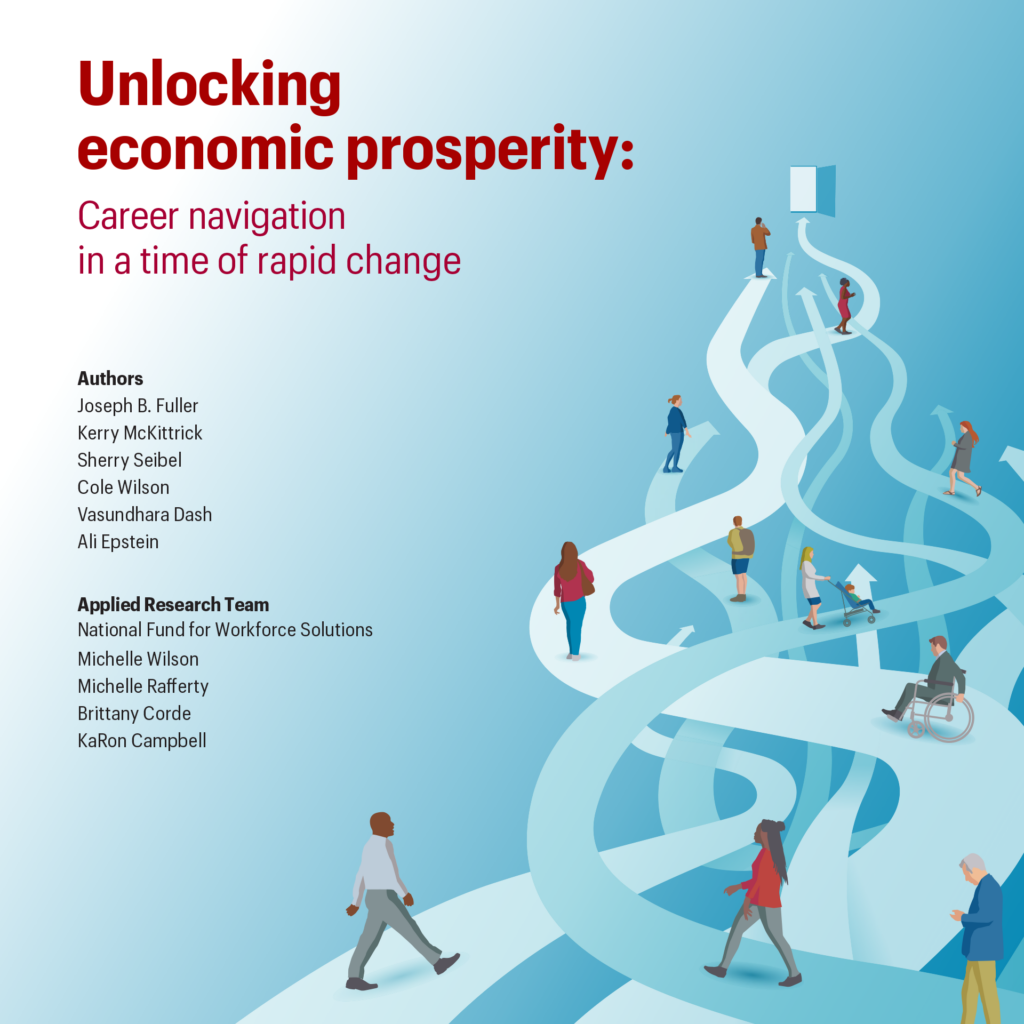
Unlocking Economic Prosperity
This resource may be shared with proper attribution to the organization.
This resource may be shared with proper attribution to the organization.
Blog Post
Telling the Right Stories: How Narratives Can Change Community College
This resource may be shared with proper attribution to the organization.
This resource may be shared with proper attribution to the organization.
The post highlights the gap between community college students' aspirations to earn four-year degrees and the reality that only a small percentage achieve this goal. It criticizes current narratives and policies that hinder successful transfers, particularly for low-income and minority students, and advocates for a shift towards focusing on credit mobility and recognition. By changing the narrative to value students' prior achievements and creating more flexible, student-centered pathways, the aim is to foster equitable educational and economic outcomes.
Research Report
MAKING THE CASE FOR SKILLS-FIRST HIRING WITH HIRING PROFESSIONALS
This resource may be shared with proper attribution to the organization.
This resource may be shared with proper attribution to the organization.
In 2023, SHRM Foundation commissioned Topos Foundation to investigate the effectiveness of various framing, language, and argumentation deployed in an ongoing effort, by SHRM Foundation and many other partners, to promote hiring that puts less emphasis on academic degrees and considers all the ways job candidates may be qualified for a position. This report contains valuable insights into effectively communicating the case for skills-first hiring with the broadest audience.
Research Report
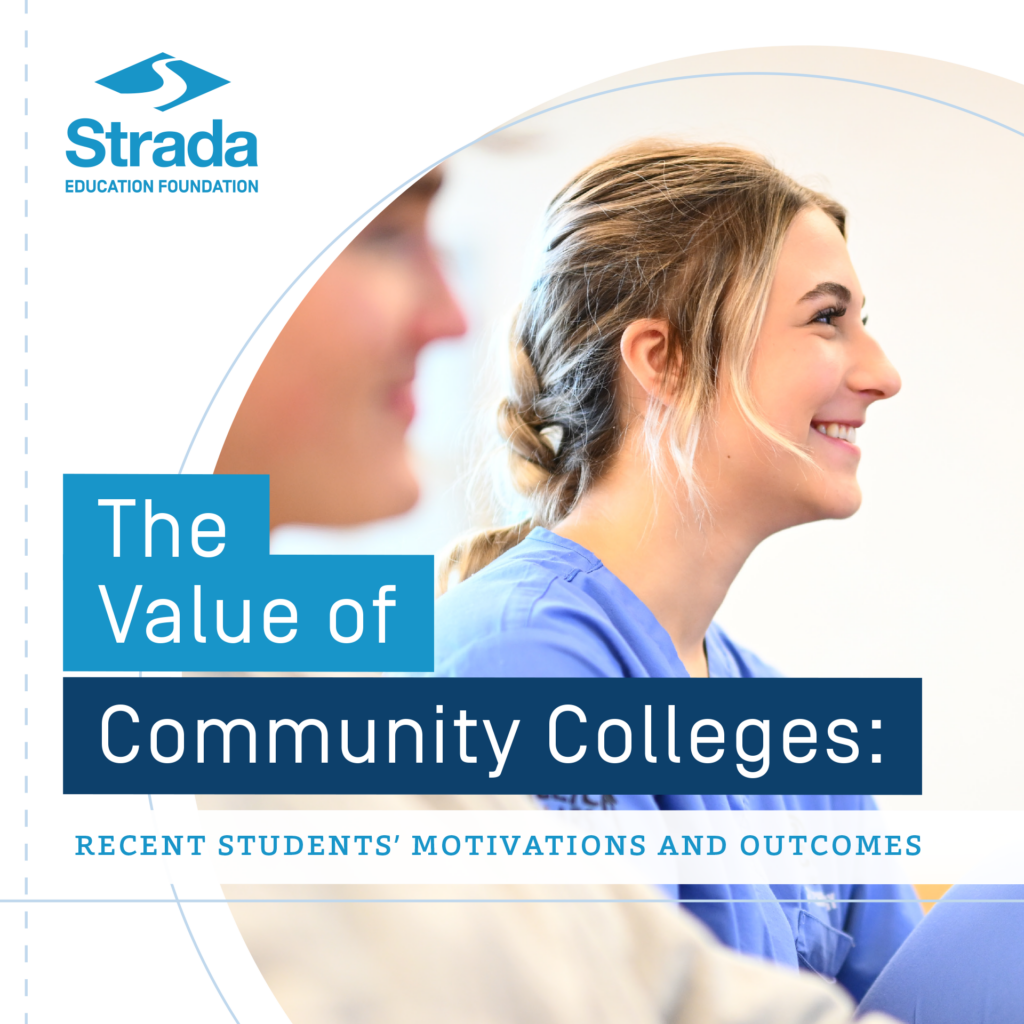
The Value of Community Colleges: Recent Students’ Motivations and Outcomes
This resource may be shared with proper attribution to the organization.
This resource may be shared with proper attribution to the organization.
This study offers new insights about value community colleges provide and the range of needs that they serve. It examines recent community college students' motivations for enrolling, and their self-reported perceptions of the value of their education and training experiences, and the degree to which they acheived their goals for enrolling.
Filters
Narrative Framework
Framework for the Design and Implementation of College and Career Pathways in Rural Communities
This resource may be shared with proper attribution to the organization.
This resource may be shared with proper attribution to the organization.
Pathways that respond to the unique needs of—and opportunities in—rural communities are a critical strategy to support youth and advance economic development. This framework outlines key considerations and promising strategies for pathways leaders who seek to achieve equitable outcomes for youth while strengthening rural communities.
Playbook or Guidebook
Tear the Paper Ceiling
This resource may be shared with proper attribution to the organization.
This resource may be shared with proper attribution to the organization.
The Tear the Paper Ceiling: STARs Hiring Playbook gives human resource professionals, talent leaders, and hiring managers practical tools and guidance to shift their hiring to include STARs - workers Skilled Through Alternative Routes.
Playbook or Guidebook
Making the Case
This resource may be shared with proper attribution to the organization.
This resource may be shared with proper attribution to the organization.
This playbook gives people in the learn-and-work ecosystem key information they can use to make the case for incremental credentialing. Case-making requires different information for various audiences, including the campus community, employers and industry partners, funders, learners, and policymakers. The playbook covers: How to define incremental credentialing and incremental credentials, the benefits of incremental credentialing to various constituencies, and the four factors driving the case for incremental credentialing.
Research Report
The Features of Narratives: A Model of Narrative Form for Social Change Efforts
This resource may be shared with proper attribution to the organization.
This resource may be shared with proper attribution to the organization.
Calls for narrative change abound in social change work. But what kinds of patterns qualify as narratives, and how narratives are embedded within particular stories, remains hazy. This report introduces a model of narrative, defining the elements and identifying the patterns in stories that comprise the narrative form. Our model identifies a set of features that make up a narrative, offering a practical tool for those working to change narratives within and beyond the issue of poverty.
Toolkit
Communications Toolkit: Postsecondary Pathways and The Shifting American Economy.
This resource may be shared with proper attribution to the organization.
This resource may be shared with proper attribution to the organization.
A toolkit communicating pathways with students and families. it includes: a) how different pathways can look like; b) how pathway career ladder can look like; c) how pathway support systems can look like.
Research Report
Unlocking Economic Prosperity
This resource may be shared with proper attribution to the organization.
This resource may be shared with proper attribution to the organization.
Blog Post
Telling the Right Stories: How Narratives Can Change Community College
This resource may be shared with proper attribution to the organization.
This resource may be shared with proper attribution to the organization.
The post highlights the gap between community college students' aspirations to earn four-year degrees and the reality that only a small percentage achieve this goal. It criticizes current narratives and policies that hinder successful transfers, particularly for low-income and minority students, and advocates for a shift towards focusing on credit mobility and recognition. By changing the narrative to value students' prior achievements and creating more flexible, student-centered pathways, the aim is to foster equitable educational and economic outcomes.
Research Report
MAKING THE CASE FOR SKILLS-FIRST HIRING WITH HIRING PROFESSIONALS
This resource may be shared with proper attribution to the organization.
This resource may be shared with proper attribution to the organization.
In 2023, SHRM Foundation commissioned Topos Foundation to investigate the effectiveness of various framing, language, and argumentation deployed in an ongoing effort, by SHRM Foundation and many other partners, to promote hiring that puts less emphasis on academic degrees and considers all the ways job candidates may be qualified for a position. This report contains valuable insights into effectively communicating the case for skills-first hiring with the broadest audience.
Research Report
The Value of Community Colleges: Recent Students’ Motivations and Outcomes
This resource may be shared with proper attribution to the organization.
This resource may be shared with proper attribution to the organization.
This study offers new insights about value community colleges provide and the range of needs that they serve. It examines recent community college students' motivations for enrolling, and their self-reported perceptions of the value of their education and training experiences, and the degree to which they acheived their goals for enrolling.