Reaching Employers
Engage employers in new ways of thinking about talent
Employers are essential partners—but may need new language and framing to engage in new approaches to talent development and skills-based hiring.
Use these tools to:
- Communicate the value of skills and experience alongside credentials
- Highlight real business benefits and outcomes
- Encourage adoption of more inclusive hiring practices
Explore resources for reaching employers below
Playbook or Guidebook
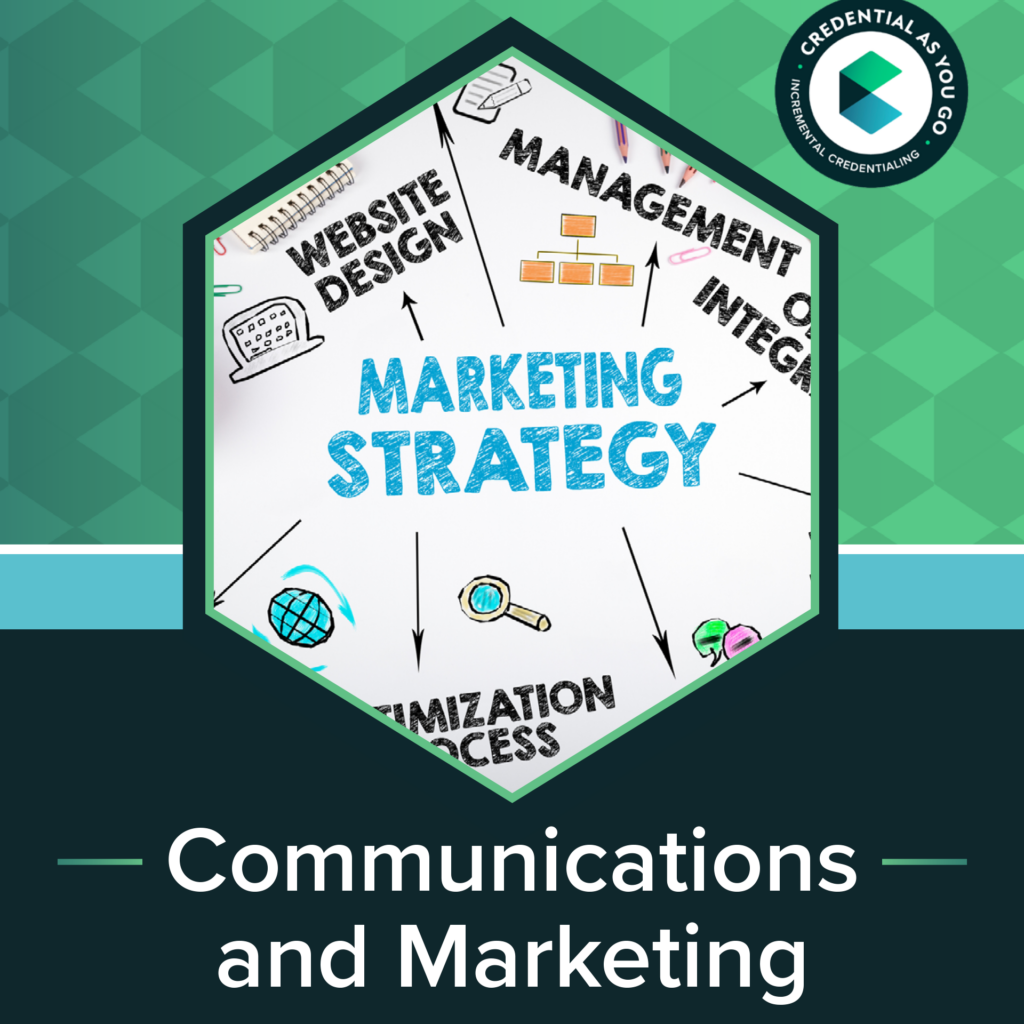
Building a Communications and Marketing Strategy in a State or Institution for Incremental Credentialing
This resource may be shared with proper attribution to the organization.
This resource may be shared with proper attribution to the organization.
Communications and marketing are critical in the effort to transform the nation’s degree-centric postsecondary model to an incremental credentialing system. To support such a major transformation, communications and marketing are needed at three levels: state and institution Wide, individual credential and program levels, and nationwide. This Playbook focuses on the first of these.

Playbook or Guidebook
Making the Case
This resource may be shared with proper attribution to the organization.
This resource may be shared with proper attribution to the organization.
This playbook gives people in the learn-and-work ecosystem key information they can use to make the case for incremental credentialing. Case-making requires different information for various audiences, including the campus community, employers and industry partners, funders, learners, and policymakers. The playbook covers: How to define incremental credentialing and incremental credentials, the benefits of incremental credentialing to various constituencies, and the four factors driving the case for incremental credentialing.
Research Report
Organizing People through Storytelling: Public Narrative as a Leadership Development Practice
This resource may be shared with proper attribution to the organization.
This resource may be shared with proper attribution to the organization.
The study supported by the Bloomberg Harvard City Leadership Initiative proposes “public narrative” as a key form of leadership development in organizations and communities. This report raises a set of 'Action Insights' on how to use public narrative to organize people through storytelling.
White Paper
Degrees of Risk: What Gen Z and Employers Think About Education-to-Career Pathways… and How Those Views are Changing
This resource may be shared with proper attribution to the organization.
This resource may be shared with proper attribution to the organization.
This is an examination of what is required to make a person employable, as well as what professional and educational success looks like. This study was commissioned by American Student Assistance (ASA) and Jobs for the Future (JFF). The research aimed to understand current familiarity with and perceptions of non-degree postsecondary pathways from both Gen Z and employer perspectives. This paper also makes recommendations for the way forward to expand high-quality postsecondary options for all learners.

Article, Research Report
Measuring Who Moves Ahead
This resource may be shared with proper attribution to the organization.
This resource may be shared with proper attribution to the organization.
The 2023 American Opportunity Index evaluated nearly 400 large U.S. firms to produce key findings on how firms maximize their internal talent to drive corporate performance and the growth of their employees. It also raised significant disparities in promotion and retention among companies and underscores the business choice in talent management practices. Among their key findings are that large companies that excel in employee retention save up to $400 million annually on turnover costs, primarily by offering promotion opportunities and competitive wages. Additionally, top companies are 2.5 times more likely to promote employees and pay 68% more for the same roles, benefiting corporate performance and worker growth.
Research Report
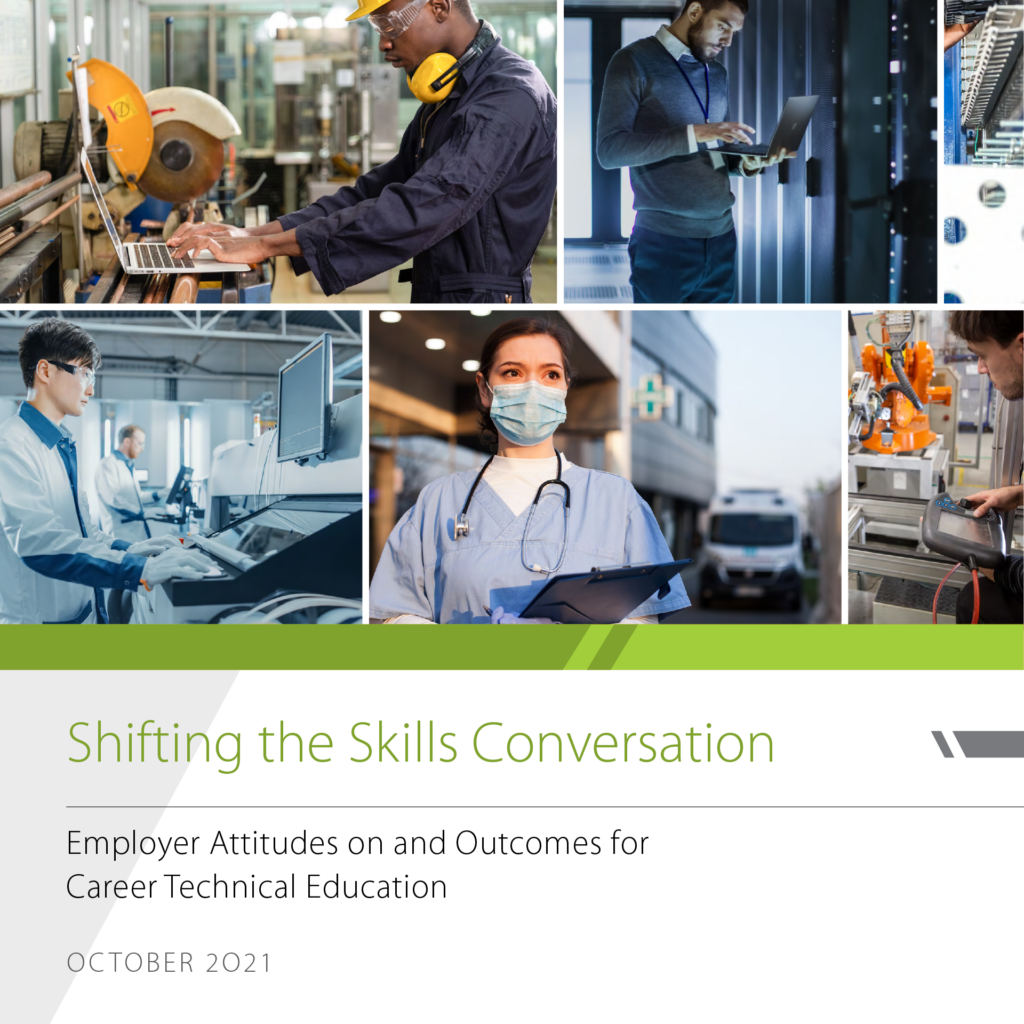
Shifting the Skills Conversation: Employer Attitudes and Outcomes of Career Technical Education
This resource may be shared with proper attribution to the organization.
This resource may be shared with proper attribution to the organization.
This resource provides tangible data points on employer attitudes toward Career Technical Education (CTE) and the positive return on investment CTE experiences provide for business and economic growth. Based on a national survey of more than 300 professionals actively involved in hiring decisions in in-demand fields, these new findings demonstrate that employers strongly support and see direct value in CTE. The findings also indicate that employer recognition and support for skills-focused hiring is growing and that employers back a greater public investment in CTE programs.
Filters
Playbook or Guidebook
Building a Communications and Marketing Strategy in a State or Institution for Incremental Credentialing
This resource may be shared with proper attribution to the organization.
This resource may be shared with proper attribution to the organization.
Communications and marketing are critical in the effort to transform the nation’s degree-centric postsecondary model to an incremental credentialing system. To support such a major transformation, communications and marketing are needed at three levels: state and institution Wide, individual credential and program levels, and nationwide. This Playbook focuses on the first of these.
Playbook or Guidebook
Making the Case
This resource may be shared with proper attribution to the organization.
This resource may be shared with proper attribution to the organization.
This playbook gives people in the learn-and-work ecosystem key information they can use to make the case for incremental credentialing. Case-making requires different information for various audiences, including the campus community, employers and industry partners, funders, learners, and policymakers. The playbook covers: How to define incremental credentialing and incremental credentials, the benefits of incremental credentialing to various constituencies, and the four factors driving the case for incremental credentialing.
Research Report
Organizing People through Storytelling: Public Narrative as a Leadership Development Practice
This resource may be shared with proper attribution to the organization.
This resource may be shared with proper attribution to the organization.
The study supported by the Bloomberg Harvard City Leadership Initiative proposes “public narrative” as a key form of leadership development in organizations and communities. This report raises a set of 'Action Insights' on how to use public narrative to organize people through storytelling.
White Paper
Degrees of Risk: What Gen Z and Employers Think About Education-to-Career Pathways… and How Those Views are Changing
This resource may be shared with proper attribution to the organization.
This resource may be shared with proper attribution to the organization.
This is an examination of what is required to make a person employable, as well as what professional and educational success looks like. This study was commissioned by American Student Assistance (ASA) and Jobs for the Future (JFF). The research aimed to understand current familiarity with and perceptions of non-degree postsecondary pathways from both Gen Z and employer perspectives. This paper also makes recommendations for the way forward to expand high-quality postsecondary options for all learners.
Article, Research Report
Measuring Who Moves Ahead
This resource may be shared with proper attribution to the organization.
This resource may be shared with proper attribution to the organization.
The 2023 American Opportunity Index evaluated nearly 400 large U.S. firms to produce key findings on how firms maximize their internal talent to drive corporate performance and the growth of their employees. It also raised significant disparities in promotion and retention among companies and underscores the business choice in talent management practices. Among their key findings are that large companies that excel in employee retention save up to $400 million annually on turnover costs, primarily by offering promotion opportunities and competitive wages. Additionally, top companies are 2.5 times more likely to promote employees and pay 68% more for the same roles, benefiting corporate performance and worker growth.
Research Report
Shifting the Skills Conversation: Employer Attitudes and Outcomes of Career Technical Education
This resource may be shared with proper attribution to the organization.
This resource may be shared with proper attribution to the organization.
This resource provides tangible data points on employer attitudes toward Career Technical Education (CTE) and the positive return on investment CTE experiences provide for business and economic growth. Based on a national survey of more than 300 professionals actively involved in hiring decisions in in-demand fields, these new findings demonstrate that employers strongly support and see direct value in CTE. The findings also indicate that employer recognition and support for skills-focused hiring is growing and that employers back a greater public investment in CTE programs.