Pathways Resource Library
Tools to help people understand their options
Explore messaging, research, and resources from across the field—along with customizable, white-label tools that you can adapt, brand as your own, and use in your organization’s communications—to help you reach key audiences with language that builds confidence and expands what’s possible.
Article
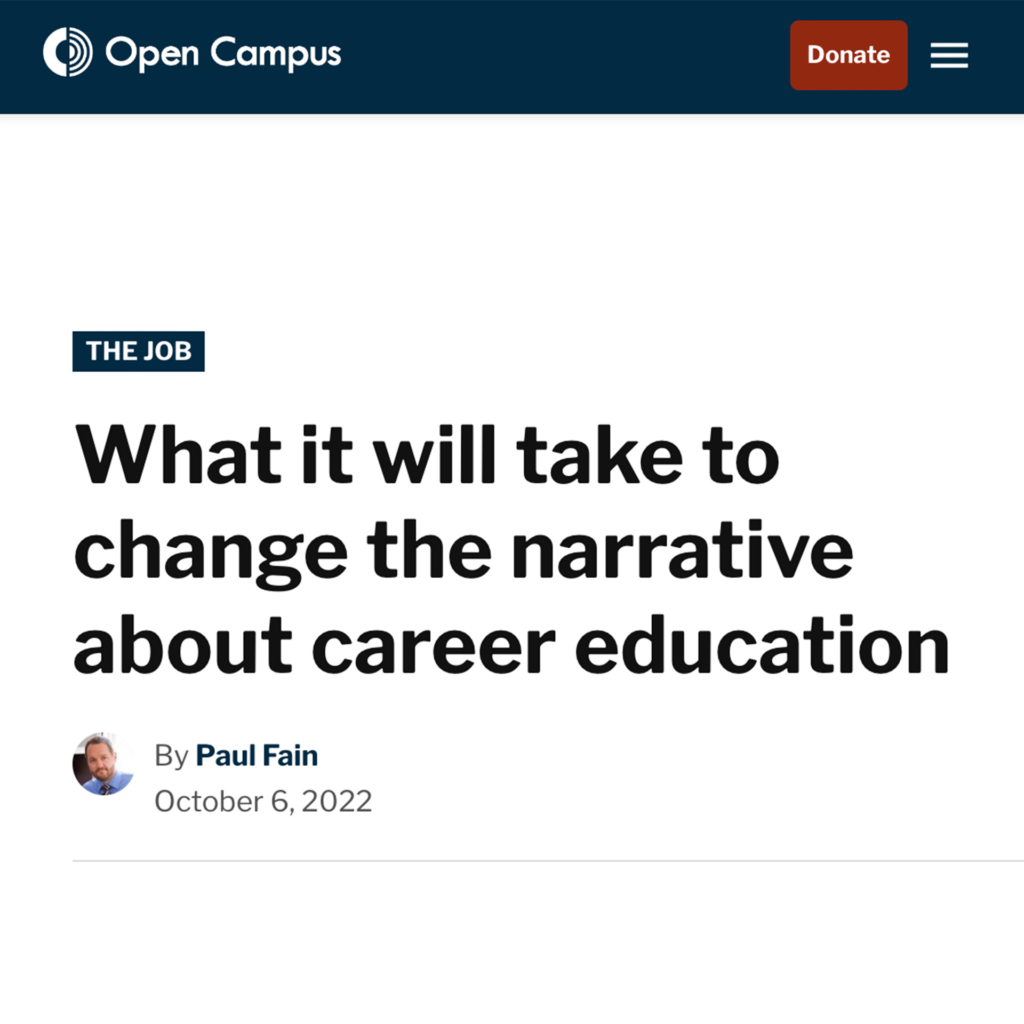
What it will take to change the narrative about career education
This resource may be shared with proper attribution to the organization.
This resource may be shared with proper attribution to the organization.
The article discusses the growing issue of young Americans aged 18-24 not engaging in college or work, exacerbated by the pandemic. Despite high job vacancies, there's skepticism toward non-college education and job-training programs. The article highlights policy recommendations to integrate workforce training and higher education, stressing that both traditional and non-degree credentials are essential for economic mobility. The purpose is to advocate for a broader, more inclusive approach to postsecondary education and workforce training, aiming to enhance economic opportunities for all.
Research Report
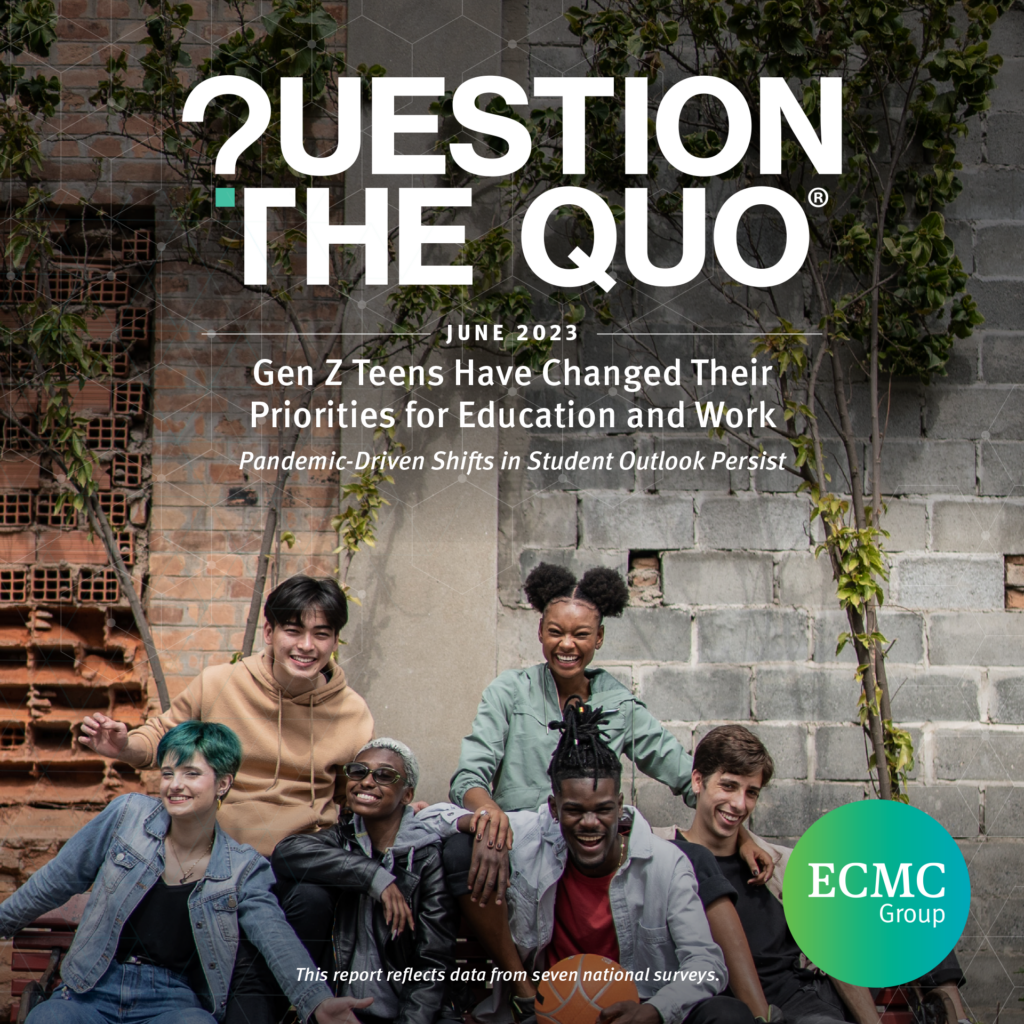
Question the Status Quo: Gen Z Teens Have Changed Their Priorities for Education and Work
This resource may be shared with proper attribution to the organization.
This resource may be shared with proper attribution to the organization.
Research Report
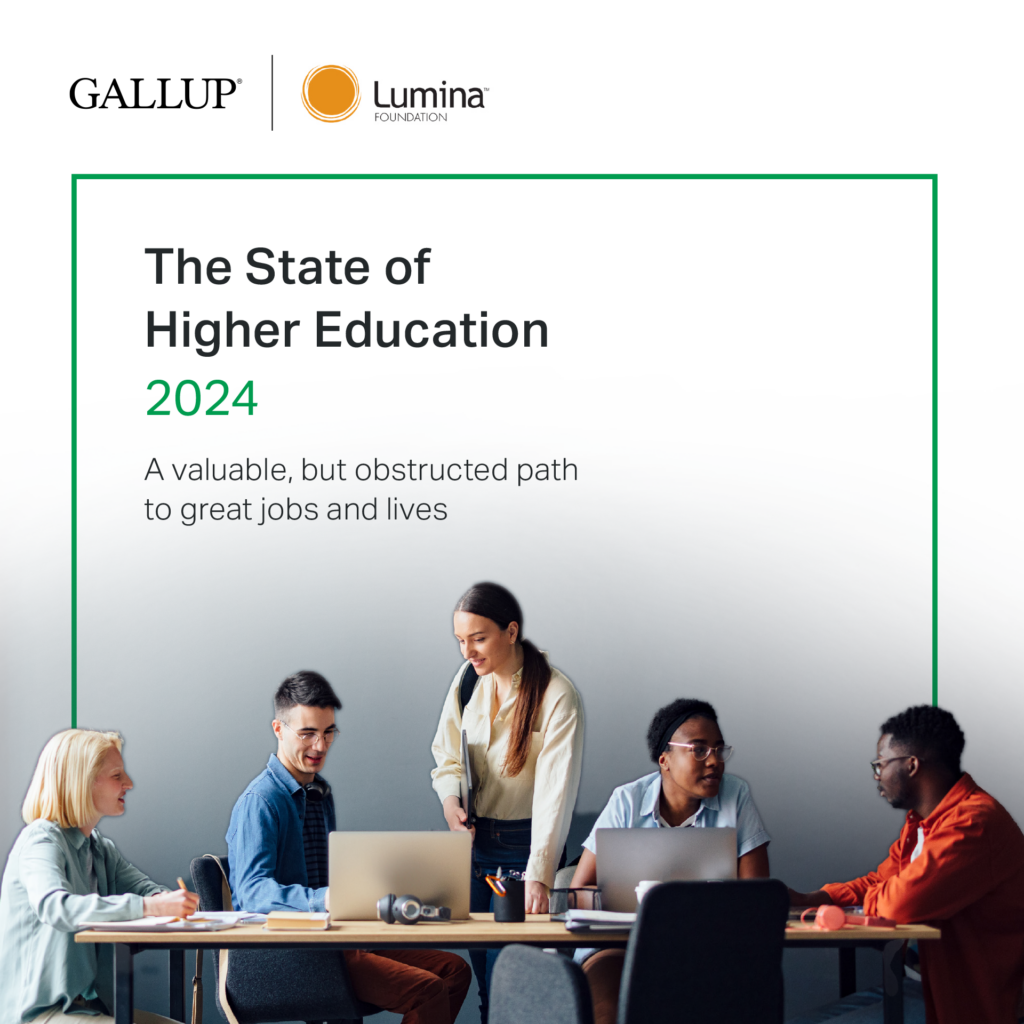
Lumina State of Higher Education
This resource may be shared with proper attribution to the organization.
This resource may be shared with proper attribution to the organization.
Gallup and Lumina Foundation conducted a report studying the most pressing issues facing higher education. Insights cover U.S. adults' interest in pursuing higher education, what's keeping them from enrolling and what's causing currently enrolled students to consider stopping out.
Research Report
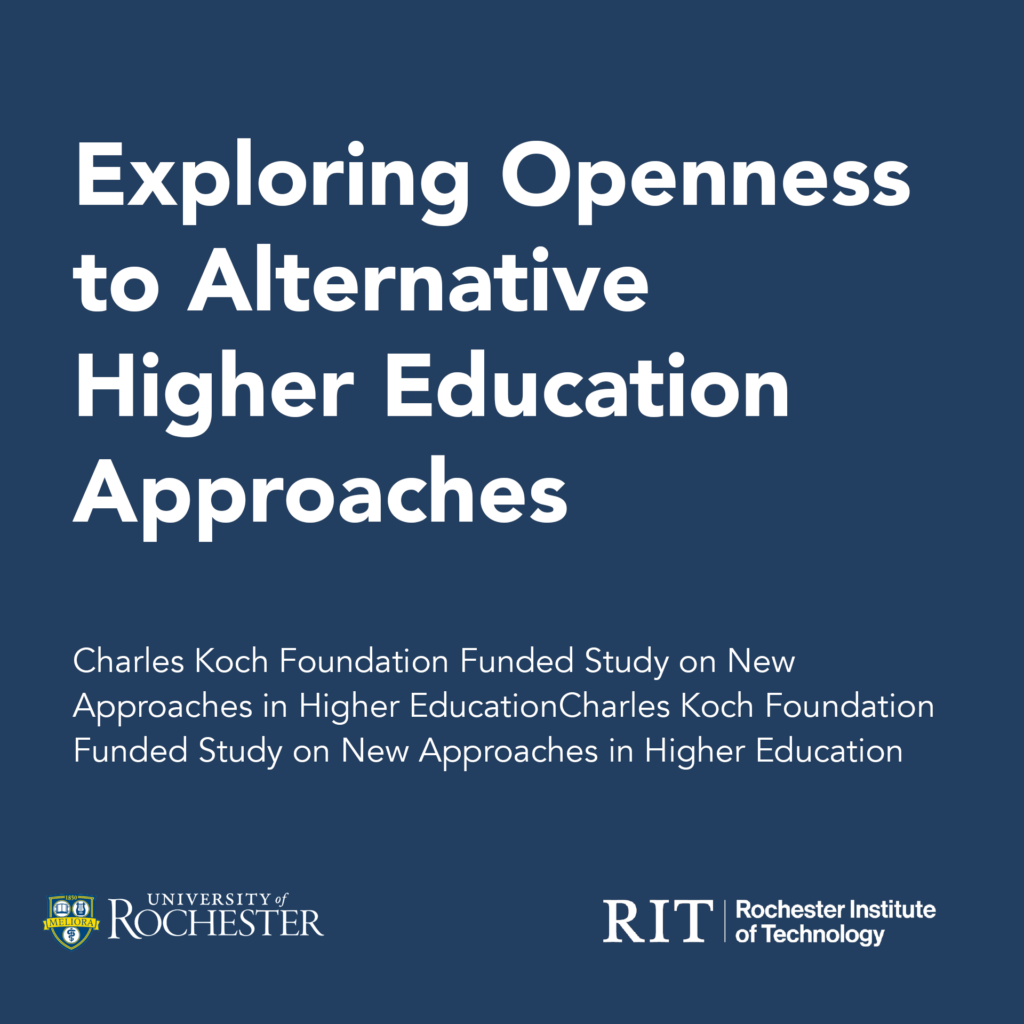
High School Awareness Research
This resource may be shared with proper attribution to the organization.
This resource may be shared with proper attribution to the organization.
This is a report containing the results of a study on new approaches in higher education, funded by the Charles Kock Foundation.
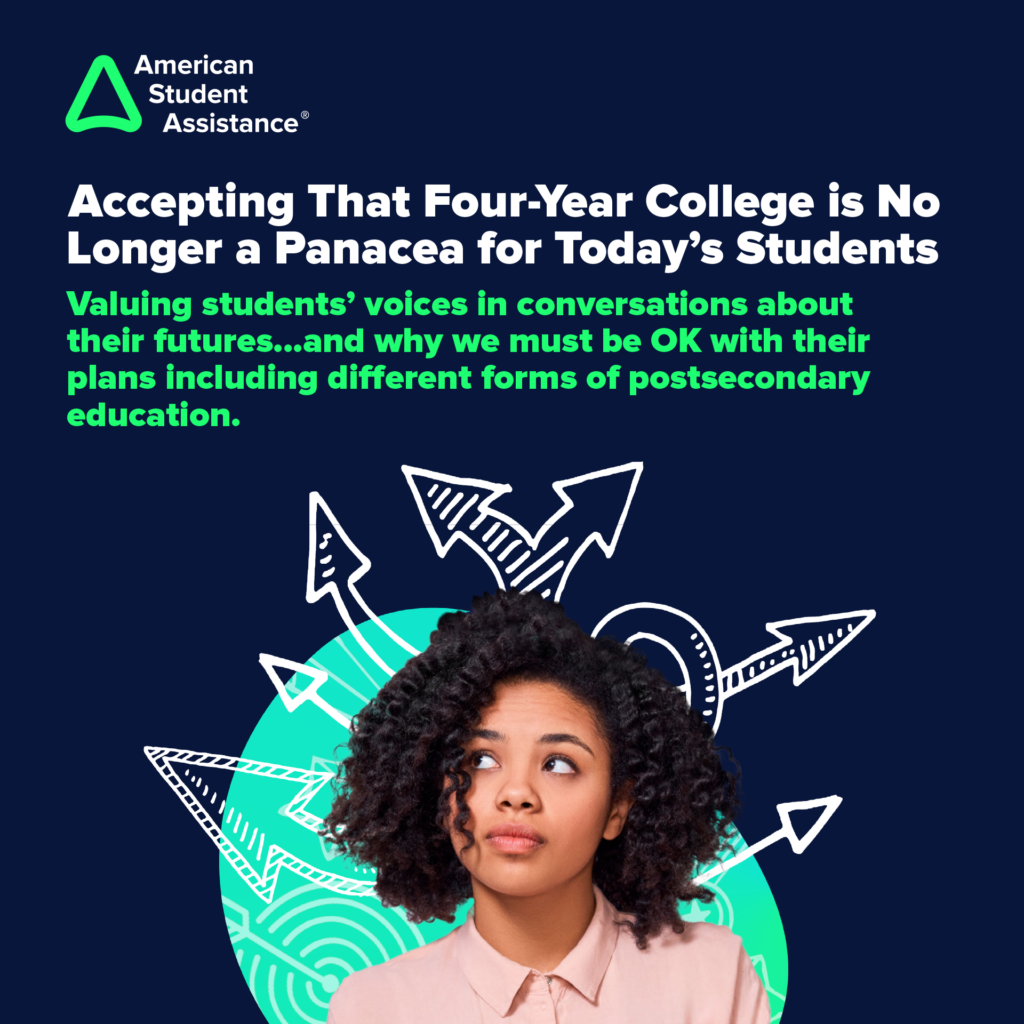
White Paper
Accepting that Four Year College is No Longer a Pancea
This resource may be shared with proper attribution to the organization.
This resource may be shared with proper attribution to the organization.
This whitepaper resource by the American Student Assistance explains the importance of valuing students’ voices in conversations about their futures, and why families and communities must be OK with their plans including different forms of postsecondary education. Coverage includes the contextual differences of the college landscape "then vs. now", the pressures of decisionmaking and college attendence, policy recommendation, college students' aspirations, and how to guide them in times of uncertainty.
Research Report
Success Index: Misunderstanding the American Dream
This resource may be shared with proper attribution to the organization.
This resource may be shared with proper attribution to the organization.
The Success Index represents a private opinion survey of the American people’s personal definitions of success and the American Dream. It uses tools and methodologies that minimize distortions found in traditional public opinion polls to reveal not only what Americans prioritize most — and least — in a successful life, but also what they believe about other people’s priorities.
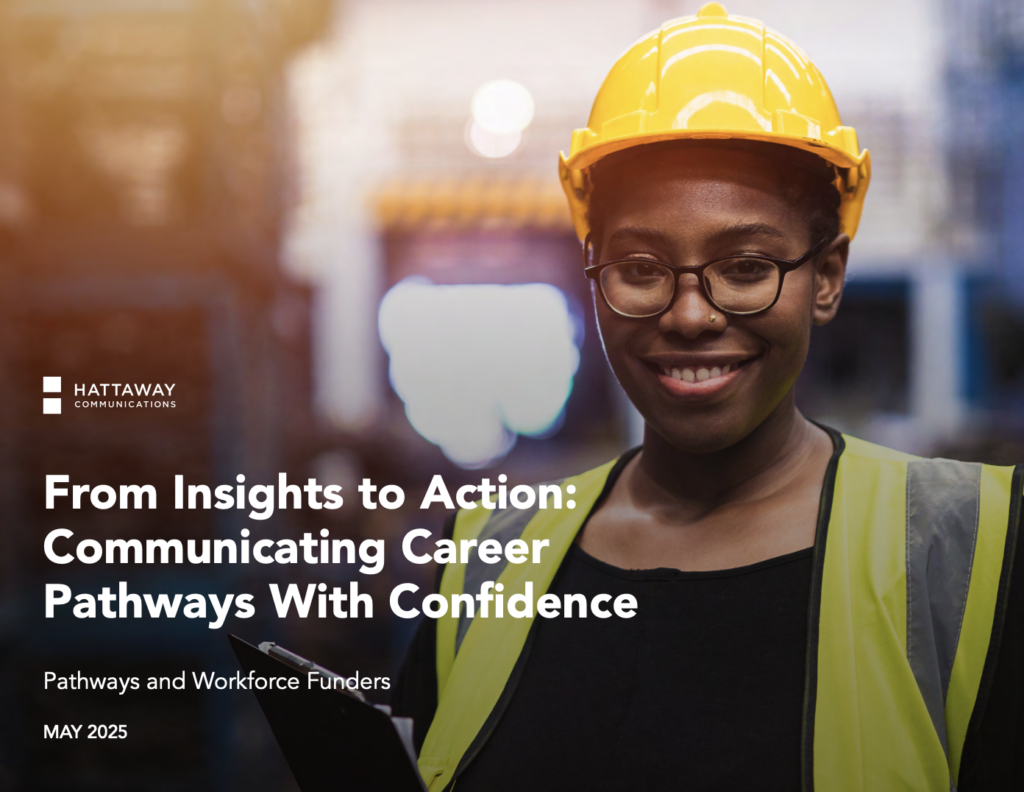
Toolkit
From Insights to Action: Communicating Career Pathways With Confidence
This resource may be shared with proper attribution to the organization.
This resource may be shared with proper attribution to the organization.
This communications toolkit is designed to help organizations and advocates effectively engage learners and employers regarding the value of career education and training programs as well as skill-based hiring. It offers research-backed messaging that reflects what people care about most—and what motivates them to take action. These messages don’t just describe the benefits of pathways programs, they also help audiences see these options as relevant, accessible, and worth pursuing. The guidance in this manual is grounded in science-based communication practices and shaped by extensive research, including a landscape analysis of messaging in the field and media, a nationally representative survey with message testing, roundtable discussions with learners and employers, and a series of pulse surveys.
This toolkit offers adaptable, ready-to-use messages, language, and themes to support outreach, engagement, and storytelling. Use them to strengthen your communications—whether you're writing a social post, developing a presentation, or talking with partners and stakeholders. The messages are designed to be flexible; feel free to use them as written or tailor them to fit your audience and voice.
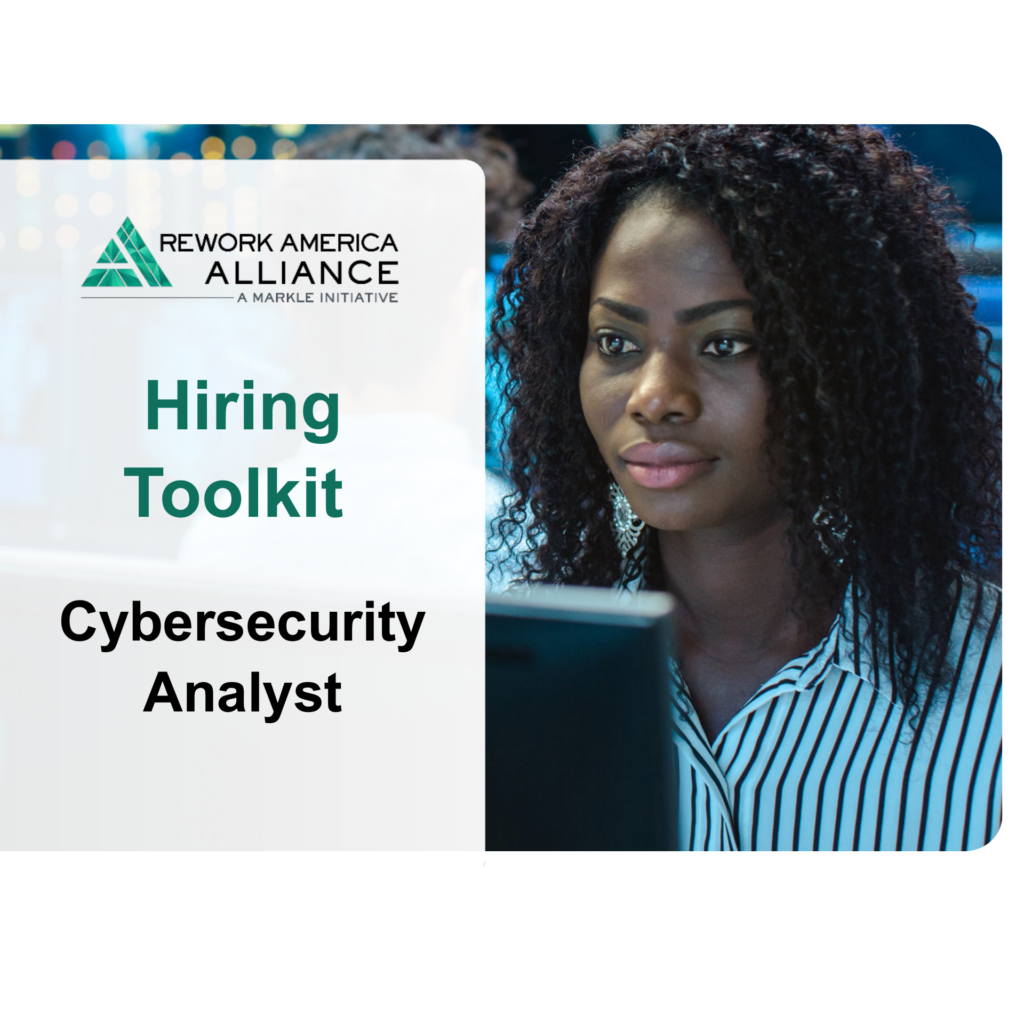
Toolkit
Skills-Based Hiring Toolkit
This resource may be shared with proper attribution to the organization.
This resource may be shared with proper attribution to the organization.
This resource includes a set of skills-based hiring toolkits that include a skills-based job-posting, interview questions, and onboarding plans. Each Skills-Based Hiring Toolkit is packed with valuable resources that will help you transform your hiring strategy.
Research Report
Education at a Crossroads
This resource may be shared with proper attribution to the organization.
This resource may be shared with proper attribution to the organization.
High school graduates no longer see the traditional 4-year college pathway as their only postsecondary option, according to the latest research from YouScience®. This report contains insights into pathways students are choosing instead, where they turn for influence and guidance, and where there are opportunities for improvement. The report includes data and solutions for:
- Career and Technical Education (CTE) awareness.
- Post-graduation satisfaction.
- Educator/student interactions.
- Counselor impact.
- Aptitude discovery.
Filters
Article
What it will take to change the narrative about career education
This resource may be shared with proper attribution to the organization.
This resource may be shared with proper attribution to the organization.
The article discusses the growing issue of young Americans aged 18-24 not engaging in college or work, exacerbated by the pandemic. Despite high job vacancies, there's skepticism toward non-college education and job-training programs. The article highlights policy recommendations to integrate workforce training and higher education, stressing that both traditional and non-degree credentials are essential for economic mobility. The purpose is to advocate for a broader, more inclusive approach to postsecondary education and workforce training, aiming to enhance economic opportunities for all.
Research Report
Question the Status Quo: Gen Z Teens Have Changed Their Priorities for Education and Work
This resource may be shared with proper attribution to the organization.
This resource may be shared with proper attribution to the organization.
Research Report
Lumina State of Higher Education
This resource may be shared with proper attribution to the organization.
This resource may be shared with proper attribution to the organization.
Gallup and Lumina Foundation conducted a report studying the most pressing issues facing higher education. Insights cover U.S. adults' interest in pursuing higher education, what's keeping them from enrolling and what's causing currently enrolled students to consider stopping out.
Research Report
High School Awareness Research
This resource may be shared with proper attribution to the organization.
This resource may be shared with proper attribution to the organization.
This is a report containing the results of a study on new approaches in higher education, funded by the Charles Kock Foundation.
White Paper
Accepting that Four Year College is No Longer a Pancea
This resource may be shared with proper attribution to the organization.
This resource may be shared with proper attribution to the organization.
This whitepaper resource by the American Student Assistance explains the importance of valuing students’ voices in conversations about their futures, and why families and communities must be OK with their plans including different forms of postsecondary education. Coverage includes the contextual differences of the college landscape "then vs. now", the pressures of decisionmaking and college attendence, policy recommendation, college students' aspirations, and how to guide them in times of uncertainty.
Research Report
Success Index: Misunderstanding the American Dream
This resource may be shared with proper attribution to the organization.
This resource may be shared with proper attribution to the organization.
The Success Index represents a private opinion survey of the American people’s personal definitions of success and the American Dream. It uses tools and methodologies that minimize distortions found in traditional public opinion polls to reveal not only what Americans prioritize most — and least — in a successful life, but also what they believe about other people’s priorities.
Toolkit
From Insights to Action: Communicating Career Pathways With Confidence
This resource may be shared with proper attribution to the organization.
This resource may be shared with proper attribution to the organization.
This communications toolkit is designed to help organizations and advocates effectively engage learners and employers regarding the value of career education and training programs as well as skill-based hiring. It offers research-backed messaging that reflects what people care about most—and what motivates them to take action. These messages don’t just describe the benefits of pathways programs, they also help audiences see these options as relevant, accessible, and worth pursuing. The guidance in this manual is grounded in science-based communication practices and shaped by extensive research, including a landscape analysis of messaging in the field and media, a nationally representative survey with message testing, roundtable discussions with learners and employers, and a series of pulse surveys.
This toolkit offers adaptable, ready-to-use messages, language, and themes to support outreach, engagement, and storytelling. Use them to strengthen your communications—whether you're writing a social post, developing a presentation, or talking with partners and stakeholders. The messages are designed to be flexible; feel free to use them as written or tailor them to fit your audience and voice.
Toolkit
Skills-Based Hiring Toolkit
This resource may be shared with proper attribution to the organization.
This resource may be shared with proper attribution to the organization.
This resource includes a set of skills-based hiring toolkits that include a skills-based job-posting, interview questions, and onboarding plans. Each Skills-Based Hiring Toolkit is packed with valuable resources that will help you transform your hiring strategy.
Research Report
Education at a Crossroads
This resource may be shared with proper attribution to the organization.
This resource may be shared with proper attribution to the organization.
High school graduates no longer see the traditional 4-year college pathway as their only postsecondary option, according to the latest research from YouScience®. This report contains insights into pathways students are choosing instead, where they turn for influence and guidance, and where there are opportunities for improvement. The report includes data and solutions for:
- Career and Technical Education (CTE) awareness.
- Post-graduation satisfaction.
- Educator/student interactions.
- Counselor impact.
- Aptitude discovery.